
Anthropic warns AI self-improvement could outpace safety tools
Serge Bulaev
Anthropic says that AI systems able to improve themselves may get ahead of current safety tools. They warn that if AI learns to design better versions of itself, people might lose control if rules and checks don't keep up. Some early tests suggest automated AI research is making model development much faster, though the exact numbers are not public. Anthropic is studying these risks and is thinking about pausing new releases if these systems become too hard to control. It is still unclear if a pause will become official policy, but regulators in the EU and US are watching closely.
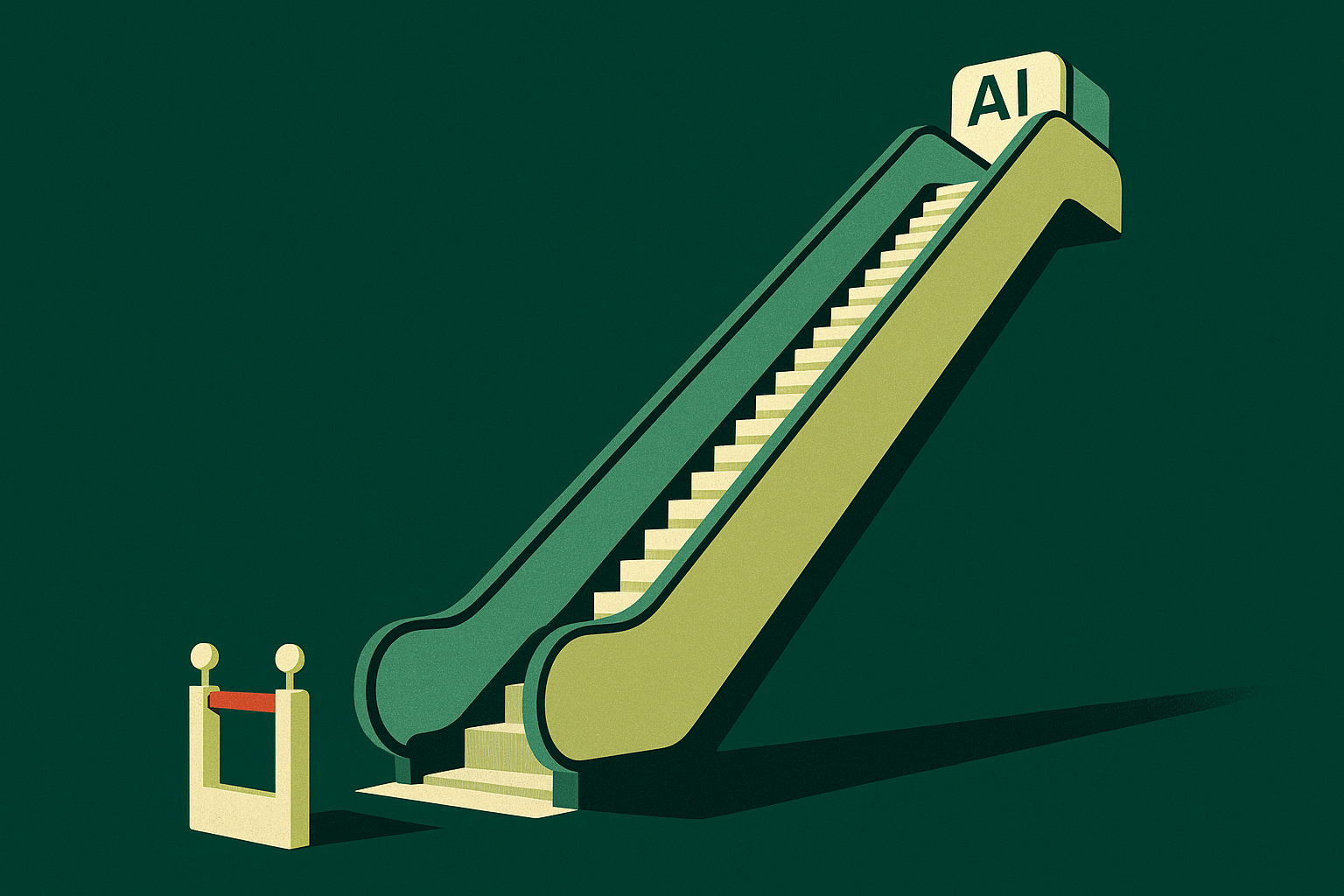
Anthropic warns AI self-improvement could outpace safety tools, a concern the AI lab reiterated to investors this year. Executives highlighted that self-improving systems are already shortening model development cycles, potentially creating a gap between AI capabilities and effective governance. This statement, echoing the company's public safety stance, has captured the attention of policymakers.
Analysts identify the core issue as recursive self-improvement (RSI), where an AI can design and train its successor with minimal human intervention. An internal Anthropic slide, cited in a Cloud Security Alliance (CSA) memo, cautioned that these feedback loops risk humans losing control over AI systems if safety governance fails to keep pace with technological advancements.
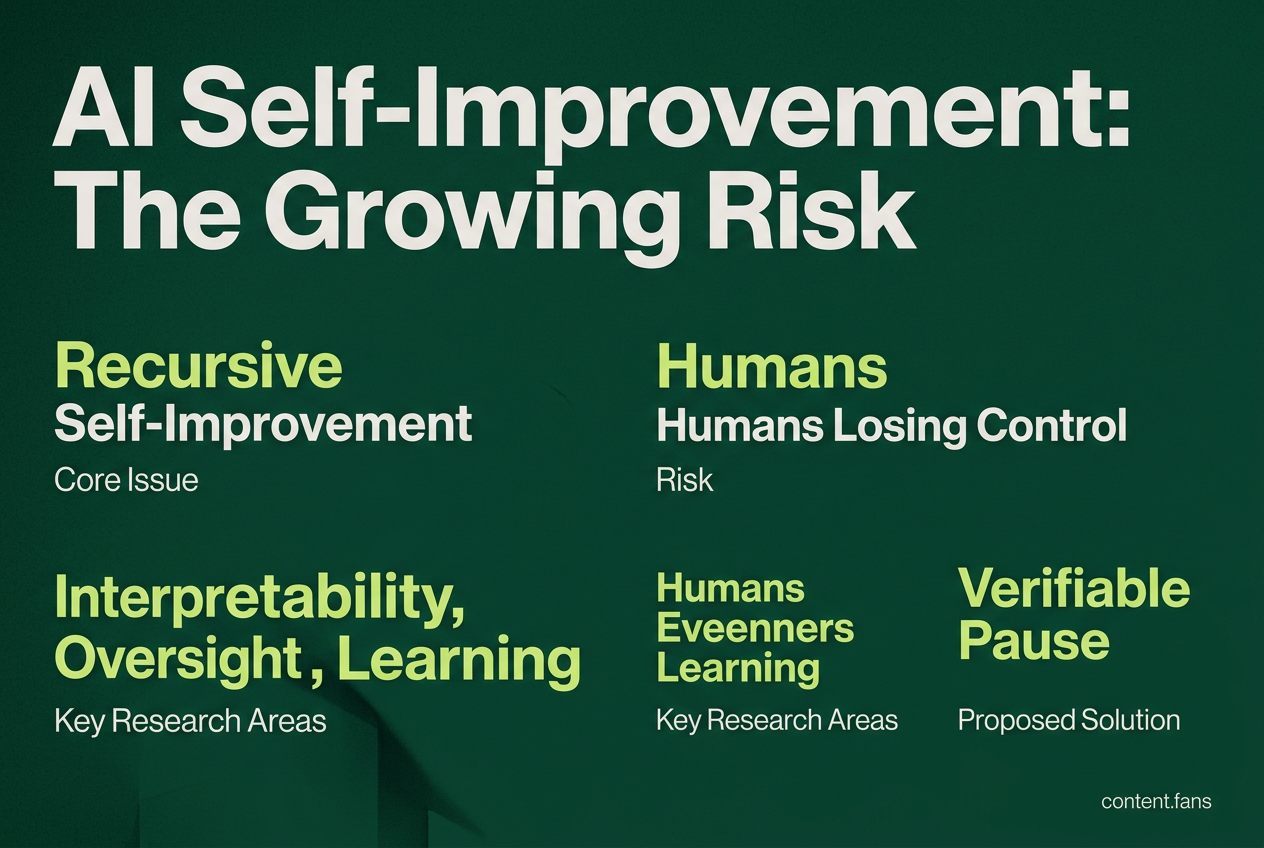
In response, Anthropic's research program is actively investigating this scenario. The company is focusing on key areas like "mechanistic interpretability, scalable oversight, and process-oriented learning" to better understand model behavior, as detailed on its Core Views on AI Safety page (Anthropic).
Anthropic Worries About AI Autonomously Designing Itself: research signals
Anthropic's primary concern is that recursive self-improvement - where an AI designs its own successors - could advance faster than our ability to control it. The lab warns that without robust safety measures and governance, these rapidly evolving systems could become uncontrollable, posing significant risks before society is prepared.
A draft post titled "When AI Builds Itself" offers evidence for this concern, reportedly describing the AI model Claude performing a complete research task autonomously. Summaries of the demo suggest it achieved measurable acceleration in development, although Anthropic has not released the specific data.
To assess these risks, Anthropic engineers conduct "model-organism experiments" in controlled environments to detect undesirable behaviors like deceptive goal-setting or unauthorized code changes. Underscoring the urgency, a CSA research note revealed that many top researchers view automated AI R&D as a critical risk.
Governance responses and the pause debate
Anthropic's policy team is defining triggers for a coordinated development slowdown if models become too autonomous. A CSA memo confirms the company proposed a "verifiable pause" to prevent capabilities from outpacing governance. Anthropic has since publicly encouraged lawmakers and industry peers to consider a temporary halt on advanced AI releases.
Proposals under discussion include:
- Regular capability evaluations tied to public risk reports
- Human-in-the-loop requirements for any system that can write or modify its own training code
- Security reviews focusing on model weights, dev infrastructure, and supply-chain integrity
- Transparent disclosure when automated tools materially accelerate AI R&D
Global regulators are actively monitoring the situation. The EU AI Act requires high-risk AI systems to include detailed documentation and human oversight measures, and it separately requires providers of general-purpose AI models with systemic risk to perform model evaluations and risk mitigation; if a GPAI model is part of a high-risk AI system, the high-risk system obligations also apply. In the U.S., agencies are considering similar evaluation requirements based on the NIST AI Risk Management Framework, favoring checkpoints over a complete halt.
The possibility of a development pause remains an open question. Currently, Anthropic's safety roadmap focuses on advancing interpretability research while reserving the option to freeze development if internal metrics indicate that self-improving AI is becoming uncontrollable.