
Anthropic pricing shift raises AI cost risks for enterprises
Serge Bulaev
Anthropic changed its enterprise pricing for Claude in 2026, removing bundled tokens from some deals and switching to charging per token used. This may make costs less predictable for companies, similar to cloud spending. As a result, businesses might need to add more controls and monitoring to avoid overspending. Legal teams are now adding contract clauses to protect against sudden pricing changes and to clarify billing rules. These changes suggest that AI contracts may start to look more like cloud service agreements in the future.

Anthropic's recent pricing shift for its Claude AI models is creating new cost risks for enterprises, moving vendor management and consumption control to the top of the agenda. A Forrester analysis highlights that by unbundling tokens from seat licenses, Anthropic is exposing businesses to unpredictable usage-based costs, much like cloud infrastructure spending. This guide outlines the changes and provides actionable strategies for procurement, finance, and engineering teams to manage this new financial volatility and maintain budget control.
What changed in Anthropic enterprise pricing
Anthropic's pricing update shifted enterprise clients from fixed subscriptions with bundled tokens to a usage-based model. Companies now pay per-token API rates on top of a base seat fee, eliminating predictable, all-inclusive packages and increasing the potential for significant cost fluctuations based on actual AI consumption.
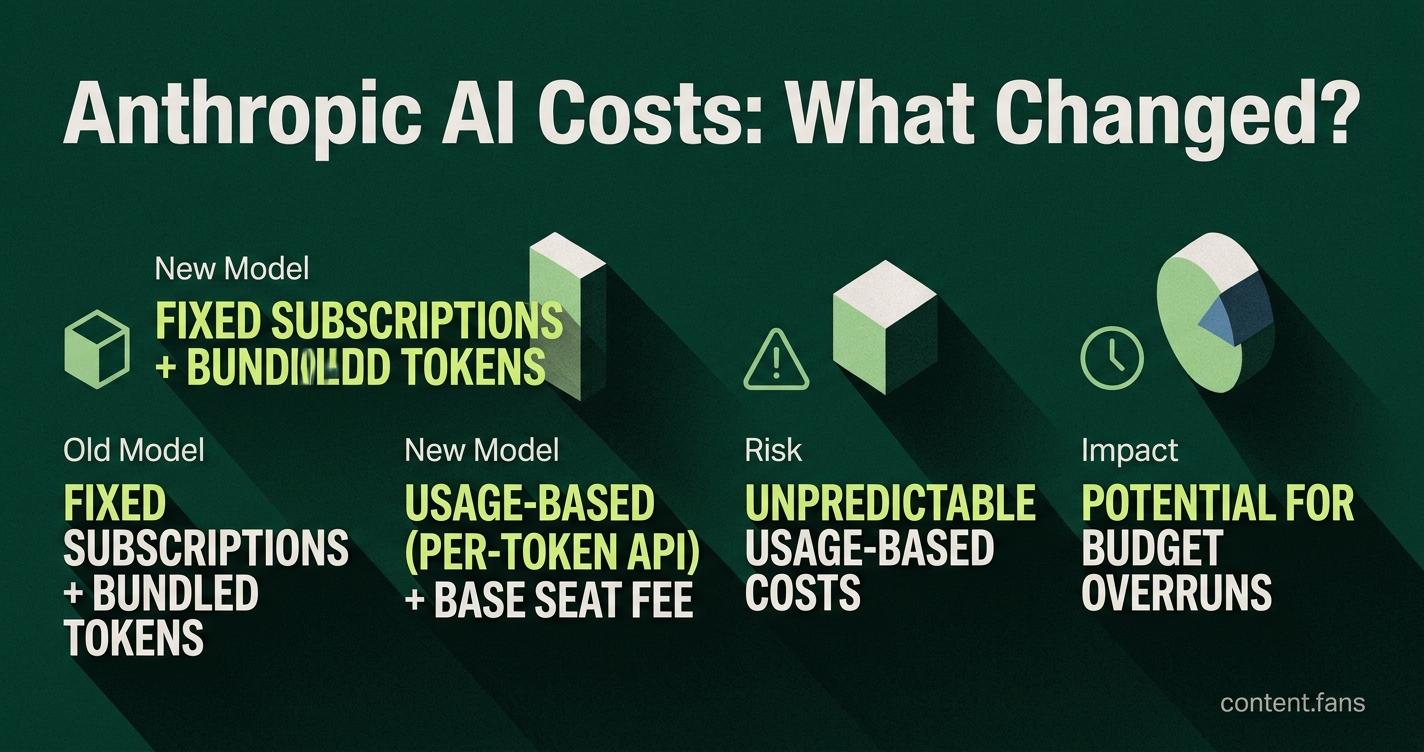
According to The Register, Anthropic unbundled tokens from its enterprise seat deals, meaning customers now pay per token on top of a monthly seat fee for certain contracts. This separates platform access from consumption, tying costs directly to token volume instead of user counts. Subsequent changes introduced separate, non-rolling monthly credits for tools like Agent SDK and related services. While some models have seen API rate reductions and cheaper cache reads, the overall billing structure has become a complex hybrid of seat fees, token charges, and expiring credits. This model creates a risk of budget overruns, especially as AI workloads scale or automated agents generate unexpected usage.
Strategies for Managing AI Consumption and Controlling Costs
To counter unpredictable spending, finance and IT leaders must implement robust monitoring and controls. This involves treating seat licenses, token usage, and agent credits as distinct budget lines. Proactive measures include setting multi-tiered alerts at various thresholds of monthly token limits, which can trigger automated downgrades to more cost-effective models for non-critical tasks. It is also vital to renegotiate contracts before breaching usage caps, as discounts are often forfeited after overages occur.
Key levers to deploy:
- Per-team monthly token budgets with automated fallbacks
- Routing rules that reserve premium models for customer-facing or high reasoning tasks
- Cache-management policies that trim repeated context
- Contract clauses defining "billable tokens" and overage rates
- Quarterly business reviews that match spend against ROI metrics
Key Contractual Safeguards for AI Renewals
Legal and procurement teams must adapt contracts to mitigate risks from consumption-based pricing. New agreements should mandate advance notice for any pricing or model adjustments. Essential clauses now include audit rights for token consumption logs, clear data-use restrictions, and usage caps that either roll over or are trued-up monthly. Following expert legal guidance, teams are also incorporating milestone-based payments tied to vendor deliverables and indemnities covering training data and AI-generated content.
This approach signals that AI service agreements are evolving to resemble cloud IaaS contracts, with granular metering and shared responsibility models. By embedding strong contractual protections, cost controls, and monitoring from the outset, enterprises can prevent budget shocks while retaining the flexibility to leverage new, more efficient models as they become available.