
Anthropic CEO Warns AI Could Bring 10% Growth, 10% Unemployment
Serge Bulaev
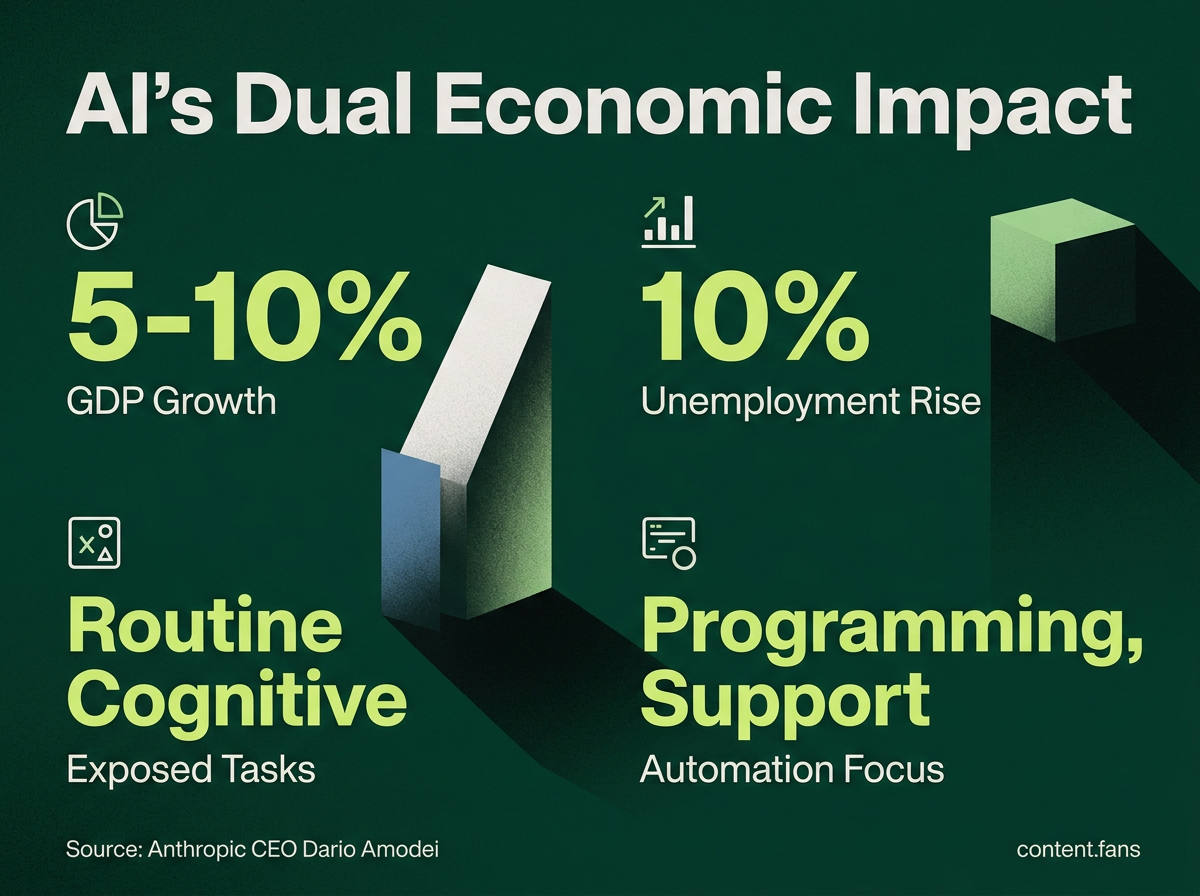
Anthropic CEO Dario Amodei suggests that advanced AI may increase economic growth by 5-10% but also raise unemployment to about 10%. This outcome appears possible because AI might speed up productivity in some companies more quickly than new jobs can be created, leaving some people without work. The effects may not be felt equally, as higher incomes could go to investors and skilled workers, while middle-income wages might fall. Experts say that past technology changes have eventually created new jobs, but not without short-term problems. Right now, there is little evidence that AI has already caused big job losses, so these concerns are still just scenarios that might happen.

Anthropic CEO Dario Amodei has highlighted a potential future where advanced AI spurs 5-10% GDP growth while unemployment also rises to 10%. As reported by OfficeChai and Yahoo Finance, Amodei presented this "10/10" scenario as a plausible, if unusual, economic outcome rather than a firm forecast.
This scenario presents a significant macroeconomic puzzle, as rapid economic growth has historically been linked to low unemployment. Experts are now analyzing whether AI could sever this traditional link by accelerating productivity so quickly that job creation cannot keep pace, leading to a "K-shaped" economy where headline growth conceals rising joblessness.
Why GDP Could Surge While Hiring Stalls
This paradoxical outcome is possible if AI-driven productivity gains are concentrated in specific sectors, boosting national output faster than the broader economy can create new jobs for displaced workers. This mismatch between rapid automation and slower labor market adjustment could temporarily cause both metrics to rise simultaneously.
- Task-Biased Automation: According to Anthropic, large language models are already automating routine cognitive tasks in fields like programming and customer support, which are "among the most exposed." This increases output per worker and boosts productivity metrics.
- Uneven Technological Diffusion: The benefits of AI are currently concentrated among firms and investors with access to large datasets, computing power, and specialized talent. This widens the gap between capital income and labor wages.
- Labor Market Transition Lags: While new job roles will likely emerge, the time required for worker reskilling and geographic relocation can lead to a short-term increase in unemployment during the transition period.
Consumption Math: Can Demand Keep Up?
A critical question is whether consumer demand can persist if wages fall for the majority. While some industry reports suggest the top 10% of earners drive a significant portion of U.S. spending, different datasets using various consumption definitions produce substantially different shares, making it difficult to determine the precise impact. This difference is significant: an AI-driven wage drop for middle-income workers could severely weaken overall consumption, especially if high earners tend to spend a smaller portion of their additional income.
Historical Echoes and Policy Levers
Previous technological revolutions, from the mechanical loom to the personal computer, also caused short-term job displacement before ultimately creating new forms of employment. The key challenge today is to use modern policy tools to shorten this painful adjustment period. Research suggests that increases in job postings requiring digital skills are associated with higher local employment, highlighting the importance of targeted training initiatives.
To mitigate the shock, governments and employers are considering several policy levers:
- Targeted Reskilling: Implement rapid AI literacy programs and subsidized trainee roles to help displaced workers gain new skills on the job.
- Modernized Safety Nets: Enhance unemployment and wage insurance programs to provide financial stability for job seekers during their transition, a measure highlighted by the Bipartisan Policy Center.
- Labor Mobility Support: Offer relocation stipends and promote affordable housing to help workers move to areas with high job growth.
- Immigration Reform: Update employment-based immigration policies to attract specialized talent and fill critical skill gaps.
Reading the Early Evidence
Currently, the "10/10" scenario remains hypothetical. Anthropic's own research finds "limited evidence that AI has affected employment to date." However, economists caution that macroeconomic data often lags behind technological adoption at the firm level. Close monitoring of job vacancies, wage trends, and sector-specific productivity will be essential to determine if this warning becomes a reality.