
Amazon integrates Alexa for Shopping into search, replaces Rufus
Serge Bulaev
Amazon is replacing its Rufus assistant with Alexa for Shopping, which may make searching and shopping on Amazon more conversational. Alexa for Shopping appears to use past data from Rufus and can remember previous searches, compare products, and track prices for users. Amazon suggests this change might help shoppers by giving more personal recommendations and making it easier to buy things across devices. The move could also change how ads are shown, as Alexa for Shopping can answer natural questions and possibly keep users more engaged. It is rolling out in the U.S. soon, but there are no public numbers yet on how much this helps people buy more.

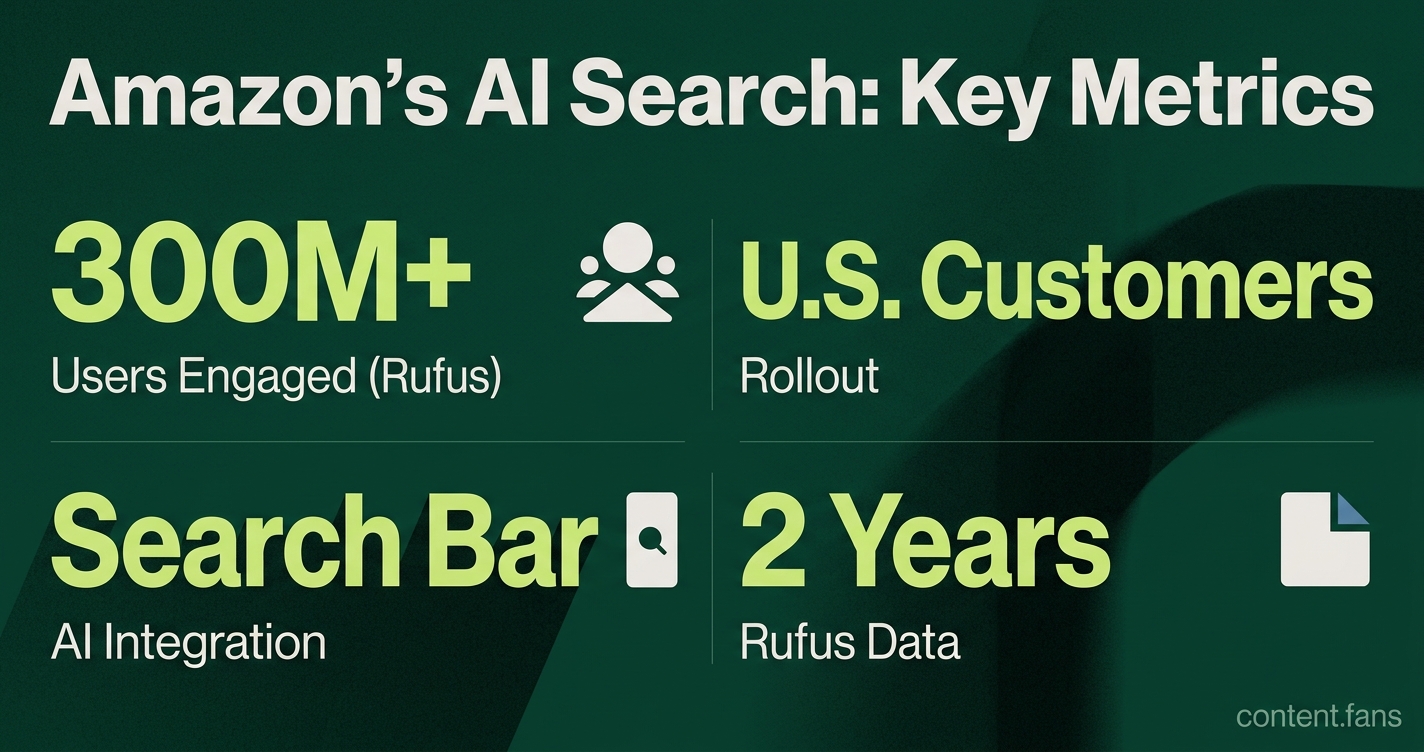
In a major shift for its e-commerce platform, Amazon integrates Alexa for Shopping directly into its main search bar, replacing the short-lived Rufus AI assistant. This move transforms the standard search box into a conversational interface across its app, desktop site, and Echo devices. According to a company announcement cited by Customer Experience Dive, the feature is rolling out to U.S. customers.
This integration merges two years of Rufus's training data into a unified agent that leverages catalog information, purchase history, and cross-device memory, signaling Amazon's strategic shift toward intent-driven product discovery.
What changes for shoppers
Amazon's new Alexa for Shopping assistant offers a more conversational and personalized experience. It remembers past searches, provides side-by-side product comparisons, and tracks prices based on user requests. Shoppers can now use natural language in the search bar for more refined and context-aware results.
Alexa for Shopping inherits a massive dataset from Rufus, which Amazon told reporters engaged over 300 million users, a figure cited by GeekWire. This enables the new assistant to provide richer context by remembering previous queries, offering product comparisons, and monitoring prices, all triggered by conversational prompts like "find a travel-size sunscreen under ten dollars."
Key user-facing upgrades include:
* Personalized Recommendations: The AI leverages purchase history to deliver tailored product suggestions.
* Automated Price Tracking: Users can set price thresholds for items, with an option for the assistant to add the item to the cart automatically when the price drops.
* Cross-Device Continuity: The assistant maintains a consistent memory of user interactions across mobile, desktop, and Echo Show devices.
Implications for Amazon's ad engine
With search advertising representing a significant portion of Amazon's revenue, this new conversational interface is critical. By integrating answers directly into the search bar, Amazon creates new opportunities for sponsored prompts that target natural-language intent instead of just keywords. Amazon reports that a significant number of shoppers who interact with a brand prompt within the assistant continue the conversation, indicating strong upper-funnel engagement.
This context-aware model will likely change how sellers approach listing optimization. According to guidance from seller-focused ad playbooks, product pages with detailed specifications, high-quality images, and positive review velocity have a higher chance of being featured by the assistant. For advertisers, this signals a necessary pivot from short-tail keywords to bidding strategies that align with long-form semantic queries like "best vegan protein powder for post-workout."
Competitive framing
Amazon is positioning Alexa for Shopping as a direct competitor to Google's Gemini-powered shopping tools and various ChatGPT commerce integrations. The key differentiator is its proximity to the point of purchase; unlike Google's discovery-focused tools, the Alexa agent can execute hands-free reorders and even complete a purchase automatically when a price alert is met. In contrast, ChatGPT primarily functions as a research tool that directs users to external retailers.
Early reach and rollout details
The new assistant is available for free to all customers logged into Amazon.com or the shopping app, with no Prime membership required. The initial rollout targets the United States, with international availability yet to be announced. On Echo smart displays, voice interactions will be synchronized with on-screen content, allowing users to add items to their cart verbally without losing their place.
This launch aligns with a broader trend of consumer adoption of AI-powered shopping assistants. Industry reports suggest that a growing number of shoppers have used AI for purchase decisions, and industry observers suggest this existing behavior may reduce adoption friction for Amazon's new tool.
While Amazon has not released public data on conversion uplift, its decision to discontinue Rufus and integrate its data into Alexa for Shopping signals strong confidence. The move suggests Amazon believes this conversational approach will increase shopper engagement and focus advertising spend on higher-intent interactions.
What happened to Rufus - did Amazon retire the assistant overnight?
Amazon is replacing the Rufus brand with Alexa for Shopping and integrating Rufus technology behind the scenes.
Rufus helped over 300 million customers in 2025 and is now part of a single, cross-device shopping agent. Instead of a separate button, the new assistant lives in the main search bar and answers directly in-stream, turning queries like "best hypoallergenic sheets" into product cards without extra clicks.
How does the new Alexa for Shopping appear on app, web and Echo?
The rollout is U.S.-wide and login required - Prime is optional.
Once you are signed in:
- Mobile & desktop: simply type a question in the search bar and the AI returns a conversational answer plus carousel of items.
- Echo Show: you can scroll an entire Amazon storefront on screen and finalize the order by voice or touch.
Amazon calls this "shopping continuity", meaning your price alert set on the phone is remembered when you later ask the kitchen Echo to check the same item.
What kind of tasks can Alexa for Shopping handle that Rufus could not?
Turning Q&A into full checkout is the headline addition. Examples that Amazon has publicly demonstrated:
- "Add this sunscreen to my cart if the price drops to $10" - Alexa will monitor the SKU and purchase automatically once the threshold is hit.
- Re-ordering everyday essentials by saying "send me more dog food" uses stored payment and address data to complete the purchase in one step.
Critically, all of this can now be triggered from the main search bar, pushing Amazon toward an agent-first discovery model.
Will conversational search hurt Amazon's ad business?
Early evidence says no. Amazon's advertising business continues to grow significantly. The company is inserting Sponsored Brand prompts inside assistant answers and reports that many shoppers who see a prompt continue the conversation about that brand.
Because the AI surfaces only one recommended product set, winning placement becomes binary - either recommended or invisible - making ad stakes higher but not shrinking total inventory.
How does Amazon's assistant compare with Google and ChatGPT?
| Feature | Alexa for Shopping | Google AI Shopping | ChatGPT Commerce |
|---|---|---|---|
| Purchase completion | native one-click inside Amazon | directs to merchant sites | depends on external checkout |
| Price-drop automation | auto-buy at user-set threshold | limited alert tools | manual follow-up |
| Cross-retailer browsing | Shop Direct for select merchants | wide web search | browser plug-ins required |
| Best moment to use | routine restock, voice list building | open-ended discovery | deep product research |
In short, Amazon is the only player that can both recommend and complete the purchase, while Google excels at breadth and ChatGPT focuses on research.