
AI Transforms Social Media Marketing: 97% of Leaders See Mandatory Literacy
Serge Bulaev
By 2026, AI will take over much of social media marketing, writing and posting content instantly and personalizing what people see. Almost all marketing leaders say knowing how to use AI is now essential for their jobs. Companies are using smart tools to target people more accurately, save money, and predict what customers will do next. But keeping things real and trustworthy matters, so brands mix AI speed with human creativity and clear labels when content is made by AI. Success will depend on teams learning new skills and using AI carefully, with strong rules to stay ethical and fair.
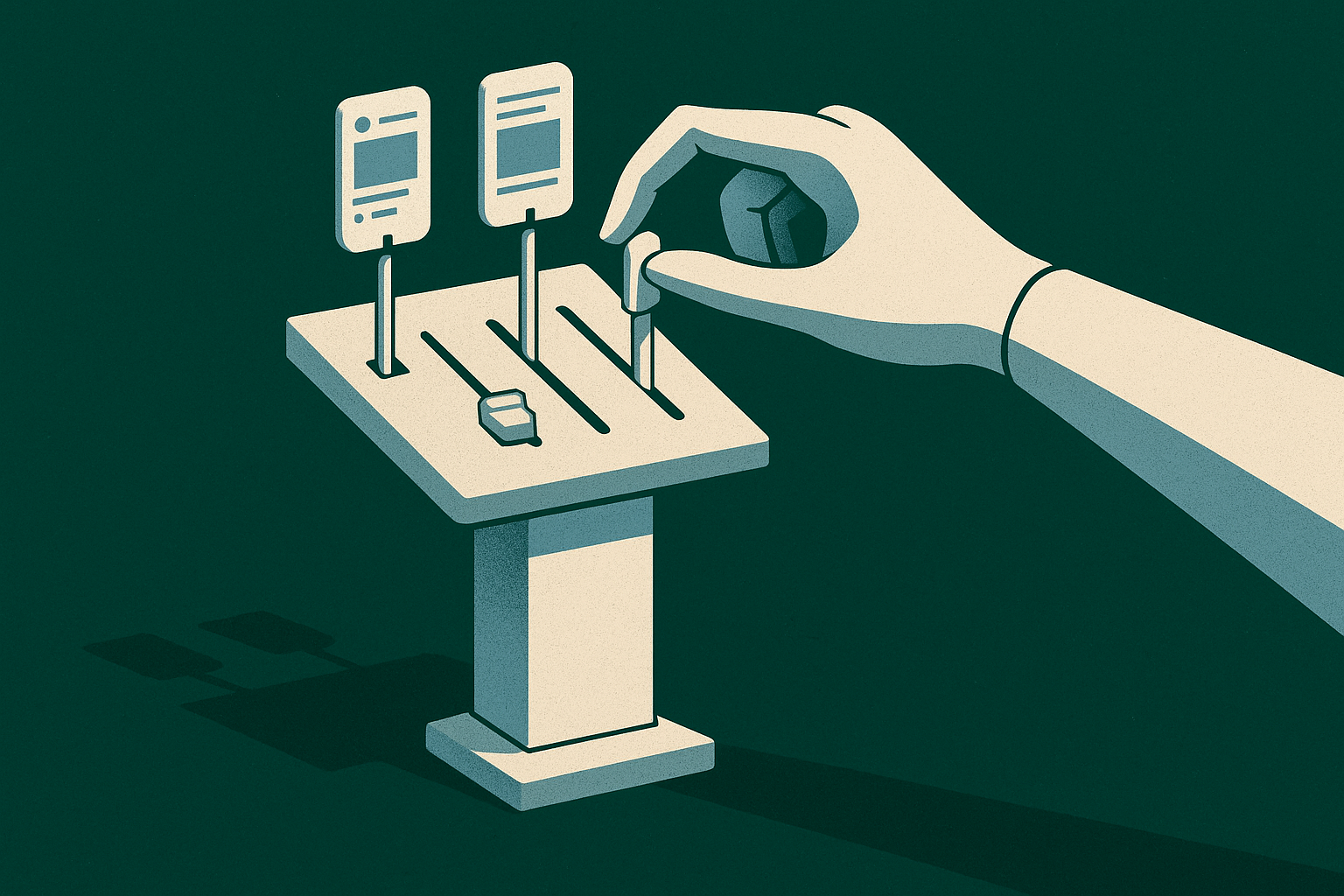
The way AI transforms social media marketing is becoming clearer, with 2026 trends showing algorithms writing, scheduling, and optimizing content in real time. For marketers, this represents a fundamental shift away from feeds based on follower graphs and toward dynamic models that learn minute-by-minute. This evolution is critical as audience attention fragments and budgets stagnate, with AI offering a path to unprecedented efficiency and relevance that human teams cannot achieve alone.
Key AI Social Media Trends for 2026
AI is revolutionizing social media by automating content creation, scheduling, and real-time optimization. It enables hyper-personalized user feeds based on live engagement signals rather than static follower lists, offering marketing teams greater efficiency and campaign relevance in an era of fragmented attention and tight budgets.
The scale of this change is underscored by industry surveys where 97% of marketing leaders now see AI literacy as mandatory for career growth (Sprout Social research). This urgency is amplified by platform-level changes, such as Meta leveraging its AI assistant's conversations to personalize ads across its ecosystem, cementing the industry's pivot from follower counts to real-time engagement signals.
Agentic AI Delivers Hyper-Personalized Feeds
Today's AI assistants have evolved from passive dashboards into active "doers." Machine learning algorithms now match content to micro-segments by analyzing real-time context like scroll speed, recent purchases, or even local weather. Brands are also using synthetic data to test campaigns before launch, minimizing wasted ad spend. However, this high velocity introduces the risk of audience exhaustion. Leading marketers mitigate this by using AI to focus on high-intent moments instead of indiscriminately chasing every trend.
Balancing Generative Speed with Authenticity
While generative AI tools can slash production costs for large advertisers by 30-50%, consumer trust hinges on human oversight. Authenticity remains a powerful currency. For example, fashion brand Aerie achieved its highest Instagram engagement in a year after publicly pledging to avoid using AI-generated models, demonstrating that a commitment to realism can effectively cut through content overload.
The Ethics of Using Virtual Influencers
Synthetic personas are increasingly used to host product demos, simplify technical topics, and manage 24/7 Q&A sessions. As their adoption grows, regulatory bodies are mandating clear disclosure for non-human influencers. Building trust is paramount, particularly given mixed public sentiment toward virtual influencers. To maintain transparency, ethics experts recommend a framework of practical guardrails:
- Label every synthetic post clearly with an "AI-generated" tag.
- Retain human approval for all final scripts and visuals.
- Audit AI training data to eliminate bias and prevent use of stolen likenesses.
- Feature a diverse rotation of characters to avoid harmful stereotyping.
- Provide clear opt-outs for users whose data informs recommendation algorithms.
Using Predictive Analytics to Optimize Spend
Predictive AI models empower marketing teams to forecast customer churn, lifetime value (LTV), and purchase timing with greater accuracy. This allows automated agents to strategically allocate budget to audience segments demonstrating high purchase intent. According to a Boston Consulting Group study, this approach can triple ROI while cutting costs by up to 20%. However, success depends on a solid foundation; even the most advanced AI is ineffective without clean data pipelines and reliable cross-platform user identification.
The Evolving Skills and Strategy for Social Teams
As AI automates tactical work, the role of social media professionals is shifting toward strategic orchestration. Copywriters are becoming prompt engineers, media buyers are supervising algorithmic budget allocation, and community managers are moderating bot-led interactions. Future-proof training must focus on statistical thinking, advanced prompt design, and ethics compliance. Organizations that successfully cultivate these skills and implement clear governance will be best positioned to thrive.
What makes 97% of marketing leaders say AI literacy is now mandatory for social media teams?
The shift happened when AI stopped being a nice-to-have and became the engine behind every high-performing campaign. In 2025, 59% of marketers already ranked AI-driven personalization as the single most impactful trend, while platforms like Meta began using real-time AI conversations to reshape ad targeting across Facebook, Instagram and WhatsApp. Teams that lag behind now see up to 7× lower conversion rates compared to competitors who let agentic assistants optimize creatives, budgets and audience segments 24/7.
How are brands safely deploying virtual influencers without triggering backlash?
The winners follow three non-negotiables: clear "AI-Generated" labels, human-curated storylines, and diverse design reviews to avoid stereotype traps. After the 2025 "Synthia" scandal - where an AI avatar trained on real creators without consent tanked two brand partnerships - the FTC tightened rules. Today, B2B players running virtual tech-demo hosts add a trust line "Powered by AI, Curated by Humans" and still earn 28% higher engagement than stock-photo campaigns.
Where is the fastest ROI showing up from agentic AI assistants?
Look at onboarding and remarketing flows. Grubhub's campus program handed agentic workflows full control over channel choice, timing and creative rotation; the result was an 836% ROI spike, 20% more orders and 188% extra student signups. On social feeds, the same logic reallocates live campaign budgets in minutes, cutting cost per lead up to 50% when the agent shifts spend from LinkedIn to Google Ads at half the price.
Why did Aerie's anti-AI pledge become its most-liked Instagram post of 2025?
Consumers are hitting authenticity overload. When the fashion retailer publicly banned AI-generated bodies, the post scored 75% higher static engagement in two weeks and proved that "real-only" can be a differentiator. The takeaway: use AI behind the scenes for speed and insights, but keep human faces in front of the camera unless you can disclose virtual talent without eroding trust.
Which AI capabilities will move from experimental to expected in 2026?
- Synthetic audience testing - GenAI creates 10,000 simulated personas to pre-flight creatives, killing under-performing concepts before a dollar is spent.
- Autonomous fastvertising - algorithms spot trending audio or memes and publish on-brand replies within minutes; delays longer than an hour already cost up to 30% reach.
- AI-native infrastructure - platforms bake generative copy, design and predictive segments into one dashboard, removing the need for separate content, insight and media tools.