
AI shifts to metered pricing as IPOs loom for Anthropic, OpenAI
Serge Bulaev
AI companies are moving away from cheap, flat-rate pricing and are starting to charge based on actual usage, which may surprise some users. This change appears to be driven by a decrease in venture subsidies and preparations for public offerings, making it more important to show clear profits. Reports suggest that once companies like Anthropic and OpenAI go public, there will be closer scrutiny of how much it really costs to run their models. Enterprises are seeing higher bills as pricing shifts to pay-per-use, and they may require more transparency before buying more. It seems investors expect the next year will reveal which AI providers can make money without heavy discounts, as buyers and sellers adjust to the new pricing reality.

The era of cheap, subsidized large language models (LLMs) is rapidly closing as the industry shifts to metered pricing. This change, arriving faster than many anticipated, is marked by shrinking free tiers and the replacement of flat-rate plans with usage-based invoices that mirror cloud service billing. This transition is driven by two primary forces: the tapering of venture capital subsidies that fueled initial growth and the need for leading AI developers to demonstrate clear unit economics as they prepare for high-stakes initial public offerings (IPOs).
Fewer subsidies, sharper pencils
AI companies are transitioning from flat-rate subscriptions to usage-based billing to establish clearer profitability ahead of public offerings. The end of venture capital subsidies that previously masked high compute costs is forcing a direct link between price and actual model usage for long-term financial stability.
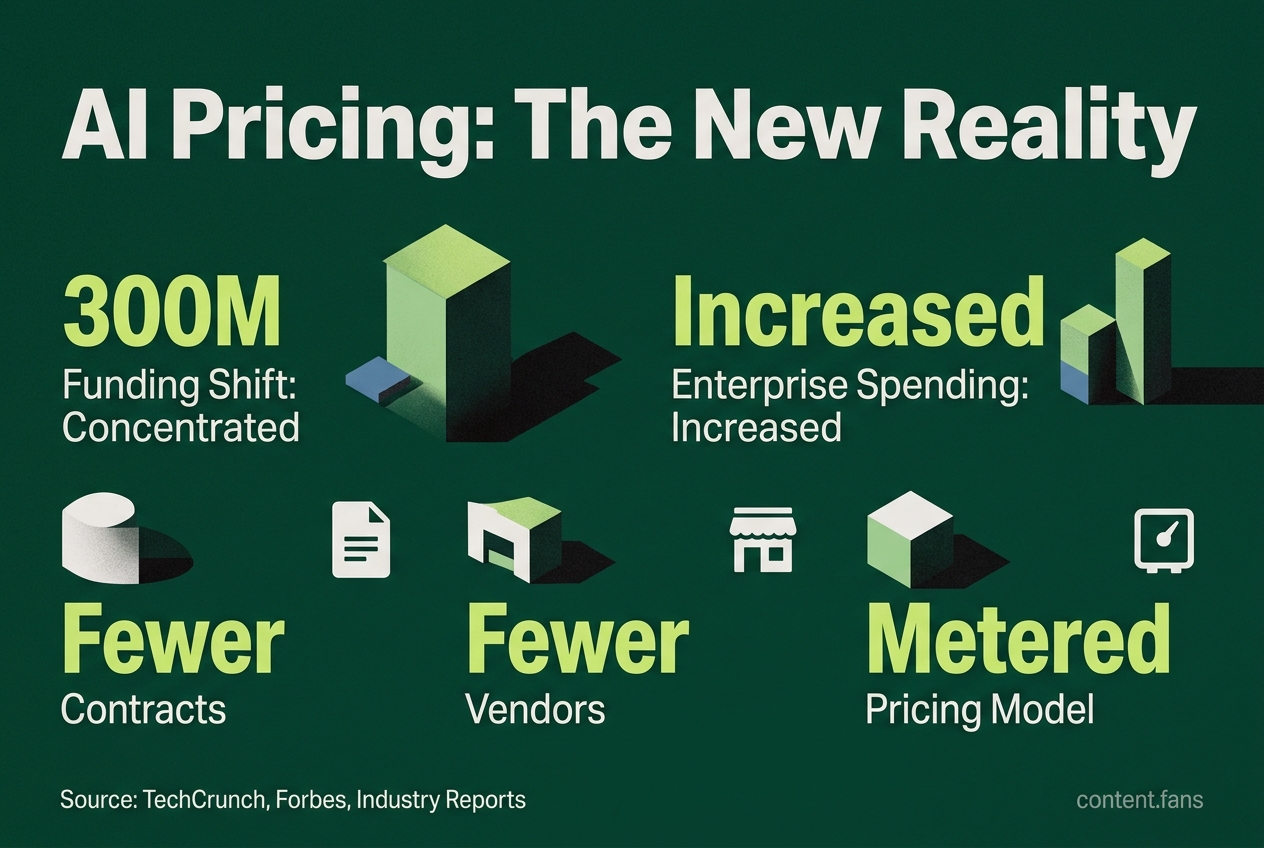
While AI startups attracted significant venture capital funding in 2025, this capital was heavily concentrated among a few foundation model vendors. This allowed for generous free tiers, but industry reports warn these discounts are unsustainable as investors now demand a clear path to profitability. A Forbes analysis further suggests this funding environment is raising price floors.
IPO scrutiny is changing the conversation
The prospect of public market scrutiny is a major catalyst. According to industry reports, several major AI companies are considering public offerings, with various timelines being discussed in the market. Once these companies go public, bankers expect intense analysis of gross margins per token, compelling a tighter alignment between pricing and underlying compute costs.
What metered pricing looks like
In practice, metered pricing involves tiered, pay-per-token plans similar to established cloud services. The impact is significant: industry reports suggest enterprise AI spending has increased substantially after switching from flat rates to metered use. TechCrunch reported that a survey of 24 enterprise-focused VCs predicted more enterprise AI spending in 2026, concentrated in fewer contracts and fewer vendors, with tool consolidation as a theme, indicating procurement now demands clear cost dashboards before scaling AI initiatives.
Cost management playbook
To manage these new variable costs, finance and engineering leaders are adopting governance strategies from cloud cost management. Key tactics include:
- Setting hard usage caps at the API key or workflow level to prevent unexpected overages.
- Implementing model routing to use smaller, cheaper models for simple tasks, reserving frontier models for complex reasoning.
- Using real-time dashboards to monitor and alert on cost spikes by feature or team.
- Tying AI expenditures directly to business metrics, like cost per customer resolution, for quarterly review.
Synapnews highlights that direct controls like hard limits and granular attribution offer the quickest savings. Additionally, Smartbridge notes that on-premise inference can be cost-effective for high-volume, steady-state workloads with full GPU utilization.
The road ahead for buyers and builders
This new reality presents challenges for both sides of the market. Founders must now balance growth with profitability, while enterprise buyers face the difficulty of forecasting unpredictable, token-based costs. Over the next year, investors expect a market shakeout that will separate AI providers with sustainable, usage-based revenue from those dependent on temporary subsidies. The ultimate test will be whether metered pricing strengthens or weakens demand once the true cost of AI is fully transparent.
Why are AI labs moving away from flat-rate pricing?
Flat-rate plans were only viable because venture capital subsidies covered the deficit between subscription fees and actual compute costs. As leading labs like Anthropic and OpenAI prepare for potential IPOs, they face investor pressure to demonstrate profitable unit economics. Metered, token-based billing makes revenue and costs transparent, satisfying both investors and regulators.
When will the big three AI firms actually list?
While various timelines have been discussed in industry reports, all potential IPO dates remain subject to market conditions and are largely speculative. Major AI companies are reportedly considering public offerings, but specific timing remains uncertain and could shift based on market volatility.
What signals show the subsidy era is ending?
The evidence is both anecdotal and data-driven. For instance, one enterprise reportedly consumed half a billion dollars in Claude tokens in one month - a cost far exceeding any flat-rate fee, proving subsidies were covering the difference. Concurrently, AI funding consumed 50-53% of all venture capital in 2025, totaling about $190-$200 billion, a funding level that investors are no longer willing to sustain without a return.
How can teams keep costs from exploding once metered pricing kicks in?
Teams can control escalating costs by adopting a disciplined approach:
- Model Routing: Use smaller, less expensive models for simple tasks, reserving powerful frontier models for high-value, complex prompts.
- Usage Caps: Implement hard API limits per project and configure real-time alerts to prevent budget overruns.
- Cost Attribution: Track spending by feature or customer to connect AI costs directly to revenue and ROI.
- Workflow Audits: Review automated agent loops to eliminate redundant or inefficient model calls.
- Vendor Negotiation: Secure enterprise agreements with multiple providers to maintain pricing leverage and avoid vendor lock-in.
Is this the end of "cheap AI" for consumers?
While the change won't be immediate, the trend is unmistakable. Similar to the early days of ride-hailing, the AI industry's subsidized era is ending. As public market investors demand profitability, consumer-facing prices will inevitably rise. Users should expect freemium access to become more limited or disappear entirely, with new models launching with clear, per-token pricing structures.