
Agencies tackle 70% 'dark' AI traffic for Amazon attribution
Serge Bulaev
Amazon agencies are trying to measure how much AI chat engines like ChatGPT and Perplexity lead shoppers to Amazon listings, but tracking this is difficult. About 70% of this traffic is "dark," meaning it arrives without clear referral data. Agencies are using new methods like customer surveys and analyzing brand search spikes to help fill these gaps. They are also changing how they count sales, extending tracking windows and comparing different reports to avoid double counting. These steps may help agencies better understand how AI discovery affects Amazon sales, but there is still much uncertainty.

Amazon agencies are scrambling to solve the challenge of dark AI traffic for Amazon attribution as shoppers increasingly discover products on chat engines like ChatGPT and Perplexity. With a significant portion of this traffic arriving without clear referral data, marketers must urgently adopt new models to measure how AI-driven journeys impact sales. Accurately measuring these opaque customer journeys requires blending new data sources that go far beyond standard last-touch attribution reports.
Hybrid Frameworks: Measuring AI's Impact on Amazon Purchases
To measure AI's impact on purchases, agencies are adopting hybrid frameworks. They combine Amazon's native Attribution tool with external signals like post-purchase surveys and brand search analysis. This multi-pronged approach helps quantify traffic from AI sources that don't pass standard referral data, closing a critical attribution gap.
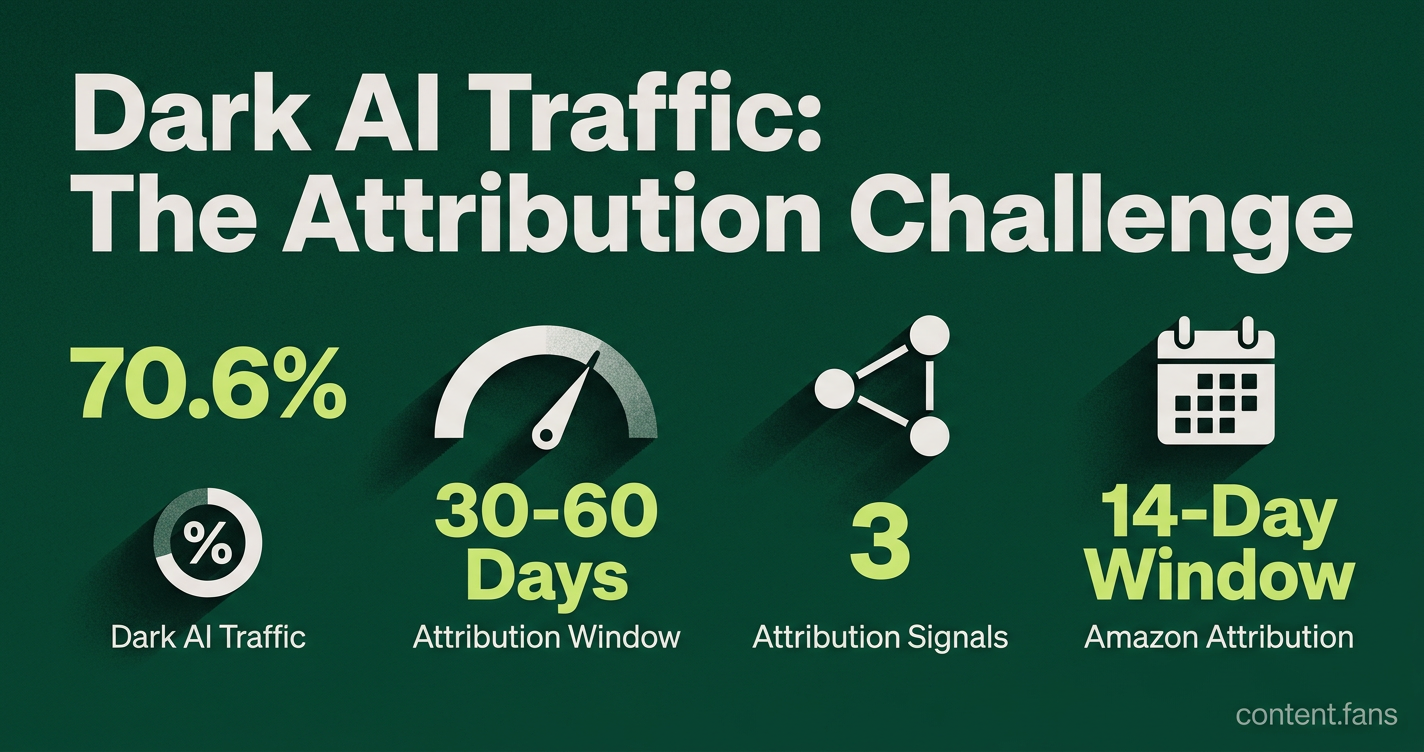
The foundation remains Amazon Attribution, which offers last-click credit within a 14-day window and access to the Brand Referral Bonus. However, with approximately 70.6% of AI-origin sessions arriving without a referrer header per industry statistics, this creates a massive 'dark traffic' gap. To close this gap, measurement leaders layer in two additional signals:
- Post-Purchase Surveys: Adding a single question on the order confirmation page to ask shoppers where they discovered the product, including specific AI engines as options.
- Branded Search Lift Analysis: Correlating week-over-week spikes in branded search queries with mentions of the product in AI-generated answers, often identified using citation telemetry from tools like ppl.studio.
Emerging Attribution Tactics for 2026 and Beyond
Leading agencies now extend attribution windows from 14 days to 30-60 days for AI channels, recognizing that AI-influenced purchases often involve a longer consideration phase. They also de-duplicate conversions by cross-referencing Amazon Attribution reports with data from other platforms like Meta to ensure accurate measurement.
A three-signal formula is gaining traction for a more holistic view:
| Signal | Data source | Typical credit |
|---|---|---|
| Direct AI referral | Referrer or UTM = chatgpt.com, perplexity.ai | Full attribution |
| AI-influenced organic | Branded search spikes linked to AI visibility | Partial attribution |
| Post-AI direct | Correlated direct traffic without referrer | Partial attribution |
How AI Discovery is Reshaping Media Planning
Amazon's own recommendation engines already drive a significant portion of its revenue, and AI-powered discovery is accelerating this trend. According to industry reports, impulse buys increase when algorithms predictively surface relevant items. In response, savvy brands are shifting budgets from broad display ads to sophisticated pre-click targeting tools like Amazon Personalize. This allows them to target users based on behaviors like hover time and scroll depth, surfacing sponsored items at the moment of highest intent.
Furthermore, optimizing product carousels is crucial; limiting them to a small number of highly relevant items can boost conversion rates according to industry reports. Voice is another critical channel, with rising trust in Alexa placements for search-like queries. This requires creating voice-optimized copy that directly answers the conversational questions surfaced in tools like Amazon's Rufus.
Actionable Steps for Agencies This Quarter
- Enroll in Brand Referral Bonus: Ensure all eligible brands are enrolled and generate unique Amazon Attribution tags for each AI channel and campaign.
- Deploy a Post-Purchase Survey: Implement a single-question survey on the order confirmation page to help quantify the share of 'dark' AI traffic.
- Track AI Citations: Use crawlers or tools to log weekly citations of your top ASINs across major AI engines, then correlate those timestamps with spikes in branded search volume.
- Refine Media Spend: Review your media mix weekly. After calculating your true cost per acquisition by subtracting bonus credits, reallocate budget to the most effective channels.
By implementing these incremental tactics, agencies can start to accurately quantify how AI-driven discovery influences Amazon revenue, gaining a competitive edge without waiting for a perfect, native attribution model from Amazon.