
Accenture acquires Whalar to integrate creator marketing into enterprise services
Serge Bulaev
Accenture plans to buy Whalar and add it to Accenture Song, which may help them strengthen creator and influencer marketing for big companies. The goal appears to be moving brands away from one-time influencer deals to ongoing creator programs connected to data and sales tools. The deal happens as more brands want clear results and data from creator marketing, and smaller agencies face challenges unless they have strong tech or special talent. Some experts suggest the success of this move might depend on how well Accenture can mix Whalar's creator focus with business needs like data, control, and increased sales. Financial details have not been shared, and only part of Whalar is covered by the deal.
In a landmark move for the creator economy, Accenture is set to acquire Whalar to integrate creator marketing directly into its enterprise services. According to industry reports, Whalar will join Accenture Song, providing "scaled creator and influencer engagement" and formally shifting creator partnerships toward enterprise-level infrastructure Accenture newsroom.
This strategy mirrors Accenture's 2018 programmatic push, where the firm entered a fragmented but growing channel to offer consulting, execution, and measurement as a competitive advantage.
The Strategic Goal: From Activations to Always-On Programs
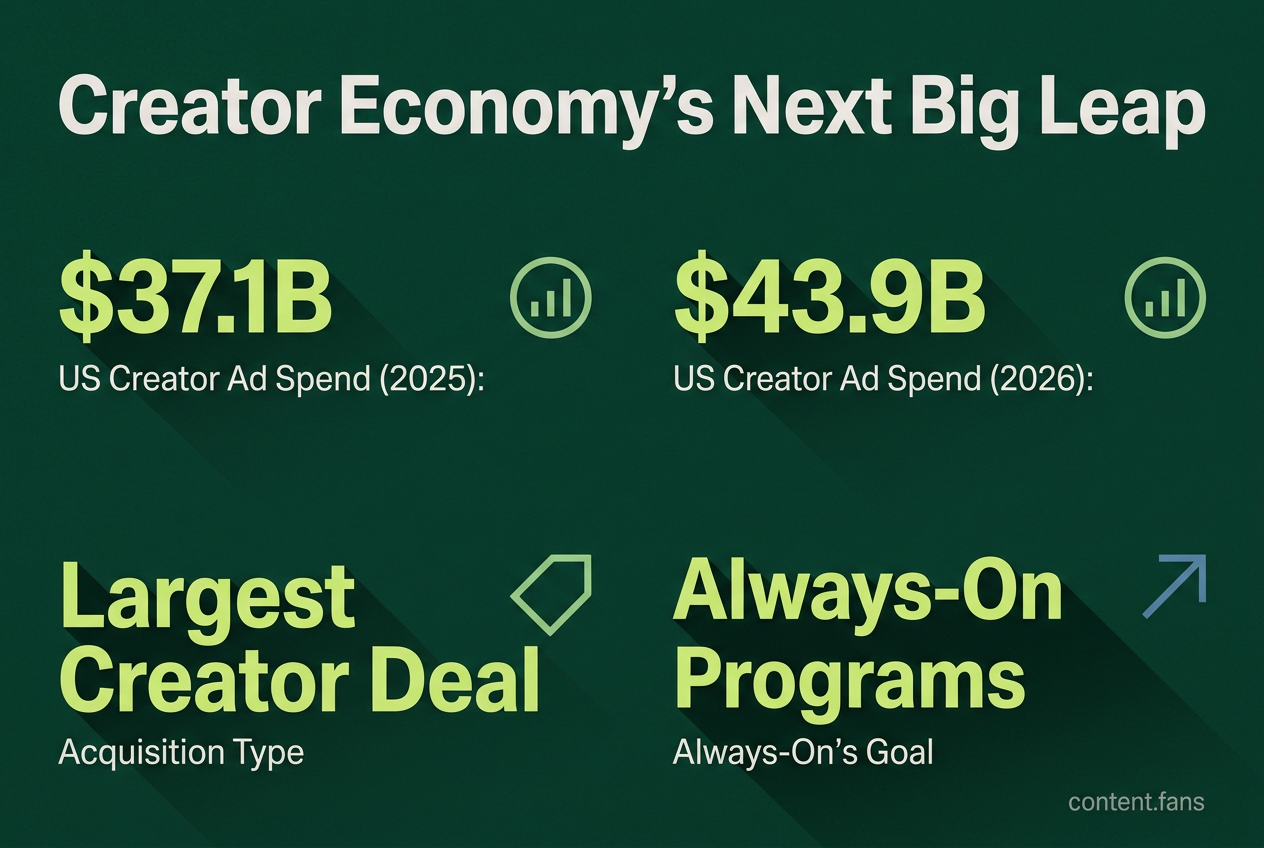
Accenture's stated goal is to pivot brands from "one-off brand activations" to integrated, always-on creator programs linked to data, commerce, and CRM. Adweek has called the acquisition the "largest creator economy deal to date," marking a "coming-of-age moment" for the industry.
Why Creator Marketing is Consolidating
Accenture is acquiring Whalar to integrate its creator talent and social expertise into Accenture Song's enterprise-level data, commerce, and AI systems. The goal is to transform creator marketing from one-off campaigns into a scalable, data-driven business function with measurable ROI for large brands.
The acquisition arrives as the creator marketing landscape consolidates. With U.S. creator ad spend forecast at $37.1 billion in 2025 and $43.9 billion in 2026, brands are demanding better ROI, creating three key market pressures:
- Enterprise marketers demand first-party data and attribution that match paid media standards.
- Boutique influencer agencies face margin pressure without proprietary technology or exclusive talent.
- Private equity groups are acquiring and rolling up smaller agencies to create platforms that can operate at scale.
Parallels with Accenture's Programmatic Model
This strategy mirrors Accenture's 2018 entry into programmatic services. At that time, Accenture Interactive offered consulting, media activation, and ad-tech implementation, positioning itself as a transparent agent for brands like HP and Radisson Hotel Group that were in-housing their media buying.
By applying this model to the creator economy, Accenture can combine Whalar's talent network with Accenture Song's powerful commerce, AI, and measurement tools. This synergy will enable advertisers to embed creators directly into CRM workflows, media mix models, and shoppable content.
Competitive Implications to Watch
- Independent creator agencies may need to emphasize cultural expertise or niche communities to stay differentiated.
- Holding companies that recently purchased influencer platforms could feel pressure to match Accenture's data-heavy integration.
- Brands evaluating in-house creator models might treat Accenture Song as a systems integrator rather than a traditional agency.
- Measurement vendors could benefit as always-on programs increase demand for third-party verification.
It's important to note that the deal, with undisclosed financial terms, covers Whalar's client-facing agency, not the entire Whalar Group. A three-year strategic partnership will be established for the remaining units, according to Business Insider reports.
Ultimately, the success of this acquisition hinges on a critical balance: integrating Whalar's authentic, talent-first culture with the rigorous enterprise demands for governance, data, and measurable sales impact.
What is Accenture's strategic goal with the Whalar acquisition?
Accenture is aiming to own the room in creator marketing by folding Whalar into Accenture Song. The move is modeled on its earlier programmatic success: integrate infrastructure, data, and services under one roof so that enterprise clients can run always-on creator programs instead of one-off influencer posts. Whalar's talent relationships plus Accenture's analytics, commerce, and AI stack will let brands treat creator content as a repeatable, measurable media channel rather than an experimental line item.
How large is this deal for the creator economy?
Industry coverage calls it the largest creator-economy transaction to date. While Accenture has not disclosed the purchase price, the announcement is labeled a "coming-of-age moment" for the sector, underlining that enterprise budgets now see creator marketing as a core growth channel rather than a side experiment.
What does the acquisition mean for day-to-day brand activity?
Expect a shift from one-off activations to continuous, data-driven creator programs. Accenture Song plans to connect Whalar's creator expertise to its own measurement, CRM, and commerce tools, letting brand managers view creator ROIs in the same dashboards they use for paid search or display. The integration should make it easier to embed creators into personalized customer journeys and media-mix models, reducing campaign lag times and improving attribution.
How does this compare with Accenture's earlier programmatic push?
Between 2018 and 2023 Accenture built a programmatic practice by helping brands in-house their ad-buying tech, offering consulting, activation, and ad-tech support without taking media margin. The Whalar deal repeats that playbook: gain early control of the workflow and data layer, then sell the combined service as higher-margin business consulting rather than simple media buying.
What risks should brands and creators watch for?
- Authenticity: Enterprise standardization can erode the raw voice that made creator content effective.
- Cost concentration: Fees may rise as large consultancies bundle services.
- Talent leverage: Creators could find negotiating power diluted if a handful of mega-platforms dominate sourcing and pricing.
Brands should balance scale benefits with direct creator relationships to retain authenticity and pricing flexibility.