
7 Free AI Tools That Double Creator Income
Serge Bulaev
Free AI tools are helping creators make more money online by making work faster and easier. With tools like ChatGPT, Canva AI, and Pictory, people can quickly create products, videos, and graphics to sell on sites like Etsy or YouTube. Simple steps - like finding trending ideas, making art, and posting online - are mostly automated. Some shops have made hundreds of thousands of dollars using these methods. The best results come from mixing AI with personal creativity and being open about using these tools.
Creators looking to scale their income in 2025 can leverage 7 free AI tools designed to automate content creation and open new revenue streams. These powerful platforms streamline everything from product brainstorming to video production, with growing success stories on Etsy and YouTube demonstrating financial growth potential. The core strategy involves pairing data-driven research with automated workflows, allowing for consistent output that captures market trends.
7 Best Free AI Tools for Creator Income
The most effective free AI tools help creators automate repetitive tasks, generate unique assets, and optimize content for discovery. Top choices include text-to-image generators for digital products, AI video editors for faceless channels, and writing assistants for crafting high-converting sales copy and SEO-friendly descriptions.
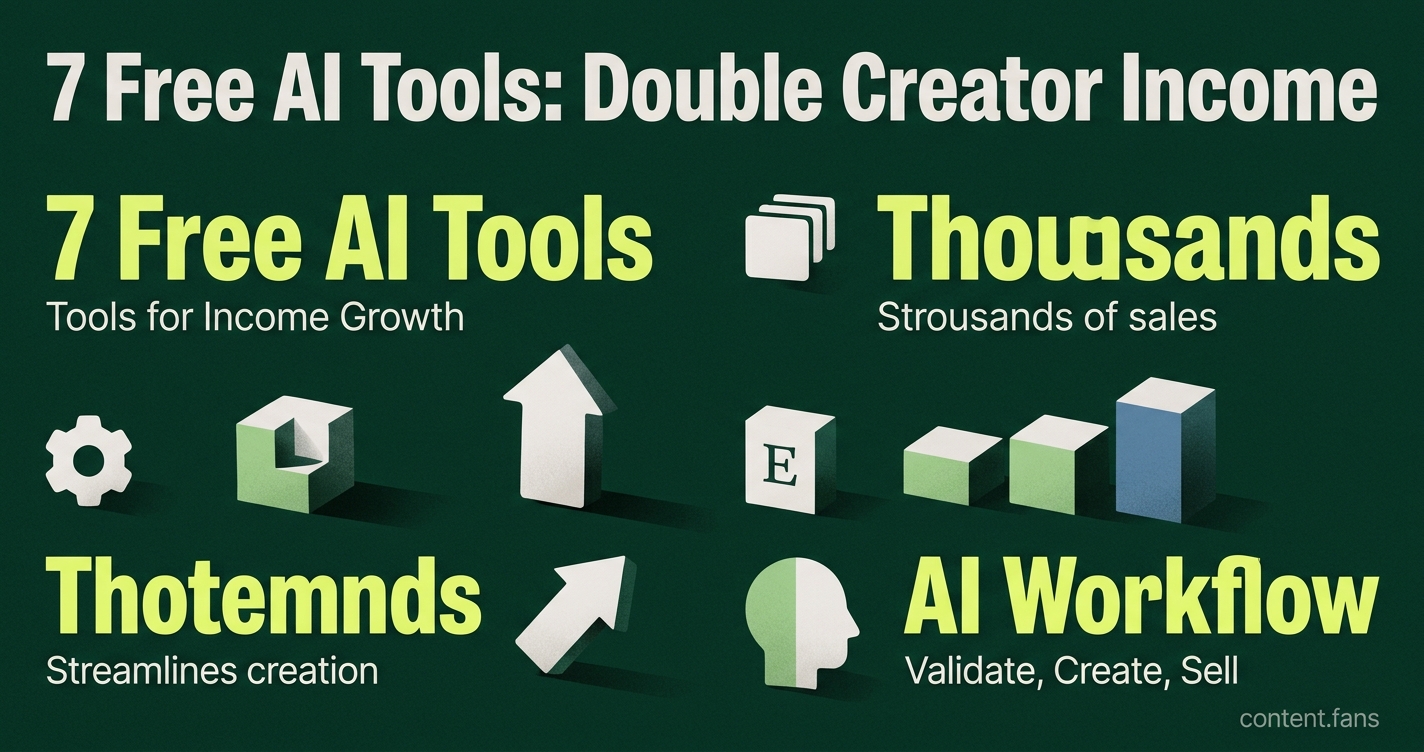
This stack of software covers writing, visual design, video production, and automation, with generous free tiers that can handle the majority of a creator's workload.
- ChatGPT: Brainstorm niche product ideas, draft compelling sales copy, and generate SEO-rich descriptions for listings and videos.
- Canva AI: Instantly convert text prompts into polished clipart, patterns, and mock-ups for print-on-demand products.
- Pictory: Turn simple scripts or articles into engaging short-form videos, perfect for faceless YouTube channels or social media promotions.
- Google Gemini: Research emerging trends and outline evergreen content directly within the Google ecosystem, as highlighted in a recent Postiv review.
- Adobe Firefly: Generate commercially safe images and graphics that are trained on licensed content, reducing copyright risks.
- Copy.ai: Write long-form content like blog posts or video scripts with a free tier offering 2,000 words per month.
- Zapier AI: Create automated workflows that publish content, tag products, or send follow-up emails without manual intervention.
Case Study: Significant Etsy Income with AI Clipart
A single, well-ranked digital clipart bundle can generate thousands of sales. According to one video walkthrough, many Etsy storefronts leveraging ChatGPT and Kittl workflows have reported substantial earnings and significant sales volumes in their early months. Growing numbers of creators are earning substantial monthly income by batch-producing themed PNG sets.
Industry reports confirm this high demand, with top digital listings accumulating significant transaction volumes, as shown in the Outfy market report. By targeting micro-niches like "watercolor western sunflower clipart," sellers minimize competition and can price bundles effectively.
A typical AI-powered workflow includes:
- Validate Ideas: Use Etsy search autosuggest to confirm demand.
- Brainstorm Concepts: Ask ChatGPT for 20+ hyper-specific bundle ideas.
- Generate Artwork: Use Canva AI or Kittl to create and export 15 - 25 PNG files.
- Optimize Listings: Refine titles, tags, and mock-ups with insights from Gemini.
- Automate Publishing: Use Zapier to schedule daily listings, consistently feeding the platform's algorithm.
Automating Faceless YouTube Channels to Drive Sales
Many creators repurpose their digital products into content for "faceless" YouTube channels, creating a second income stream. Using a tool like Pictory, a product description can be transformed into a video with stock footage, captions, and AI voice-over in minutes. Tools like Descript or CapCut can then slice the main video into vertical clips for TikTok and Reels, driving traffic back to the original Etsy shop while also earning YouTube Partner Program ad revenue.
Navigating Copyright and Ethics with AI-Generated Content
Long-term success requires understanding the ethical and legal landscape. The US Copyright Office has clarified that raw AI output is generally considered public domain; copyright protection applies only after a human has introduced significant creative modifications. As detailed guides on AI ethics explain, creators are still liable if their prompts generate trademarked material, making manual review essential.
Transparency is also crucial. Platform policies evolve, and disclosing AI usage builds audience trust while protecting your account from potential takedowns. This approach aligns with industry recommendations that stress the importance of responsible AI implementation.
Ultimately, the most successful creators treat AI as an amplifier, not a replacement for their unique vision. By blending the efficiency of smart tools with distinct human taste, you can establish a competitive edge in a market increasingly filled with generic, one-click content. This strategic approach leads to higher conversions, greater customer satisfaction, and a more sustainable creative business.
Which free AI tools are actually moving the revenue needle for Etsy clipart sellers?
ChatGPT + Kittl is the most cited one-two punch.
Sellers prompt ChatGPT for hyper-specific bundle ideas ("metallic-gold luxe watercolor florals") and push the prompts straight into Kittl's free tier to batch-export 25 PNG files at once.
Many shops report significant earnings growth - all digital downloads with zero shipping cost.
If you prefer an all-in-browser option, Canva AI's background-remover and "magic resize" let you turn a single floral into a 20-item Etsy listing in under five minutes.
How are faceless YouTube channels turning AI into substantial monthly income?
No camera, no problem.
Creators script with ChatGPT, paste the text into Pictory, and the tool auto-matches stock footage, captions, and a natural-sounding voice-over.
A 12-minute "AI clipart hustle" tutorial can be scheduled, published, and left to collect ad revenue + affiliate sales of the same tools shown on screen.
The format is identical to the Etsy tutorial videos that drive significant monthly clipart sales for their makers, so the traffic numbers convert well.
What free AI helpers should I add to my 2025-2026 toolkit?
Sources recommend ongoing free tools like ChatGPT, Canva AI, and Notion AI for 2025-2026, along with these options:
- Google Gemini - 100 free monthly credits for Veo video clips and in-Draft brainstorming
- Copy.ai (free tier) - 2,000 words/mo, multi-language, SEO headlines built in
- Adobe Firefly - commercially-safe image generation baked inside Adobe Express
- Zapier AI - auto-tag orders, send Etsy buyers a "thank-you" upsell email
Swap any of these into the workflow and you stay inside zero-budget territory while the output keeps scaling.
How do I stay on the right side of copyright and platform rules?
- Raw AI images are public-domain - you gain copyright only after real human edits (color swap, new background, manual rearrange).
- Always disclose AI use in Etsy descriptions or YouTube captions; undisclosed listings risk takedown under Amazon-KDP-style policies spreading to other platforms.
- Check each tool's terms - some limit commercial use unless you're on a paid plan.
- Keep a "human-in-the-loop" - even 5 minutes of manual touch keeps your product distinct and protects your account long-term.
Is the AI gold rush already too crowded?
Clipart niches like "generic Christmas stickers" are saturated, but micro-niche bundles ("watercolor western sunflowers with transparent background") still outperform with higher order values.
The same rule applies on YouTube: videos titled "How I made money" rack up views, yet smaller channels pivot to non-English voice-overs or seasonal sub-niches and pop into suggested feeds fast.
Bottom line: broad = buried, specific = sold; AI just shortens the production road, it doesn't erase the need for focused targeting.