
42 states subpoena OpenAI over consumer, health data practices
Serge Bulaev
A group of 42 state attorneys general subpoenaed OpenAI in June 2026, asking for records about how the company handles consumer and health data, advertising, and policies for minors and the elderly. This move suggests that state officials want to see if OpenAI's actual practices match its safety and privacy claims. OpenAI said it is working with the investigation and takes the issues seriously, but it is not clear how long the process might take. The investigation may lead to further actions if gaps are found, and new state AI laws could shape what OpenAI is required to show.

The AI firm OpenAI has been subpoenaed by 42 states regarding its consumer and health data practices, placing its internal records at the center of a major multistate investigation. Led by New York Attorney General Letitia James, the coalition served the subpoena on June 12-13, 2026. The move signals that state officials are intensifying scrutiny to ensure OpenAI's public safety and privacy claims align with its actual operations.
What the subpoena demands
Investigators are demanding extensive internal documents that go far beyond marketing. Requested records reportedly cover advertising strategies, consumer and health data handling, policies for minors, model bias testing, and all internal policy manuals, indicating a broad probe into privacy, consumer protection, and potential discrimination.
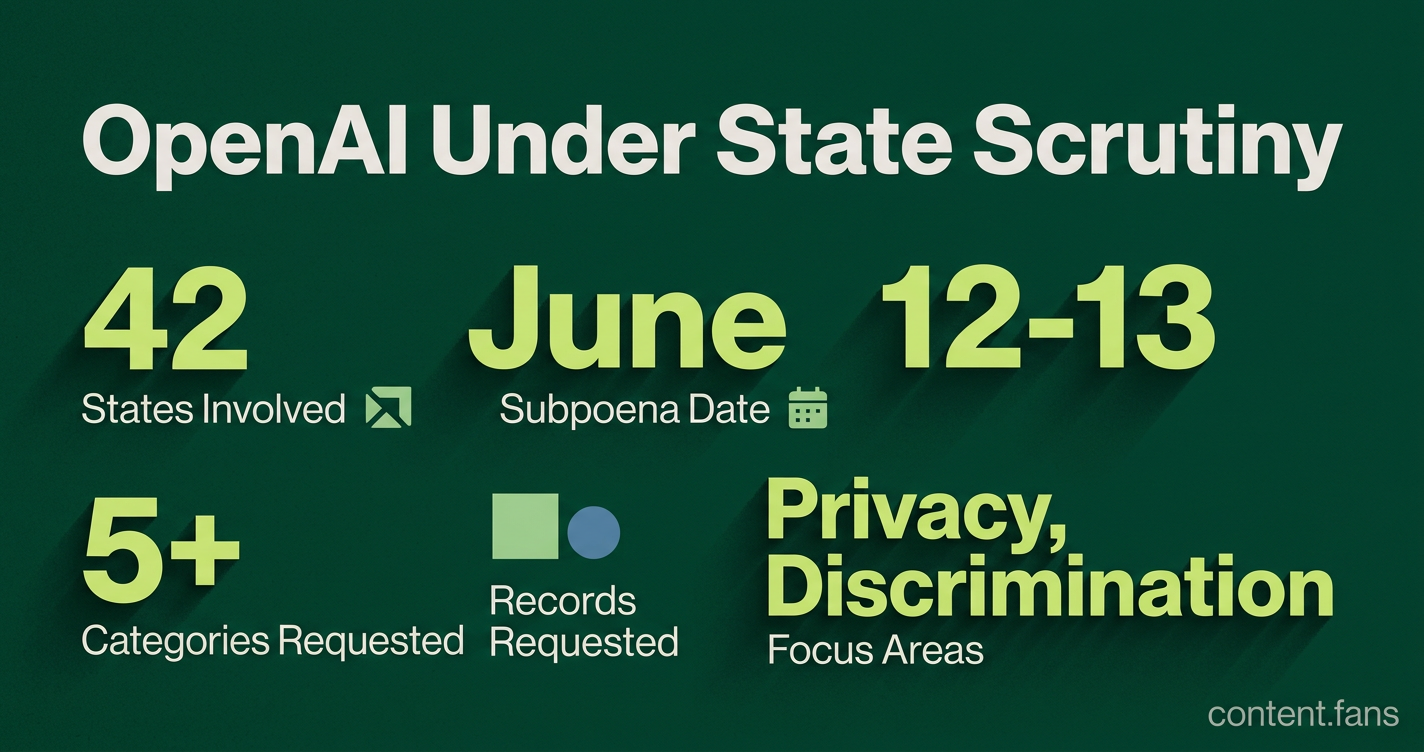
The subpoena's scope, described by Reuters as touching "a wide range of its activities and the impact on users," suggests the coalition is probing potential consumer protection, privacy, and discrimination issues in tandem rather than piecemeal. Requested categories reportedly include:
- Advertising strategies and engagement or retention metrics
- Handling of consumer and health data
- Policies affecting minors and elderly users
- Technical papers on deep learning models and model bias
- Current and previous internal policy manuals
Why 42 states joined forces
This coordinated action highlights a growing trend of state-level AI enforcement. While states have passed dozens of AI rules since 2025, such as California's Frontier AI Act and the Colorado AI Act, enforcement power rests with attorneys general. By banding together, state offices can share forensic costs and present a united front to large platforms. The subpoena also follows earlier multistate actions on children's online safety, specifically requesting records on minors and older adults.
OpenAI's initial response
In a statement to CNBC interview, OpenAI said it is engaging "constructively" with investigators and takes the concerns "seriously." No timeline for document production has been released. While cooperation may ease tensions, experts observe that multistate probes often expand if early disclosures reveal compliance gaps, prompting demands for detailed consent logs and model governance papers.
Possible next steps
The investigation could lead to several outcomes, from negotiated compliance assurances to public litigation and civil penalties. According to a 2026 Cleary Gottlieb privacy memo, attorneys general increasingly demand "evidence-based compliance," meaning the quality of OpenAI's documentation will be critical. Based on past tech industry cases, OpenAI may be required to:
- Map all data flows for each consumer product
- Document how it limits sensitive data in model training
- Prove that its advertising messages about safety are supportable
Whether the coalition ultimately files suit or settles, the subpoena adds significant disclosure obligations at a time when federal and international regulators are issuing their own demands.
Broader policy backdrop
This probe is set against a backdrop of aggressive state-level AI legislation. New laws provide the legal framework for this action, including Colorado's AI Act, which requires risk assessments, and California's SB 53, which imposes strict incident reporting and whistleblower protections. These statutes give attorneys general the statutory hooks to review OpenAI's documentation and enforce compliance. Together, the subpoena and new state laws signal a major shift from accepting broad ethical pledges to demanding granular, documented proof of safety, privacy, and fairness from AI developers.