
Ukrainian SaaS Grows to $1.2B in 2026, Driven by Cloud Adoption
Serge Bulaev
Ukrainian SaaS companies may reach $1.2 billion in 2026, mainly due to more cloud use and strong partnerships with providers like AWS and Microsoft Azure. Industry reports suggest most medium businesses now use SaaS, especially in retail and e-commerce, while local providers compete by offering lower prices. Security rules and the need to switch from Russian software appear to push companies to choose private or local cloud options. However, challenges such as internet outages, staffing problems, and not enough skilled cloud security workers might slow future growth. Analysts warn that without solutions to these problems, the expected increase in cloud spending for 2026 may not happen.

The Ukrainian SaaS market is experiencing significant growth as cloud adoption accelerates across the country. Industry analysts attribute this momentum to rising SME cloud usage and strategic partnerships with providers like AWS and Microsoft Azure. This combination of local affordability and global scale is reshaping how Ukrainian companies build, price, and export software, with industry reports indicating substantial revenue growth driven by increased cloud adoption.
Cloud spending climbs despite wartime risk
Ukraine's domestic IaaS and PaaS market has seen substantial growth since 2021, reaching over ₴10 billion (approx. USD 240 million) by 2025. This growth is driven by partnerships with AWS and Azure, which provide resilient, multi-zone infrastructure that helps local companies maintain service during wartime disruptions.
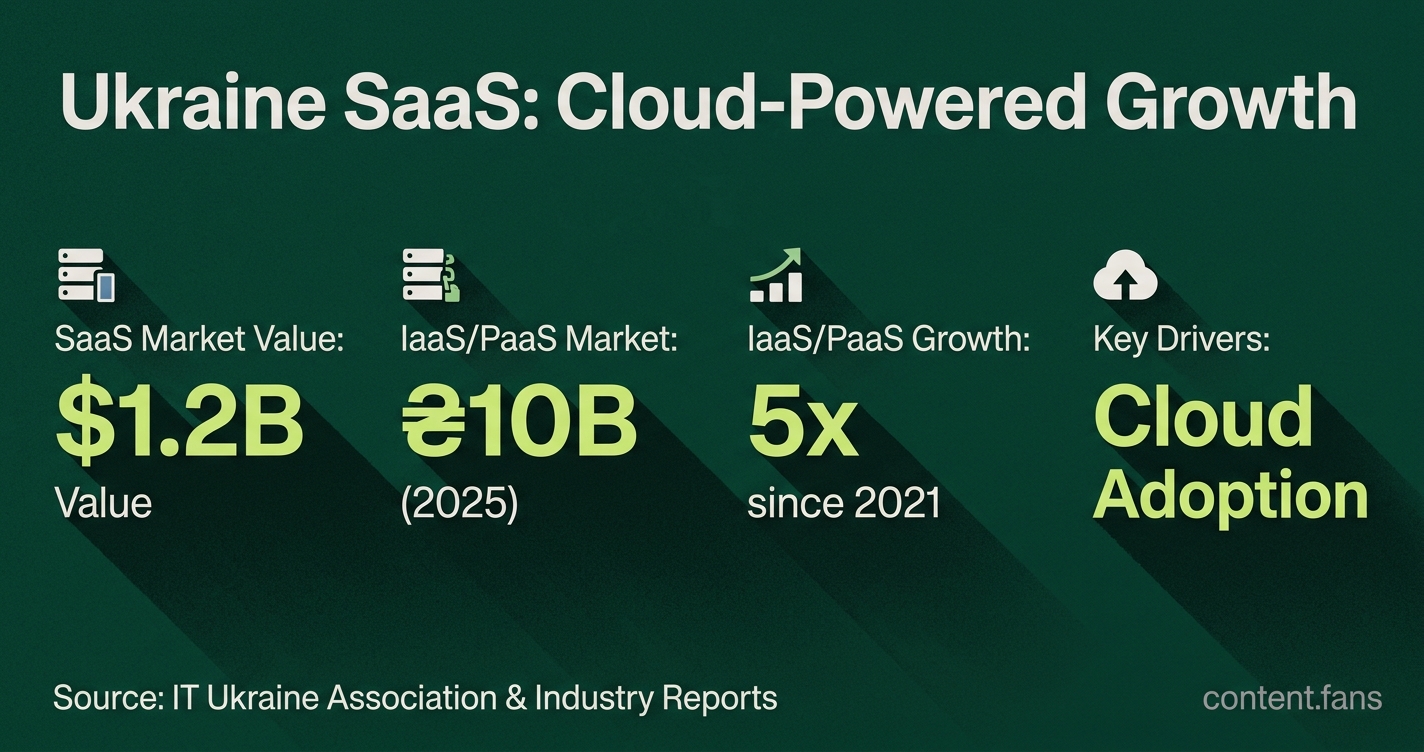
According to the IT Ukraine Association, the domestic IaaS and PaaS market grew over fivefold since 2021 (source). AWS and Azure are major players in the foreign-provider market, offering startups access to AI tools and resilient European data centers. This redundancy is critical for maintaining uptime during power cuts. Meanwhile, local providers compete on cost, with data center services reportedly priced significantly lower than what global hyperscalers charge, keeping market entry affordable.
Adoption spreads across mid-market firms
SaaS penetration has grown substantially among medium-sized businesses, particularly in retail and e-commerce, with significant SME adoption according to industry reports (SaaS for Business). In response to demand for agility, developers are focusing on subscription models with rapid deployment and automated compliance. This trend has attracted investors, with growing capital investment for Ukrainian SaaS startups enabling security enhancements and global expansion.
Key trends reported for 2026:
- Monthly recurring revenue showing strong year-over-year growth
- Average revenue per user demonstrating steady increases
- Net Promoter Scores indicating positive customer satisfaction
Security and regulation shape architecture
Security requirements and regulations are heavily influencing cloud architecture. To comply with DSUA rules prohibiting data hosting in sanctioned territories, large enterprises are demanding private or sovereign cloud solutions. As a result, architects are embedding controls like PAM, SIEM, and DDoS mitigation from the design phase. Providers are also adopting Confidential Computing and Zero Trust models to address data security concerns. This regulatory push is amplified by the national ban on Russian ERP software, driving demand for integration-ready SaaS solutions that can replace legacy systems with minimal disruption.
Cost, talent, and connectivity hurdles remain
Despite strong momentum, the sector faces significant hurdles. Persistent challenges include:
1. Connectivity Risks: Wartime internet outages pose a direct threat to service availability, as cloud access is immediately cut off during downtime.
2. Talent Continuity: The mobilisation of IT staff can disrupt team operations, though deferments for critical-sector employees provide some relief.
3. Skills Gaps: A shortage of skilled cloud security professionals is forcing companies to invest in internal training programs or recruit internationally.
Analysts caution that if these constraints are not addressed, they could impede continued growth in cloud spending.
How big will Ukraine's SaaS market be in 2026?
The Ukrainian SaaS sector is experiencing significant growth, with industry reports indicating substantial increases in annual revenue driven by widespread cloud adoption:
- A significant portion of medium-sized Ukrainian businesses now use SaaS daily (source)
- Many SMB workloads now run in the cloud (source)
- Monthly recurring revenue for local SaaS firms shows strong growth according to industry reports (source)
Which global cloud partners are most active with Ukrainian SaaS firms?
AWS and Microsoft Azure are significant players in the foreign-provider cloud business in Ukraine (source). Google Cloud, though smaller, also runs investment programs that give Ukrainian startups access to global funding and AI/ML toolkits. These alliances have allowed firms such as Kyivstar to cut infrastructure costs significantly after migrating to AWS while adding GenAI features via AWS Bedrock (source).
What measurable benefits have SaaS firms gained from moving to cloud?
Ukrainian SaaS players report various improvements from cloud adoption, including increased average revenue per user through upselling premium features, growing subscription volumes, and improved Net Promoter Scores indicating that customers see cloud-based products as more reliable and secure (source).
What challenges still slow cloud-first SaaS growth?
The top roadblocks are:
1. Data-security concerns - fear of losing control over sensitive data remains a significant barrier to cloud adoption (source)
2. Legacy integration challenges - especially after Ukraine's ban on 1C ERP software, firms must rebuild integrations while keeping operations running (source)
3. Geopolitical risk - intermittent connectivity and staff-mobilization issues threaten day-to-day availability
What is the outlook for 2026-2027?
Industry bodies and vendors indicate that continued expansion in cloud services is achievable, provided security conditions do not worsen (source). Key growth factors:
- Cost advantage: Local cloud prices are generally lower than global hyperscalers (source)
- Security innovation: growing demand for Confidential Computing and Zero-Trust architecture is creating new opportunities for SaaS providers (source)