
UK Eyes Pay Transparency Law, Employers Prepare for 2026 Shift
Serge Bulaev
The UK is considering a new law that may require employers to share pay information in job ads, or give it in writing before interviews. The government is asking for opinions until October 2026 and is looking at different ways to show salaries, such as exact numbers or pay bands. Some research suggests most job seekers prefer seeing pay ranges, and companies could benefit from being open, but there could also be risks like internal disputes. Experience from other countries shows mixed results, and any final rules in the UK are likely to start after 2026. Experts suggest employers start preparing by checking current pay bands, planning how to explain pay, and possibly stopping salary history questions.

The UK has no legal obligation to include salary ranges in job adverts yet. The government is conducting a consultation on a potential statutory duty, but full pay transparency legislation similar to the EU PTD is not imminent. The consultation is exploring a new statutory duty that would require salary figures in all advertisements or, if none are used, provision of the data in writing before the first interview, as reported by a BBC News article.
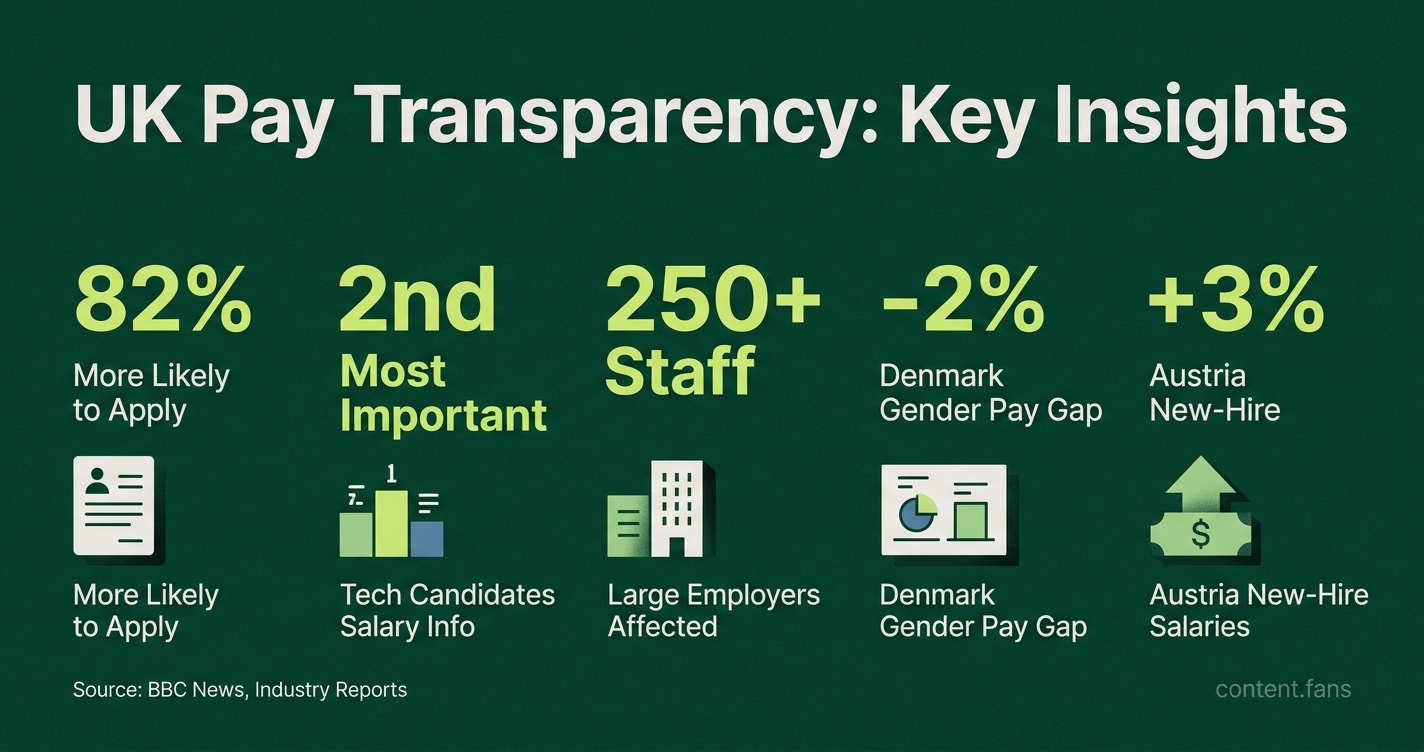
While no legal requirement currently exists, many UK recruiters already publish pay ranges. This trend aligns with candidate expectations, as surveys show 82% of workers are more likely to apply to jobs with listed pay ranges, and 89% of tech candidates consider salary information the second most important detail in a job description. Industry reports suggest a significant portion of candidates develop a negative perception of companies that omit this information.
What Could the New UK Pay Transparency Rules Entail?
The proposed UK law would obligate employers in England, Wales, and Scotland to include salary details in job listings. The government is considering requiring either an exact figure, a pay band, or a benchmark rate. Proposed pay transparency measures are expected to apply to large employers (250+ employees), not all employers. Current mandatory reporting (gender pay gap) also applies only to employers with 250+ staff.
According to industry reports, the new regulations would cover England, Wales, and Scotland. Key new legal duties under the Employment Rights Act take effect on 1 October 2026 (e.g., extended tribunal time limits, strengthened sexual harassment duty), with some reforms (equality action plans) voluntary from April 2026 and mandatory from 2027.
The Risks and Rewards for Employer Branding
Adopting pay transparency early can significantly boost employer branding. Hiring teams note that transparent job ads attract larger, more qualified applicant pools, especially in competitive sectors like technology. Research also links clear pay structures to improved employee engagement and suggests that public pay data can positively influence diversity outcomes. However, there are risks. Without a clear communication strategy explaining how pay bands are determined, companies risk triggering internal disputes over perceived pay anomalies.
Lessons from Global Pay Transparency Laws
Evidence from other countries provides valuable insights. In Denmark, an internal pay reporting law helped reduce the gender pay gap by around two percentage points. Meanwhile, Austria's mandate to post minimum wages in ads had a negligible impact on the pay gap but did increase new-hire salaries by about three percent. In the UK, gender pay gap reporting regulations have shown progress in narrowing disparities, with many women reporting improved negotiating positions.
How Employers Can Prepare for Pay Transparency
Experts advise employers to prepare proactively for the upcoming changes. Key preparatory steps include:
- Audit Pay Structures: Map all existing pay bands to identify and rectify any unexplained outliers before they become public.
- Develop a Communication Plan: Create clear documentation explaining the methodology behind base pay calculations and bonus structures.
- End Salary History Questions: Phase out questions about a candidate's previous salary, as the consultation is exploring an outright ban on this practice.
The government will continue to assess consultation responses and develop the legislative framework. This will be followed by the legislative process and the drafting of detailed regulations, which will define the final format, enforcement methods, and official start date for the new law.