
Adelaide University Scientists Unveil Laser to Detect Fake Alcohol
Serge Bulaev
Adelaide University scientists have developed a laser system that may help detect fake or dangerous alcohol by scanning bottles without opening them. The prototype uses a special type of light and machine learning to spot chemicals like methanol at very low levels, even through colored glass. This technology suggests that inspectors could check thousands of bottles quickly, but it is still in the early stages and faces challenges such as variations in glass and the need for more data. Researchers are expanding tests to other drinks, and the system might become a practical safety tool in the future, but more work is needed before it is widely used.
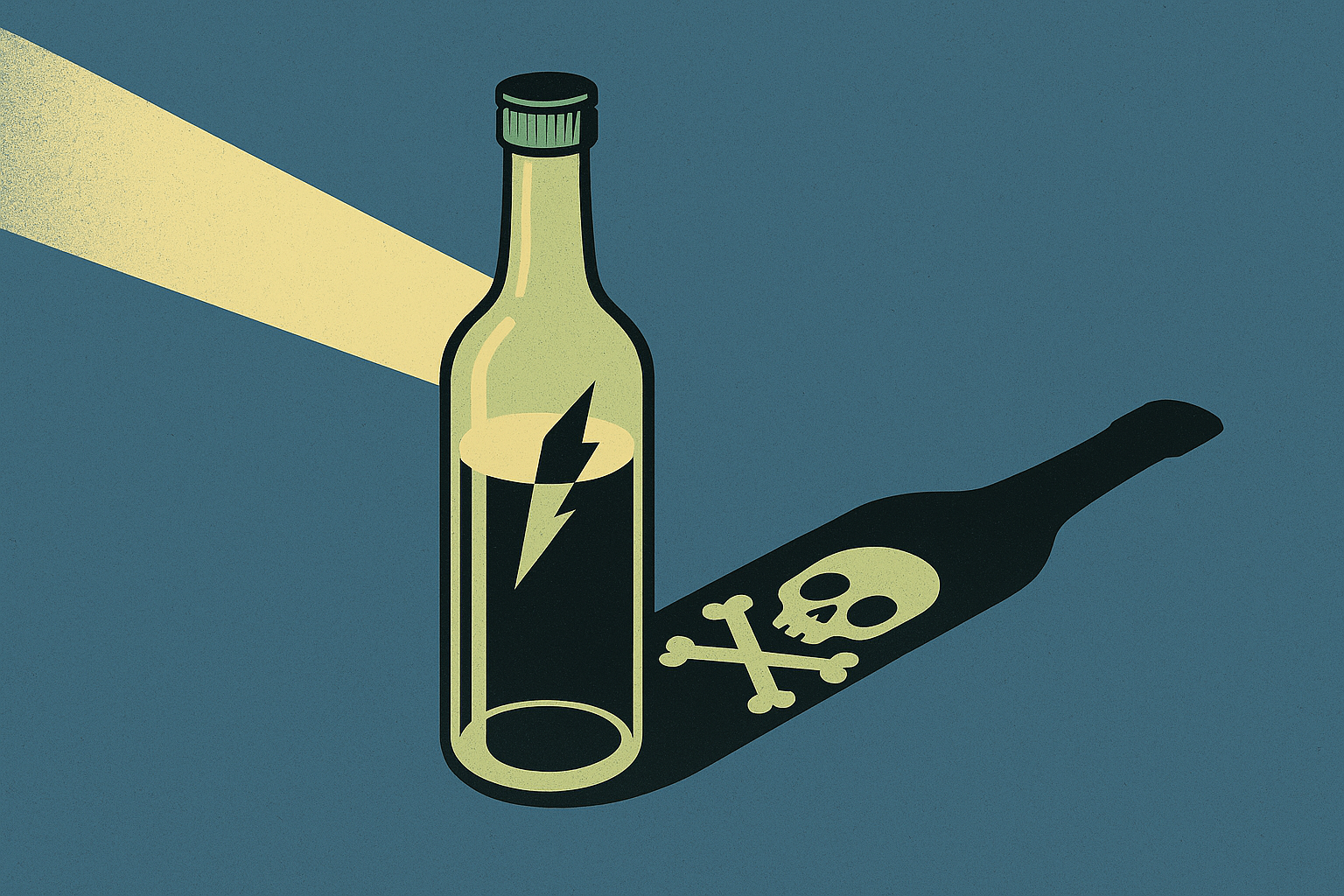
A groundbreaking laser to detect fake alcohol, unveiled by scientists at Adelaide University, is poised to shift supply chain security from a lab curiosity to a practical safety tool. The team's Raman spectroscopy prototype reads chemical fingerprints through sealed, colored glass, spotting lethal methanol at concentrations significantly lower than global limits, as reported in the phys.org article published in June 2026 titled 'New breakthrough spots deadly methanol without opening bottles', citing the Journal of Physics: Photonics paper by Ané Kritzinger et al. This technology promises a future where inspectors can screen thousands of bottles in minutes, a major leap from sending small samples to distant labs.
How the Laser Works: The Science Explained
The system uses a specialized laser (Raman spectroscopy) to see through glass without opening the bottle. By shaping the light, it cancels out the signal from the glass itself, allowing it to read the chemical fingerprint of the liquid inside and compare it to a database of authentic products.
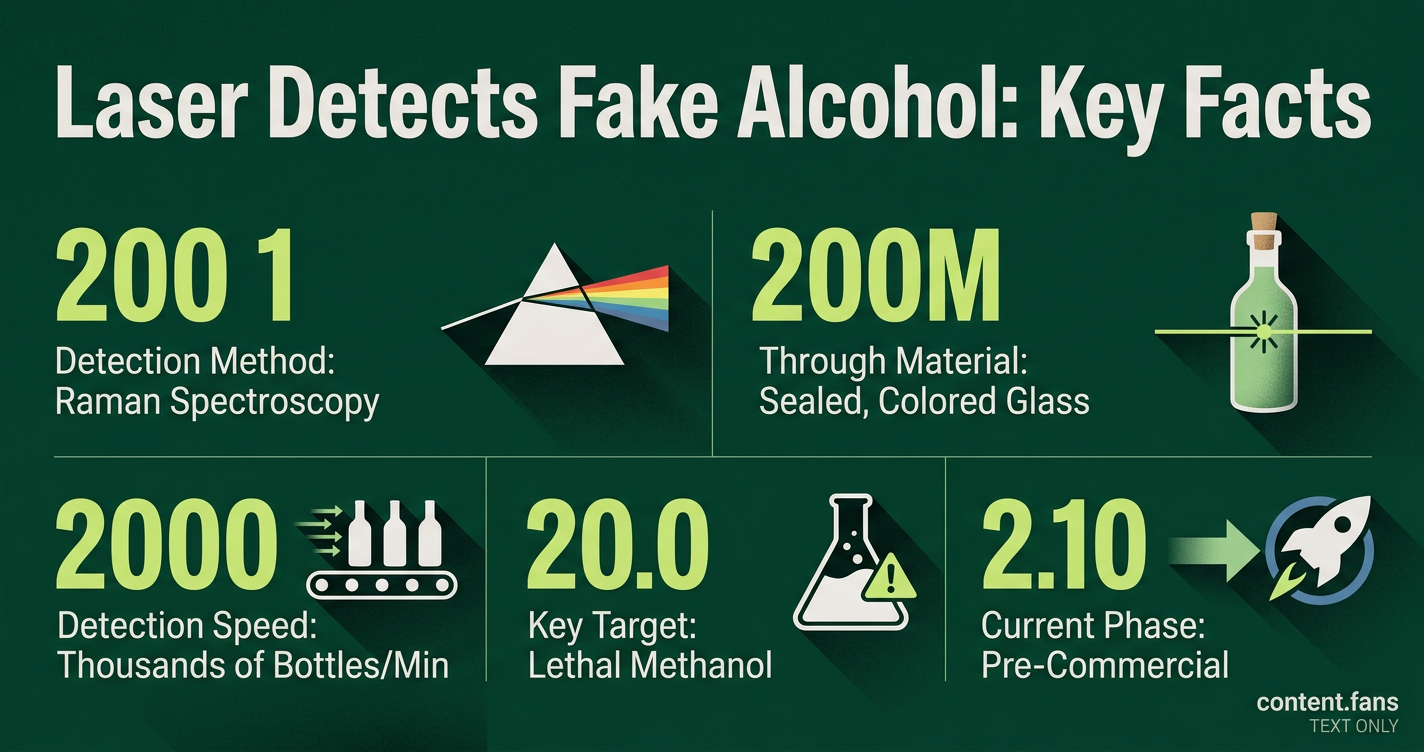
The technology overcomes a major hurdle in beverage analysis: glass interference. While traditional Raman beams scatter off glass and obscure the liquid's chemical signature, the Adelaide team's method shapes the laser's wavefront to cancel out the glass signal. This allows the detector to isolate the unique molecular vibrations of substances like methanol, ethanol, and even caramel coloring. The laser-based Raman spectroscopy system can detect toxic methanol inside unopened spirit bottles through colored glass, as demonstrated in research by St Andrews and Adelaide Universities.
A machine learning algorithm then compares the resulting spectrum against a library of authentic samples, flagging anomalies like industrial solvents rapidly on standard computing hardware.
Potential Real-World Applications
The technology's speed and non-destructive nature make it ideal for high-throughput environments like warehouses, border checkpoints, and large retail distributors. With rapid cycle times, operators could mount the scanner on a conveyor tunnel or use a handheld device to enable comprehensive inspection of high-risk shipments, a significant increase from current sampling practices. Key applications include:
- Warehouse inbound pallet screening
- Verification in duty-free and bonded stores
- Customs red-lane inspections
- Mobile support for raids on informal breweries
Hurdles to Commercialization
While promising, the technology is still in a pre-commercial phase with no announced licensing partners or launch date. Experts identify three primary challenges that must be addressed before the system is market-ready:
- Glass Variability: Thicker or UV-coated bottles can still weaken the Raman signal, requiring extensive calibration to handle diverse packaging.
- Spectral Libraries: Building accurate machine learning models requires a vast database of authentic product samples, but brand owners are often hesitant to share proprietary formulas.
- Regulatory Validation: Authorities typically mandate confirmation with mass spectrometry for legal action. The new scanner would need a secure, tamper-proof audit trail that links each scan to a database, complying with relevant regulatory standards.
Integration with Digital Traceability Systems
For seamless adoption, the laser scanner must integrate with existing traceability platforms that track case codes and tax stamps. Feeding chemical authenticity data directly into a company's ERP or blockchain system would enable faster, more targeted recalls and could automate customs clearance by verifying shipments against approved spectral profiles.
Researchers are now expanding testing to other beverages, including whisky and gin. They caution that natural fluorescence in dark spirits can obscure adulterant peaks, a challenge that may be overcome with advanced signal processing to push detection limits even further.
Industry observers will be watching for a shift from academic grants to commercial pilot projects over the next 24 months. For now, the laser remains a key academic milestone, hinting at a future of faster, non-destructive policing of the $1.5 trillion global alcohol market.