
Michaels acquires Party City, Joann assets; expands in-store shops
Serge Bulaev
Michaels bought some assets from Party City and Joann after those rivals had financial trouble, and quickly put their brands and products into its own stores. The company added new sections for party supplies and fabric, and shoppers seem to like the hands-on features and lower prices. Early sales numbers suggest this strategy might be working, with slight increases in same-store sales and customer interest. Some experts think Michaels could gain more market share since it now offers several categories under one roof, but it is still unclear how big the long-term impact will be.

Following the bankruptcies of key rivals, Michaels is strategically capitalizing on the market gap by acquiring Party City and Joann assets to convert vacant consumer demand into increased store traffic and larger sales. This case study examines how Michaels executed this swift expansion, detailing its in-store changes and the early financial results that signal a successful transformation.
A Strategic Playbook: Turning Competitor Bankruptcies into Growth
Michaels purchased intellectual property assets from Party City and Joann, integrating them into its store network. The company launched dedicated in-store "Party Shops" and "Knit & Sew Shops," adding popular brands, interactive features like Balloon Bars, and a significantly expanded product selection to attract former customers.
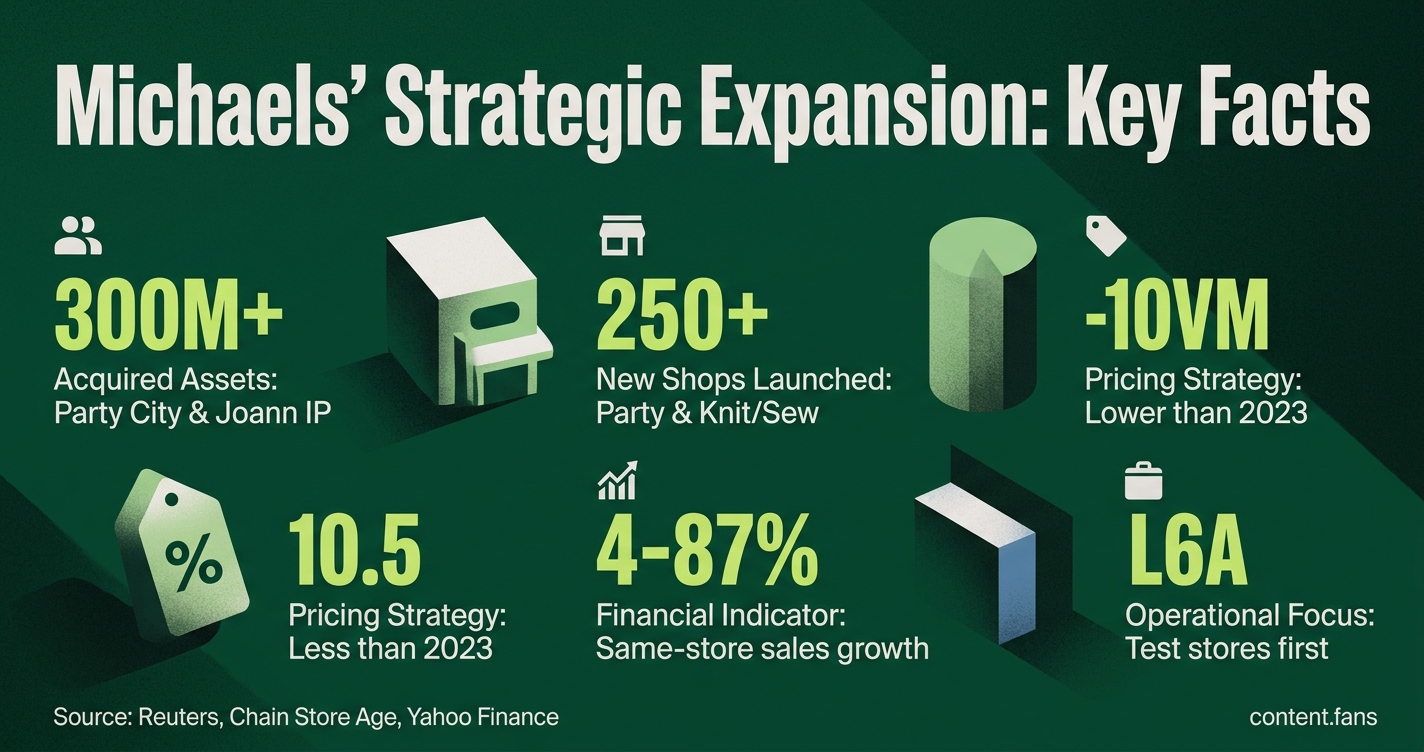
In early 2024, the company initiated its strategy by acquiring key intellectual property from both retailers. This allowed Michaels to roll out new concepts across its vast network of stores. Many locations now feature "The Party Shop," complete with Balloon Bars offering timed pickup and delivery. Concurrently, "The Knit & Sew Shop" was introduced, incorporating Joann's private labels and boosting yarn selection significantly.
Initial customer feedback is strong, with shoppers praising interactive elements like The Swatch Bar for fabrics and DIY Favor Bars. Aggressive pricing further drives traffic; the Celebrate It party line is priced substantially lower than in 2023, with management signaling additional price reductions on many items.
Key Takeaways for Retail Strategy:
- Secure IP or inventory from failed rivals before competitors do.
- Convert that merchandise into in-store "shops" with clear signage and service counters.
- Pair new categories with interactive stations that foster trial and classes.
- Reprice opening assortments to signal value and drive quick turns.
- Train associates on personalization tools such as engraving and balloon filling.
Operational Execution and Early Financial Lift
Executing this store-within-a-store concept is a significant operational undertaking. The rollout began with test stores, with more planned before a national launch. Each redesigned location requires new infrastructure, including shop-and-scan technology and self-checkout stations, alongside staff retraining.
To support the expanded categories, Michaels increased its total inventory substantially before the holiday season. Integrating numerous online fabric SKUs while ensuring availability of high-demand items like balloons poses a logistical challenge.
Despite these investments, early financial indicators are promising. The company reported same-store sales growth in recent quarters, according to reports from Reuters and Chain Store Age. Furthermore, sources cited by Yahoo Finance indicate that both sales and adjusted EBITDA saw double-digit growth in the first quarter of 2025, although specific figures remain private.
Analyzing the Competitive Landscape and Market Impact
The closures of Party City and Joann created a significant void in the specialty retail market, representing substantial annual revenue. While mass-market retailers like Walmart and Target expanded their party supply sections, Michaels has uniquely positioned itself as the sole national craft retailer offering a combined destination for crafts, party supplies, and fabric services.
With North America accounting for a significant portion of the global party supply market, even a small market share gain by Michaels could impact pricing across the category. This strategic positioning likely contributed to improved financial projections, with the company working toward achieving positive free cash flow. While final results are yet to be seen, the company's current path demonstrates a powerful model for agile response to competitor exits.
What exactly did Michaels acquire from Party City and Joann?
Michaels purchased the intellectual property and brand assets of both Party City and Joann, not their physical stores. This means they took ownership of product designs, private-label brands, and customer databases, allowing them to integrate party supplies and expanded fabric lines into their existing store network without taking on lease liabilities or outdated inventory.
How quickly did Michaels roll out the new party and fabric sections?
Following the bankruptcies, Michaels added dedicated Party Shops to many stores and increased fabric availability to numerous locations. Inventory levels rose substantially ahead of seasonal peaks to avoid stock-outs, a move that helped the chain capture share from the significant annual revenue left behind by the closed competitors.
What makes the in-store experience different after the redesign?
Stores now feature DIY "bars" where shoppers can build custom favors, candy trays, or banners in real time, plus Balloon Bars with online "Reserve a Time" pickup. The Swatch Bar lets customers touch numerous online fabric SKUs in person, while open classrooms host free crafting sessions that turn the retailer into a community hub rather than a traditional big-box craft store.
Did the strategy actually move financial needles?
According to people close to the company, first-quarter sales and adjusted EBITDA both rose by double digits after the integration. Michaels also expects improved financial performance and projects better leverage ratios, representing a healthier capital structure than before the acquisitions.
Which competitors gained the rest of Party City and Joann's market share?
Walmart and Target were significant winners, expanding dedicated party aisles substantially. Amazon captured a significant portion of online party supply sales, while Walgreens quietly added many more party SKUs. Dollar stores scooped up budget-conscious shoppers, leaving Michaels well positioned in the mid-tier, experiential niche.