
TikTok Shop Rises to Top 5 US Beauty Retailer in Under 3 Years
Serge Bulaev
TikTok Shop has quickly become one of the top five U.S. beauty retailers in less than three years, which analysts say is very fast for the industry. Data suggests TikTok Shop may already account for about 10 percent of U.S. beauty e-commerce sales and could keep growing its market share. Established retailers like Amazon, Ulta, and Sephora appear to be changing their strategies, using new media and loyalty programs to compete. Studies suggest shoppers trust influencers and may buy more when they can see product demos and shop easily in the same place. This shift to social commerce seems to be a lasting change in how beauty products are discovered and sold.
The TikTok Shop rise to a top-five U.S. beauty retailer has reshaped market distribution in under three years - a speed analysts call unprecedented. This rapid ascent from a new platform to a market heavyweight forces established sellers to fundamentally rethink their strategies for consumer discovery, content, and conversion.
TikTok Shop rises to top-five U.S. beauty retailer status, reshaping beauty distribution
The platform achieved this rapid market penetration by integrating entertainment with commerce, creating a frictionless path from discovery to purchase. Its algorithm surfaces viral product demonstrations from trusted creators, while in-app checkout capabilities convert high-intent viewers into buyers before they can navigate away, driving impulse purchases.
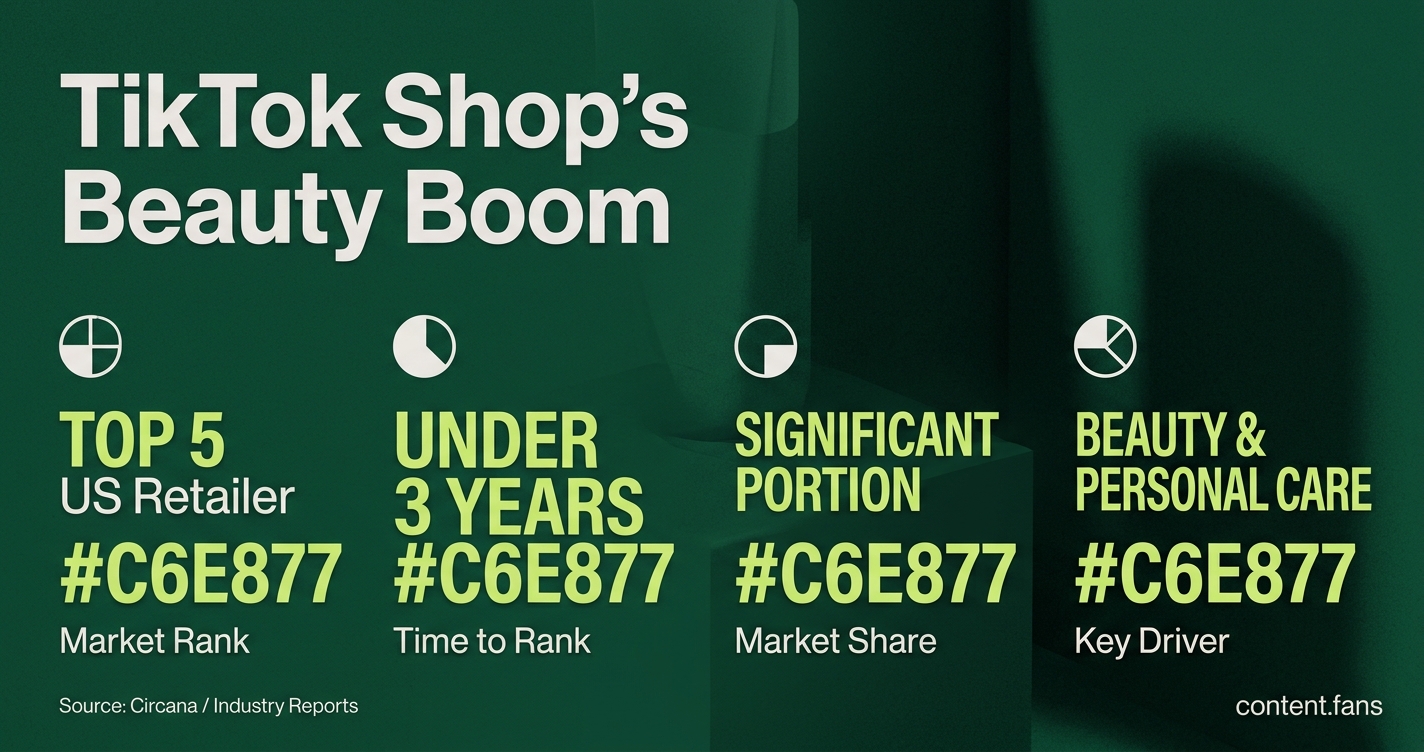
Market data highlights the platform's explosive growth. Industry reports suggest TikTok Shop captures a significant portion of U.S. beauty e-commerce sales, with beauty and personal care driving a substantial share of its total dollar volume in Q1, according to Circana. Industry analysts project the platform's overall beauty market share could continue growing substantially through 2030.
Established retailers revise their merchandising playbooks
In response, legacy retailers are revising their playbooks. Amazon is expanding its premium beauty programs with anti-reseller safeguards to match the selection of competitors. Ulta is monetizing its loyalty members by selling sponsored media via UB Media, with Sephora pursuing a similar strategy. Key tactics include:
- Using first-party loyalty data for targeted retail media
- Creating exclusive product bundles to fuel creator content and FOMO
- Synchronizing social video with on-site search and in-store displays
Mass retailers like Kroger are expected to focus on replenishment beauty and digital coupons to stay relevant as trend discovery shifts to social media.
Consumer pull: creator credibility and frictionless checkout
The success of social-first channels is rooted in consumer psychology. Academic research shows that influencer authenticity directly correlates with cosmetic purchase intent. The seamless integration of product demos and shoppable links within the same feed capitalizes on this trust, leading to higher impulse buys. Consequently, beauty marketers are prioritizing short tutorials and micro-influencer partnerships that allow consumers to purchase without leaving the app. This shift to content-commerce integration is widely seen as a structural, not seasonal, change in the industry.
How did TikTok Shop reach the top-five U.S. beauty retailers in under three years?
A significant portion of U.S. beauty e-commerce dollars now flows through TikTok Shop, according to industry reports.
Beauty and personal care represents a substantial portion of the platform's U.S. GMV, making it one of the platform's largest categories.
The funnel is simple: short-form video drives discovery, creators supply trust, and one-click checkout removes friction, turning viral moments into immediate sales.
Which incumbents are reshaping merchandising in response?
- Amazon is courting premium and indie labels with anti-counterfeit tools and creator-affiliate bundles to match the excitement consumers find on TikTok feeds.
- Ulta monetizes its loyalty members through UBMedia, selling targeted ad placements that mimic the personalized feel of influencer feeds.
- Sephora is expanding off-site social campaigns and in-store pop-ups so products spotlighted on TikTok are waiting when shoppers visit malls.
- Kroger (while less documented in current sources) is expected to lean on value-driven beauty sets and digital coupons to keep routine replenishment baskets intact as impulse purchases shift to social apps.
Why does social-first discovery convert so effectively for beauty?
Social platforms compress the journey from "see" to "buy" to seconds.
Research indicates consumers trust influencer demonstrations more than traditional ads, and exposure to that content directly raises purchase intention.
Because tutorials, before-and-after clips and live try-ons feel authentic, they solve the beauty shopper's biggest pain point: "Will this work for me?"
How are established beauty brands protecting market share?
They are treating TikTok Shop as a primary launch channel, not an after-thought:
- allocating exclusive shades or bundles to the platform,
- seeding micro-influencers with early samples to build grassroots buzz,
- using TikTok's built-in affiliate network to pay creators only when units sell, lowering risk versus fixed-fee sponsorships.
Brands that synchronize TikTok drops with Amazon, Ulta and Sephora replenishment avoid stock-outs and capture the spillover when viral demand peaks.
What should retailers outside beauty learn from this shift?
The same mechanics - creator credibility, short-form education, in-app checkout - are spreading to fashion, home goods and snacks.
Any category driven by visual change, personal taste or routine experimentation can be "beautified."
Retailers that build first-party data, creator networks and shoppable media inventories now will own the discovery layer that TikTok Shop already monopolizes in beauty.