
TikTok Shop Bans AI Voices From Live Commerce Streams
Serge Bulaev
TikTok Shop now bans AI voices and pre-recorded audio on live shopping streams to make broadcasts more human and real-time. The policy, announced in June 2026, means hosts must speak or sign live, and shops that break the rule lose points from their Account Health Rating, which may limit or remove their shop features. This change may raise costs for sellers who now need human hosts instead of using AI loops. TikTok's decision appears to respond to concerns about trust and viewer fatigue with AI content, but the actual effect on sales numbers is still unclear. The rule only affects live shopping streams, not other TikTok live videos. TikTok Shop now bans AI voices and pre-recorded audio on live shopping streams to make broadcasts more human and real-time. The policy, announced in June 2026, means hosts must speak or sign live, and shops that break the rule lose points from their Account Health Rating, which may limit or remove their shop features. This change may raise costs for sellers who now need human hosts instead of using AI loops. TikTok's decision appears to respond to concerns about trust and viewer fatigue with AI content, but the actual effect on sales numbers is still unclear. The rule only affects live shopping streams, not other TikTok live videos.
The recent TikTok Shop ban on AI voices from live commerce streams is fundamentally reshaping how sellers engage with customers. The policy took effect in the United States on June 22, 2026, and prohibits AI-generated audio and pre-recorded content in promotional LIVEs to prioritize authentic, human-led interaction and restore trust in the platform's shopping experience, as noted in a TechTimes report.
What Does TikTok's AI Voice Ban Prohibit?
TikTok's updated LIVE Shopping guidelines forbid the use of synthetic voiceovers, pre-recorded audio, radio-style narration, and slideshows that dominate the screen. All shoppable streams now require hosts to broadcast in real time by either speaking or using sign language.
The new policy strictly bans AI text-to-speech, looped audio tracks, and any other non-live narration during shoppable broadcasts. Sellers must now present products using a live human host who can interact with viewers, reinforcing the authenticity and real-time nature of the platform's live commerce ecosystem.
On TikTok Shop, repeat offenses can lead to commission cuts and suspension of LIVE selling privileges. On Amazon, violations lead to AHR point deductions, listing restrictions, or account deactivation, but not commission cuts.
How the Account Health Rating System Works
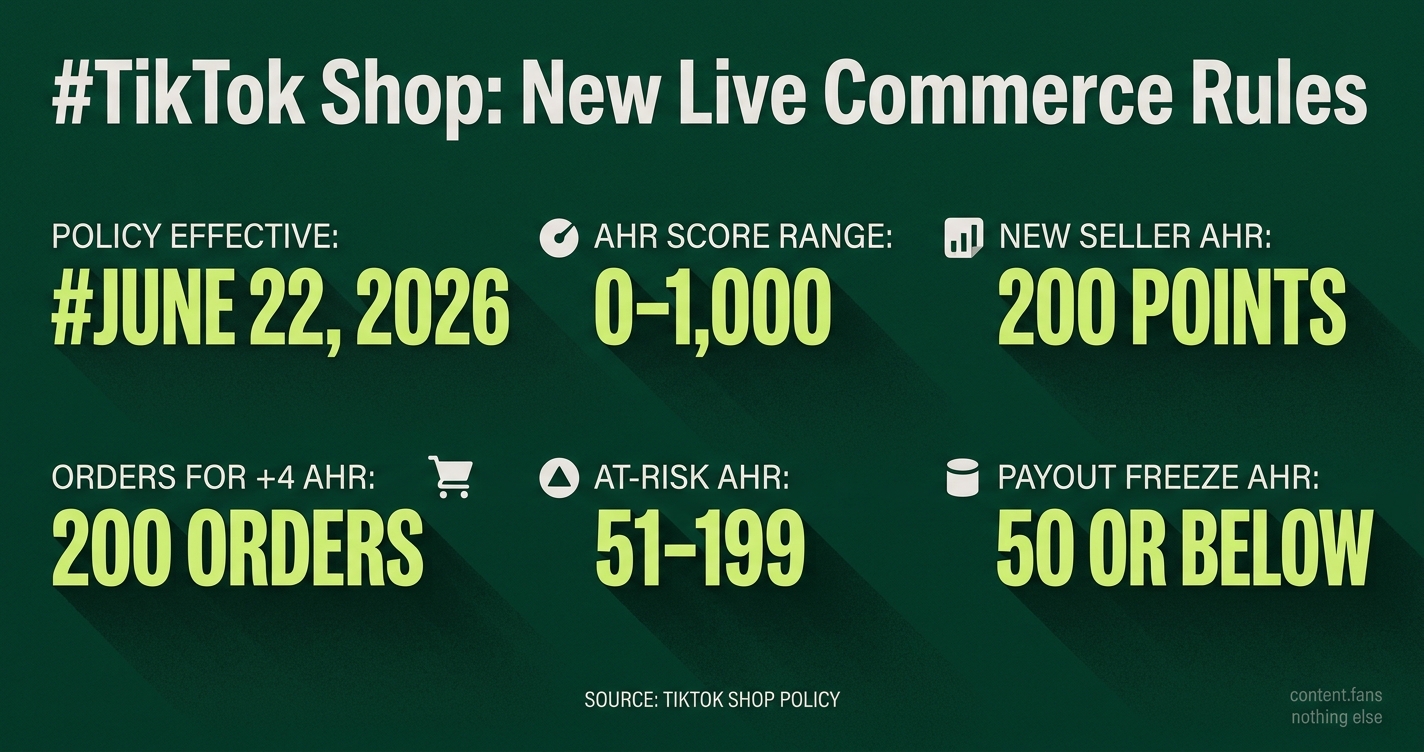
Replacing the old Violation Points matrix, the Account Health Rating (AHR) is a dynamic score from 0 to 1,000 that reflects a shop's compliance over the last 180 days. All new sellers start with 200 points. Points are deducted for violations and added back when violations are addressed. Additionally, sellers gain 4 points for every 200 successful orders fulfilled over the last 180 days.
| AHR Score | Status & Result |
|---|---|
| 200-1,000 (Green) | Good standing with full access |
| 51-199 (Orange) | At risk; traffic or campaign limits imposed |
| 50 or below (Red) | Poor; payout freezes and further restrictions |
Specific point thresholds automatically trigger penalties:
- 150 points: On TikTok Shop, this results in a 7-day restriction on creating new listings and enrolling in mega campaigns.
- Lower scores: According to industry reports, further point reductions can lead to extended suspensions of selling tools.
- Severely low scores: Industry sources indicate this can result in extended campaign ineligibility.
- Minimum scores: Reports suggest this may lead to significant restrictions on e-commerce permissions.
TikTok provides full details on managing AHR in its official Seller Center guide.
The Financial Impact on Creators and Brands
The ban on automated streams significantly raises operational costs. Previously, many sellers could run extended looped broadcasts with AI narration to reach global audiences at lower costs. Now, they must invest in human hosts, studio time, and live production staff to remain compliant.
This shift benefits larger brands with dedicated presenter teams, while smaller sellers and dropshippers face a difficult choice: absorb higher production costs or pause their live commerce campaigns. Agencies are already updating contracts to mandate live, multi-angle broadcasts and prohibit pre-recorded audio.
Why TikTok Is Prioritizing Human-Led Commerce
The policy change is a direct response to declining viewer trust and engagement. Market research from eMarketer reveals that consumers are four times more likely to distrust a brand upon detecting AI-generated marketing content. Repetitive, low-effort AI streams were causing viewer fatigue and diminishing the platform's core appeal of real-time authenticity.
By mandating live human interaction, TikTok aims to improve key metrics like watch time and conversion rates, betting that authentic engagement is more valuable than automated scale. This move reinforces a commitment to genuine creator-led content while still allowing automation in backend logistics.
How Sellers Can Adapt and Succeed
To navigate the new rules and maintain a healthy shop, sellers should take these four key steps:
- Monitor Your AHR: Check your Account Health Rating daily and aim to keep it safely above the 150-point penalty threshold.
- Invest in Live Talent: Train hosts to engage with audiences, answer questions spontaneously, and provide authentic product demonstrations.
- Use the Appeal System: If you receive an incorrect violation, file an appeal immediately. Overturned flags will restore your AHR points and privileges.
- Diversify Your Strategy: Protect your business by exploring revenue streams beyond live commerce in case stricter regulations impact affiliate earnings.
It's important to note this policy only affects commerce-enabled LIVEs; standard entertainment or educational streams are not subject to these rules. Ultimately, success on TikTok Shop now depends on embracing human-centric content and ensuring full compliance.
What exactly is banned under TikTok Shop's new live-audio rule?
AI-generated voices, pre-recorded audio tracks, and any radio-style narration are no longer allowed during live commerce streams. Sellers must now communicate in real-time using a live human host - either through speech or sign language. Looped footage, slideshows, or static images that cover more than half of the screen are also disallowed.
How does TikTok punish sellers who still use AI voices?
Each violation lowers the Account Health Rating. When the score drops to 150 points the seller faces a 7-day restriction on creating new listings and enrolling in mega campaigns. Industry reports indicate that further point reductions can lead to extended blackouts, and severely low scores may result in significant restrictions on e-commerce permissions. Points are calculated over the last 180 days, so repeated slips can quickly snowball into long suspensions.
Why did TikTok decide to outlaw synthetic narration?
Consumer trust is the main driver. Studies cited by the platform show shoppers are four times more likely to lose trust in a brand when they detect AI-generated marketing. Faceless, automated streams were also causing viewer fatigue and eroding the "live" feel that makes TikTok commerce engaging.
How are merchants adapting to the human-only requirement?
Sellers have abandoned extended automated loops and now rotate trained hosts in studio shifts. Brands are rewriting creator contracts to require spontaneous, multi-angle product demos, while solo merchants are forming small hosting teams to share airtime and costs. Operational budgets have risen, but the change favors merchants who can invest in authentic, interactive presentation.
Can a penalized shop recover its lost points and privileges?
Yes. Sellers can claw back points by completing policy quizzes, uploading compliant content, and driving successful orders. Appeals filed through the Seller Center can also restore privileges if the strike is overturned. Maintaining an AHR above 150 is the safest buffer to keep LIVE and shoppable-video tools active.