
AI, Subscriptions Drive Asia Pacific E-commerce to $7.47 Trillion by 2031
Serge Bulaev
Recent research suggests that e-commerce in the Asia Pacific region may reach $7.47 trillion by 2031. Many shoppers already use AI and subscribe to multiple products, while digital wallets are used for most online purchases. AI appears to help with shopping and delivery, and subscription models are growing, especially in countries like Japan, South Korea, China, and India. Experts believe that continued use of AI, flexible subscriptions, and secure digital payments might drive future growth, but adoption may differ by country.

The Asia Pacific e-commerce market is on a confirmed trajectory to reach $7.47 trillion by 2031, fueled by the rapid adoption of AI and subscription models. Industry reports indicate shoppers are embracing new technologies, with a growing number using generative AI for purchases and many holding multiple product subscriptions. This shift occurs within a larger context of mobile-first commerce, with the APAC e-commerce market valued at $4.86 trillion in 2026.
AI-driven shopping experiences
Consumers are leveraging generative AI for the entire shopping journey, from product discovery and comparison to automated checkouts. AI-powered recommendation engines, dynamic pricing, and voice assistants are becoming standard, while logistics algorithms are drastically reducing delivery times in major metropolitan hubs across the region.
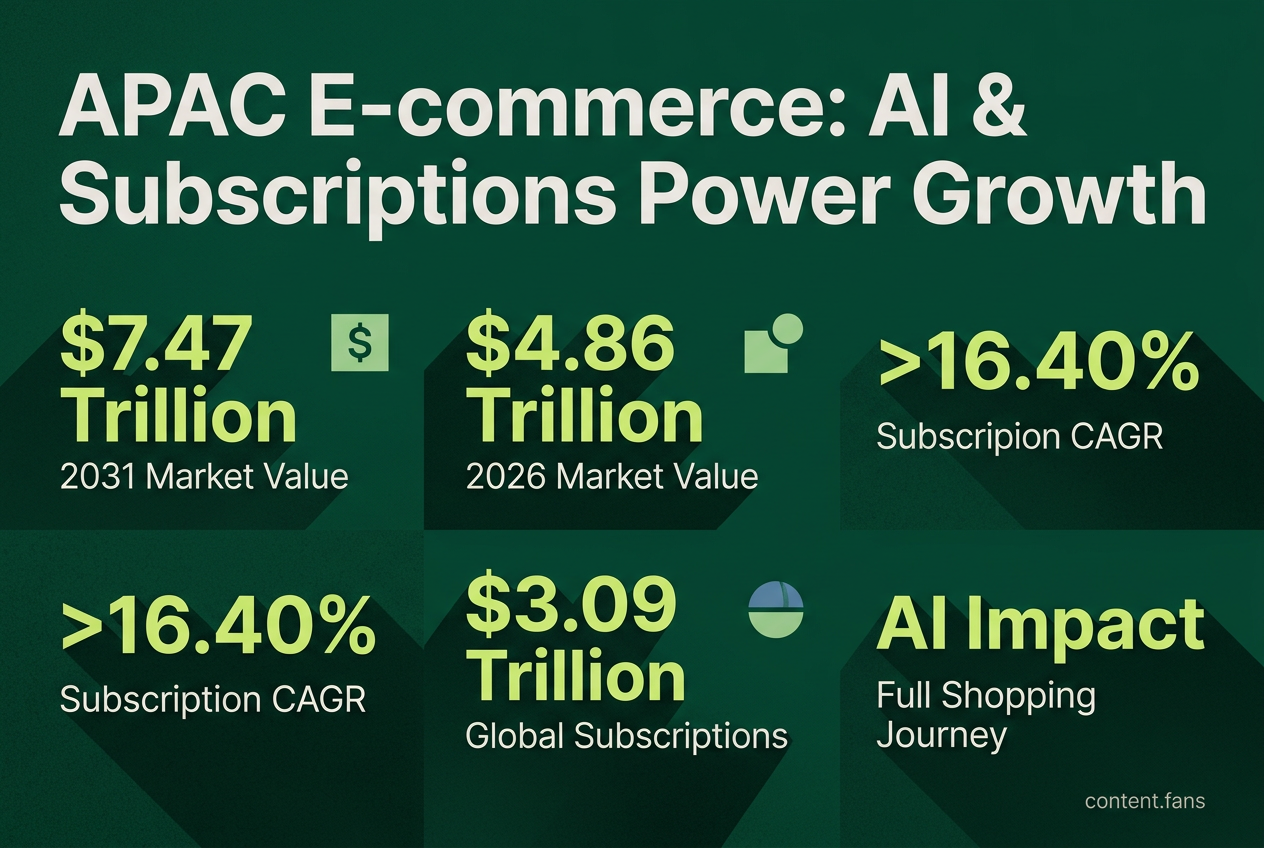
Generative AI is moving beyond simple search to influence the entire customer journey. Research from Bain & Company and NielsenIQ shows that a significant portion of consumers are willing to try conversational commerce after one positive experience. Major platforms across China, India, and Southeast Asia are integrating AI recommendation engines and voice assistants, while Alibaba.com has introduced an "AI Mode" for B2B sourcing. AI's impact extends to fulfillment, with route-optimization algorithms enabling same-day delivery in major Chinese and Indian cities, though adoption rates vary by local infrastructure and regulations.
Subscription models gain critical mass
The global subscription e-commerce market is projected to be USD 3,088.71 billion in 2026, with the Asia Pacific segment experiencing growth rates exceeding 16.40% CAGR from 2026 - 2031. This growth is fueled by rising middle-class incomes, demand for personalized curation boxes, and on-demand delivery memberships. While specific data on logistics subscriptions is scarce, super-apps in Indonesia and Thailand demonstrate latent demand by bundling paid delivery with lifestyle packages.
Current subscription patterns include:
- Replenishment services for daily essentials in Japan and South Korea.
- Access memberships for fashion and beauty in urban Southeast Asia.
- Hybrid models in China and India that combine product curation with free shipping.
Analysts predict hybrid plans will grow fastest, but also highlight that managing customer churn remains a key challenge for businesses.
Digital payments underpin the shift
Digital wallets are a dominant payment method, capturing a significant portion of regional e-commerce transaction value. This dominance is built on mobile-first infrastructure, with smartphones driving the majority of orders in Southeast Asia. Seamless checkout experiences enabled by real-time payments, QR codes, and biometrics are reducing friction and encouraging cross-border commerce for SMEs. Additionally, Buy Now Pay Later (BNPL) services are expanding rapidly, with the subscription e-commerce market showing a projected 14.28% CAGR from 2026 - 2031, appealing primarily to younger consumers who prefer integrated installment plans.
Market outlook and strategic considerations
Projections from multiple sources confirm the Asia Pacific e-commerce market could approach USD 7.47 trillion by 2031. Experts agree that competitive advantage will be shaped by continued AI integration, flexible subscription models, and secure digital payments. Currently, local brands are outpacing multinationals in AI deployment, suggesting that a diversified market entry strategy is crucial for success across China, India, and emerging Southeast Asian economies.
These combined trends point to a retail landscape where personalization, predictable revenue, and frictionless payments converge. Businesses that align their product discovery, fulfillment, and payment strategies with these evolving consumer expectations will be best positioned for regional growth.