
Swift, McConaughey Trademark Voices, Likenesses to Combat AI Deepfakes
Serge Bulaev
Taylor Swift and Matthew McConaughey have filed trademarks for their voices and images to help fight AI deepfakes, which may misuse their identities. These trademarks could let them stop or remove fake content by claiming trademark infringement, but experts say this strategy is still untested in courts. Congress is also considering new laws that might give people more clear rights over digital copies of their voice and likeness. Legal experts suggest this approach appears promising but is still experimental, as no court has yet decided if AI voice clones break trademark laws.
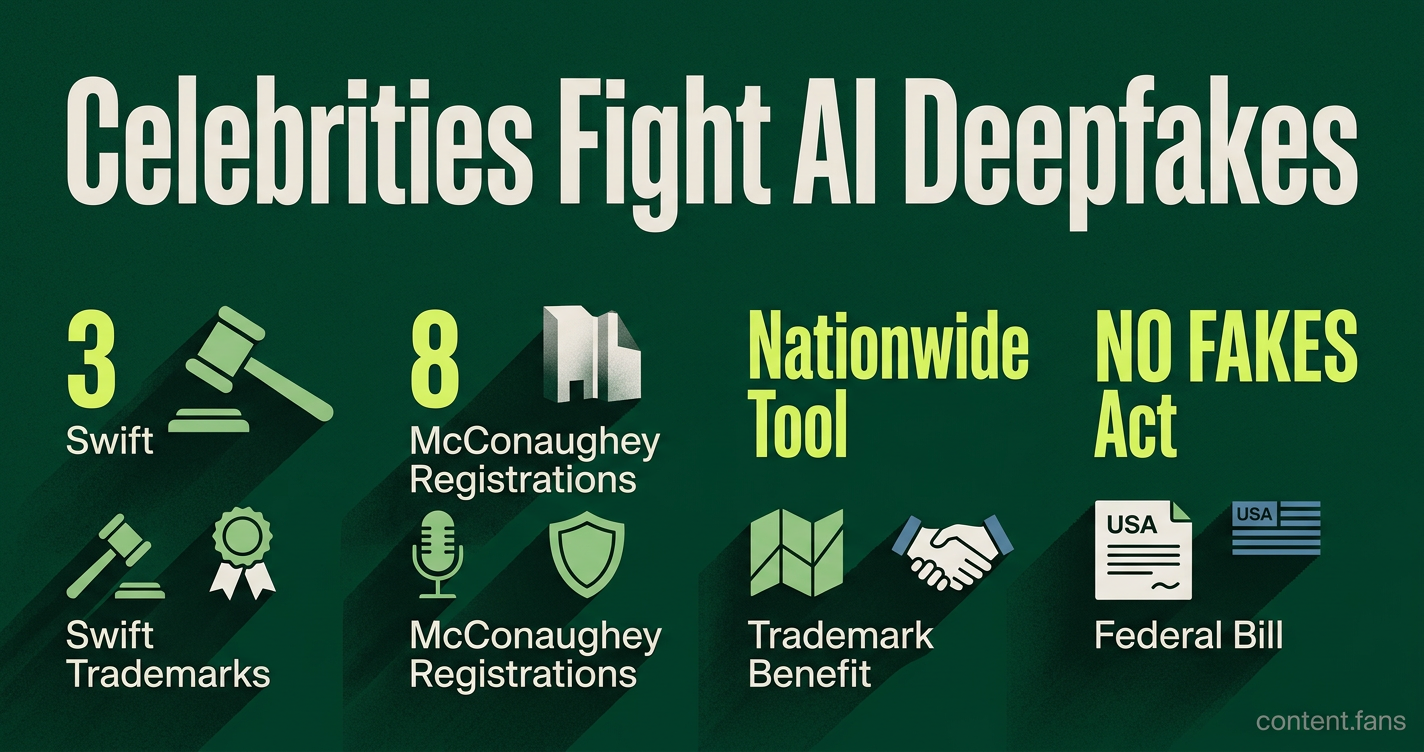
The move by Swift and McConaughey to trademark their voices and likenesses to combat AI deepfakes signals a major legal shift. Taylor Swift's company, TAS Rights Management, filed three trademark applications in April 2026 for vocal phrases and an iconic image, as reported by Trademark Lawyer Magazine. Similarly, Matthew McConaughey secured eight registrations, including for his famous catchphrase "Alright, alright, alright," a development confirmed by a CLL law-firm alert. This strategy aims to leverage trademark law against synthetic media, allowing for infringement claims to counter the misuse of their identities, which offers a more standardized approach than relying on the right of publicity.
What the new marks cover
Swift's trademark filings span several classes, including entertainment services and downloadable audio. McConaughey's portfolio extends to live appearances, podcasts, and merchandise. Legal experts note that sound marks are uncommon - with relatively few active registrations for celebrity voices in the USPTO database - making these filings potential landmark cases for challenging AI-driven impersonations.
By trademarking unique vocal phrases, images, and catchphrases, celebrities are creating a legal basis to fight unauthorized AI-generated content. This allows them to issue takedown notices for trademark infringement, providing a faster and more uniform enforcement mechanism than copyright or state-by-state publicity rights.
Why trademark and not copyright?
While copyright protects specific recordings and publicity rights differ by state, trademark law offers a unified, nationwide tool that online platforms can act on quickly. As experts noted in Trademark Lawyer Magazine, a registered mark simplifies takedowns on social media by providing a clear "confusing similarity" standard under the Lanham Act. However, legal commentators from CLL emphasize the strategy is untested, as courts have not yet determined if an AI voice clone constitutes "use in commerce."
Federal bills in progress
This trend of using trademarks coincides with legislative efforts in Congress, including the bipartisan NO FAKES Act. According to the text on Congress.gov, this bill would establish a federal right to control one's digital likeness and voice. If passed, it could supplement or even replace the current trademark strategy. This follows recent legislative efforts that address non-consensual intimate deepfakes but do not extend to commercial impersonations.
Practical targets of the filings
These trademark filings are specifically aimed at combating unauthorized commercial uses, such as:
- Voice-cloning applications creating fake ad reads in a celebrity's voice.
- Deepfake videos creating false political endorsements.
- Synthetic audio mash-ups sold as commercial ringtones.
- Unlicensed merchandise featuring AI-generated images.
- Monetized fan accounts using AI to replicate a singer's vocal style.
Holders of these trademarks can issue takedown requests, seek account suspensions, or file lawsuits under the Lanham Act if such content creates a "likelihood of confusion." As noted in the CLL alert, this enforcement can deter commercial misuse, although fair use protections for parody and commentary still apply.
Unanswered questions
Legal scholars universally agree this trademark strategy is promising yet remains experimental. The central legal question is whether an AI-generated voice, which mimics but does not directly sample a person's voice, constitutes infringement of a sound mark. Until the courts rule on this, the filings by Swift, McConaughey, and others serve as both a defensive measure and a clear warning that personal identity is now being defined as protectable intellectual property in the age of generative AI.