
SpaceX Acquires Cursor for $60B, Shakes Up AI Model Access
Serge Bulaev
SpaceX has agreed to buy Cursor for about $60 billion, which may affect how companies use different AI models for coding. For now, there have been no changes to prices or technical access, and Cursor still supports many model providers. Experts suggest that companies have a short time to set up protections before any changes happen. Once SpaceX controls Cursor, free users might have to use Grok by default and pay extra for other models, and privacy rules may change. In the future, there may be stricter limits or higher costs for using non-Grok models, so businesses should prepare for possible restrictions.

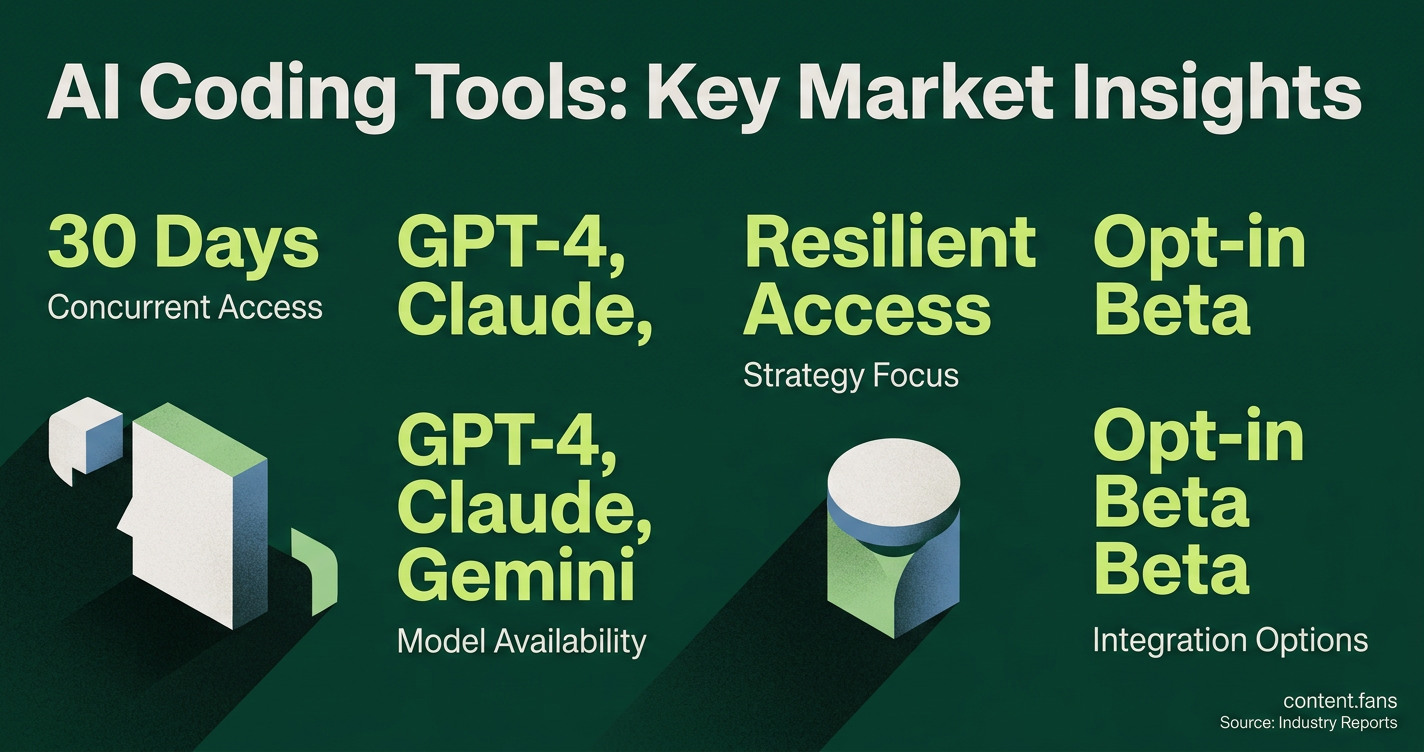
The AI coding tools landscape continues to evolve rapidly, with platforms like Cursor offering multi-model IDE capabilities that integrate various AI providers. These tools provide access to models like GPT-4, Claude, and Gemini, which are widely used in enterprise coding environments, though usage shares vary by region and industry. According to industry reports, enterprises are increasingly evaluating their AI tooling strategies to ensure resilient access across multiple providers.
While industry observers note that current AI coding platforms maintain stability in their multi-model support - with many tools supporting numerous model providers - experts recommend that enterprises focus on securing contractual guardrails and implementing resilient architecture to mitigate future market disruptions.
Current Market Stability: What Enterprises Should Monitor
As the AI coding tools market matures, procurement and engineering leaders should use this period to audit all existing AI model SKUs, quotas, and rate limits. Reports suggest that many platforms offer integration options as "opt-in beta" features, providing strategic opportunities to negotiate "concurrent model access" clauses. These clauses can guarantee a 30-day overlap period if a platform changes its default model, ensuring smoother transitions.
The evolving AI coding landscape signals strategic shifts across the industry, with platforms prioritizing various native and third-party models. While popular models like GPT-4 and Claude remain widely available, enterprises should expect ongoing changes in default settings, pricing structures, and data privacy policies as platforms continue to mature.
Market Evolution: Looking Ahead
As AI coding platforms continue to develop, analysts observe trends toward more sophisticated integration options. Industry analysis suggests potential changes in how free tiers operate, with platforms potentially adjusting their model access structures. Teams handling regulated data should prepare for evolving Data Protection Impact Assessments (DPIAs) to address these ongoing changes in the market.
Building a Resilient AI Strategy: A Practical Guide
- Implement Contractual Guardrails: Update vendor agreements with data-portability clauses, requiring export tools in common formats. Mandate at least 30 days of concurrent access when a provider changes a model's major version.
- Use Abstraction Layers: Shield your business logic from specific vendor SDKs by routing prompts through frameworks like LangChain or DSPy. This makes switching between models a matter of configuration, not a code overhaul.
- Prepare Containerized Fallbacks: Package essential open-weight models (e.g., Llama 3) in Docker containers. This ensures they can run on any Kubernetes cluster, providing a baseline of functionality during API outages or platform restrictions.
- Establish Unified Observability: Deploy dashboards with tools like Prometheus and Grafana to monitor latency, cost, and performance across all model providers. This data enables automated failover to a secondary provider if your primary one fails to meet SLAs.
Your 90-Day Action Checklist
- Audit AI workflows to identify heavy dependencies on a single external model.
- Draft a contract addendum that requires vendors to explicitly disclose if your enterprise data is used for training their models.
- Establish a secondary inference pathway with an alternative provider (e.g., Anthropic, Google) using your abstraction layer.
- Backup all AI coding tool settings and configurations for potential migration to alternative platforms or self-hosted solutions.
Long-Term Resilience and Industry Impact
Looking toward the future, enterprises should prepare for continued evolution in AI coding platforms, including potential changes in pricing models, rate limits, or model access structures. Treat AI model selection with the same rigor as a multi-cloud strategy. This means designing CI/CD pipelines to target multiple providers, storing vector indexes in portable formats (like Parquet), and conducting quarterly disaster-recovery drills that involve swapping primary model endpoints. The evolving market forces clarification around platform strategies, signaling trends toward specialization where companies must define their core competencies in the AI tooling ecosystem.