
Sen. Warren, Rep. Balint Urge DOJ to Block Fox-Roku Merger Over Antitrust
Serge Bulaev
Senator Elizabeth Warren and Representative Becca Balint sent a letter to the Department of Justice in July 2026 asking for a careful review of Fox's $22 billion plan to buy Roku. They are worried the merger might reduce choices for consumers and could make Roku favor Fox content over others. The lawmakers suggest the merger could make it harder for rival companies and may lead to some free streaming services becoming paid. There is no decision yet from the DOJ, and possible outcomes include approving, changing, or blocking the deal. The situation is still developing and the current contracts between Fox and Roku remain the same for now.

Senator Elizabeth Warren and Representative Becca Balint penned a letter urging the DOJ to 'closely scrutinize' Fox's pending acquisition of Roku, not to formally block it. In a July 16, 2026 letter, the lawmakers detail major antitrust concerns over Fox Corp.'s acquisition of Roku, escalating regulatory pressure on one of the largest vertical integrations in the streaming era.
What specific antitrust risks do Warren and Balint identify in the Fox-Roku merger?
The lawmakers' primary concern is that a vertical merger could harm competition and consumers. A combined Fox-Roku could prioritize Fox's own content, disadvantage rival streaming services, reduce consumer choice, and potentially eliminate currently free, ad-supported options by introducing new fees.
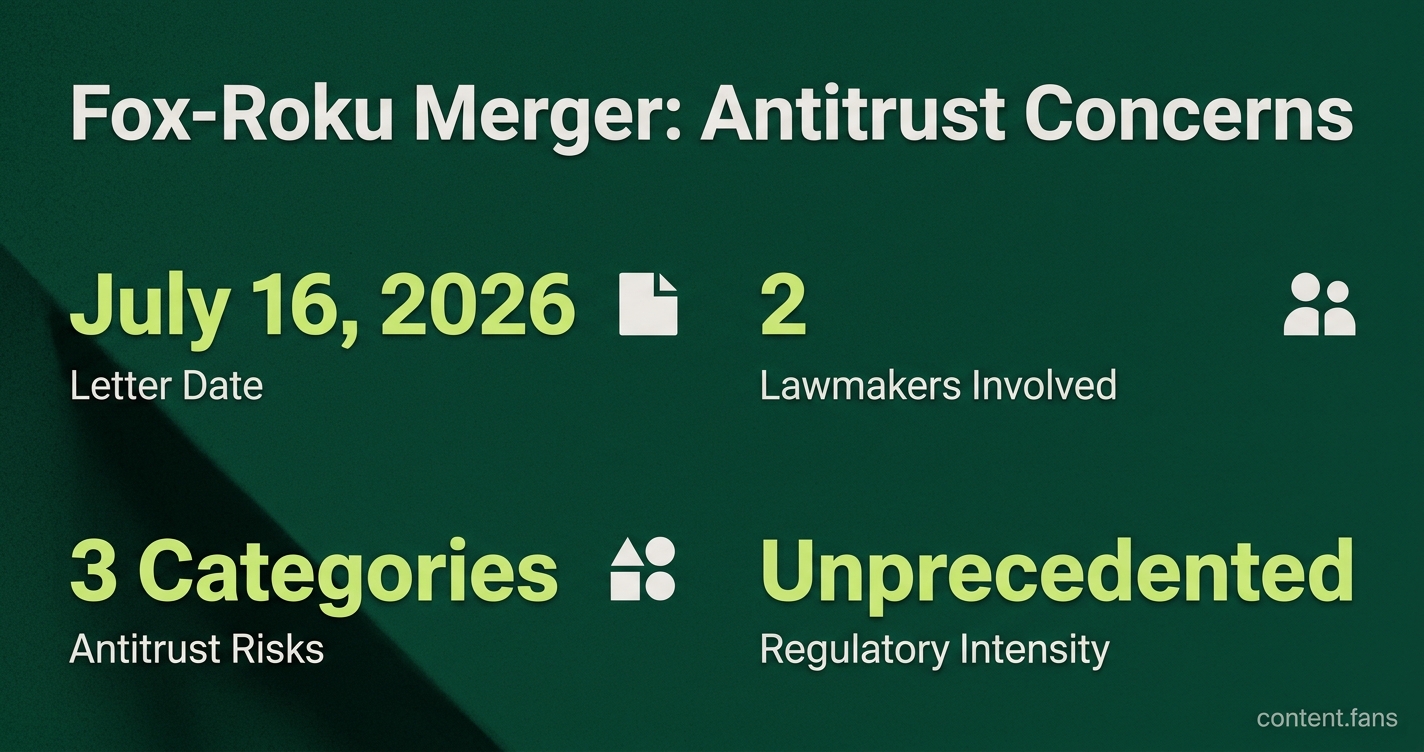
Their letter outlines several concrete competition risks that could reshape the streaming landscape:
| Risk Category | Specific Concern |
|---|---|
| Vertical Foreclosure | Combining Fox's content with Roku's platform, which reaches a significant portion of U.S. households, creates powerful incentives to steer viewers toward Fox programming while disadvantaging rivals like Disney and Paramount. |
| Consumer Harm | The merger could reduce free streaming options by enabling the combined company to convert ad-supported services into paid subscriptions, ultimately increasing costs for viewers. |
| Market Power | The new entity could gain excessive market power to preference its own content and consolidate control over the connected-TV advertising market, creating a gatekeeper between advertisers and viewers. |
Why are lawmakers concerned about political interference in the review?
Warren and Balint's letter highlights procedural alarm bells regarding the DOJ's handling of the case, pointing to potential political interference. They cite media reports that Associate Attorney General Stanley E. Woodward Jr. has allegedly "rubber-stamped" prior mergers, a concern detailed by the Hollywood Reporter. According to industry reports, there are concerns that DOJ leadership may be pressing staff to pursue backroom settlements instead of litigation. The lawmakers explicitly request a commitment that the review will be conducted impartially and free from partisan influence.
How does this case fit into broader streaming antitrust trends?
The Fox-Roku review is unfolding amid unprecedented regulatory intensity for media vertical mergers. It serves as a major test of the DOJ's updated merger guidelines, which empower officials to analyze cross-market effects like data integration and advertising leverage. This tougher stance is evident in the increased scrutiny of major media deals across the industry.
Regulators are aggressively applying the Herfindahl-Hirschman Index (HHI), a measure of market concentration. With growing consolidation in the streaming market, any further major combinations face intense scrutiny from antitrust authorities.
What are the potential outcomes for Fox and Roku?
While the deal remains in its Hart-Scott-Rodino waiting period with no decision made, the DOJ has several paths forward. For now, existing distribution contracts between the two companies remain unchanged, but the ultimate regulatory outcome will determine their future relationship.
| Scenario | Likely Impact on Agreements |
|---|---|
| Merger Blocked | The DOJ sues to stop the transaction, forcing Roku and Fox to remain separate entities. Existing agreements would continue or be renegotiated independently. |
| Approval with Conditions | The deal is approved with "behavioral" remedies, such as non-discrimination requirements in search results, mandatory content licensing to rivals, or advertising transparency rules. |
| Unconditional Approval | The merger proceeds without changes, leading to the full vertical integration of Fox's content library with Roku's distribution platform. |
What makes this case a significant test for regulators?
Beyond a standard merger review, several factors elevate the Fox-Roku case into a landmark event for competition policy:
- High-Profile Engagement: Direct intervention from prominent senators transforms a commercial dispute into a priority policy issue for Congress.
- Scale of the Deal: The proposed acquisition represents one of the largest vertical integrations in the streaming industry's history.
- Institutional Weight: Sen. Warren's role as a senior member of the Senate Banking Committee and a longtime antitrust advocate gives the letter significant influence.
- Regulatory Precedent: The case represents an important test of how the DOJ will approach vertical integration in the streaming ecosystem under current antitrust enforcement priorities.