
Retailers adopt AI, AR for 2026 shopper marketing personalization
Serge Bulaev
Retailers may rely more on AI, real-time data, and augmented reality (AR) for shopper personalization by 2026. Reports suggest that live, one-to-one engagement and fast delivery are becoming important for customer experience. AR tools appear to help increase sales and reduce product returns, while Gen Z shoppers expect price transparency and instant information. Many retailers plan to build their own AI systems, and analysts warn that those slow to improve customer experience might face greater business risks. Overall, speed, personalization, and transparency may become key factors for retail success.

As 2026 approaches, retailers are adopting AI and AR for shopper marketing personalization, using these powerful technologies to redefine the customer experience. This transformation marks a significant move away from traditional methods, with industry data highlighting a major shift toward real-time, one-to-one engagement.
How are AI and AR specifically changing shopper marketing in 2026?
By 2026, AI and AR are fundamentally reshaping shopper marketing by shifting focus from broad segmentation to live, individualized engagement. AI-driven discovery and hyper-personalization, combined with AR-enhanced browsing, create more immediate and relevant customer journeys powered by real-time data and agentic shopping tools.
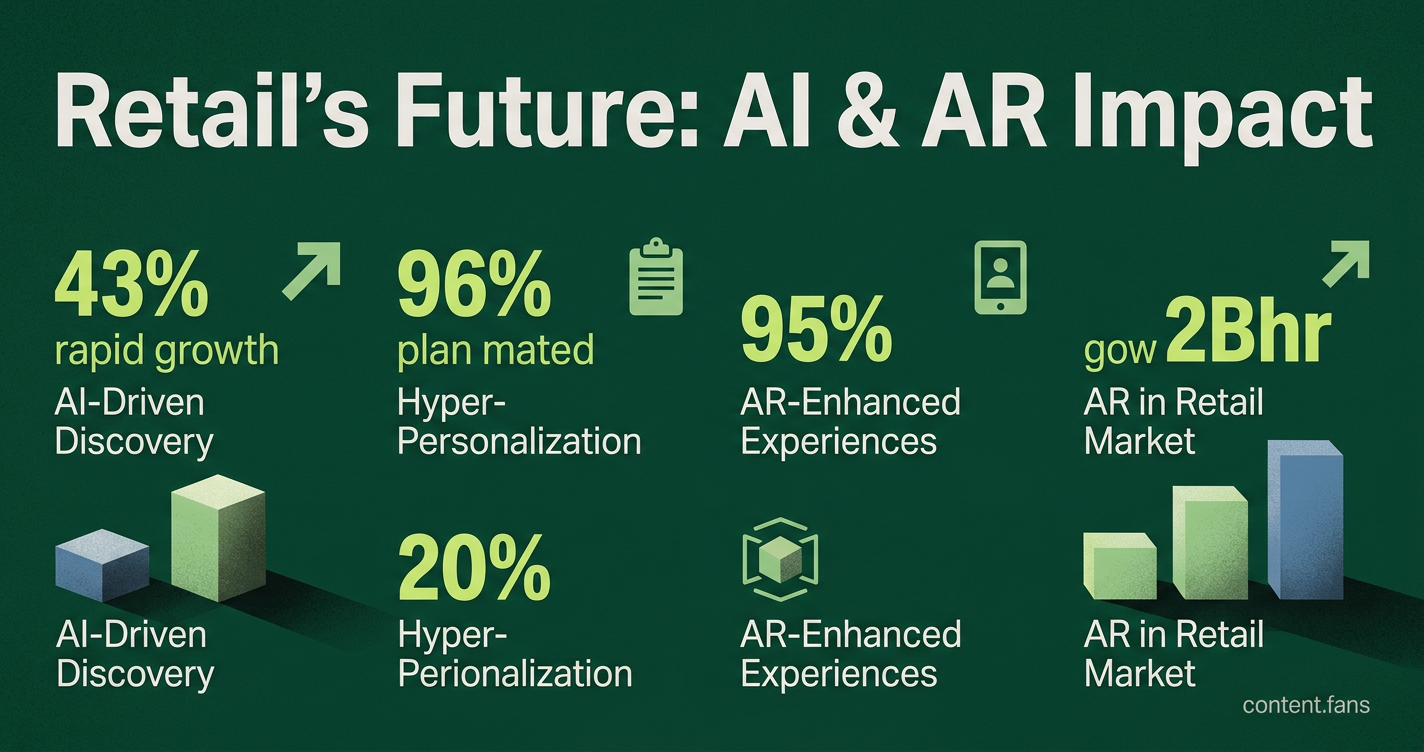
The shift is fundamental, moving marketing from traditional customer segmentation to agentic shopping and AI-driven personalization. According to the 2026 retail trends outlook from Retail Dive, three core technologies are reshaping the landscape:
- AI-Driven Discovery: A growing number of consumers are increasingly using AI chat interfaces for product research and discovery.
- Hyper-Personalization via Real-Time Data: A significant number of retail executives plan to implement AI-driven personalization within the next twelve months.
- AR-Enhanced Experiences: Mixed reality is bridging the gap between digital and in-store shopping, becoming crucial as physical retail rebounds.
What measurable business benefits can retailers expect from AR implementation?
The financial case for augmented reality has become compelling. Research shows that AR and real-time data deliver concrete ROI through multiple channels, measurably improving key performance indicators.
Studies indicate that AR implementation can drive:
- Higher conversion rates for products with 3D/AR content
- Reduced return rates through better product visualization
- Increased basket sizes when customers engage with AR features
- Improved purchase likelihood after AR interaction
Real-world examples demonstrate this potential. AR furniture visualization pilots at major retailers have shown promising results with larger average baskets and fewer returns. The global AR in retail market continues to expand rapidly, with strong growth projections for the coming years.
How does real-time data enhance personalization beyond traditional methods?
Real-time data transforms personalization from a reactive to a predictive model. Instead of analyzing past behavior, modern systems anticipate a customer's intent instantly by analyzing digital body language like scroll patterns, pauses, and revisits.
Key applications include:
- Dynamic and Transparent Pricing: New regulations require disclosure when personal data informs individualized pricing, compelling retailers to implement compliant real-time systems.
- Agentic Shopping Assistants: AI agents can manage recurring orders, suggest recipes based on smart refrigerator contents, and compare real-time inventory across various channels.
- Speed as a Core CX Metric: Services like Amazon's rapid delivery options demonstrate the power of real-time fulfillment data.
The 2026 Retail Industry Global Outlook from Deloitte highlights this trend, noting that many executives plan to bring more marketing functions in-house to leverage proprietary AI for optimized, large-scale execution.
What expert predictions should retailers prioritize for personalization strategy?
Industry leaders identify several critical shifts that will define retail strategy in 2026:
- The Rise of Agentic Commerce: McKinsey projects that AI agents could drive significant retail revenue growth by closing the gap between consumer intent and action.
- Adaptive Journey Mapping: Many CX teams are expected to abandon traditional journey maps for dynamic systems that respond to what customers are doing in the present moment.
- The Human-AI Balance: Although many shoppers use AI tools, trust remains a key issue. Experts predict a renewed focus on human-centered support and personalized physical experiences to complement AI-only interactions.
- Combating Experience Fatigue: As consumers reject complex, high-friction journeys, simplicity and guided shopping are becoming significant competitive advantages.
What implementation challenges should retailers anticipate?
Despite the powerful momentum behind these technologies, retailers must navigate several strategic hurdles:
- Regulatory Compliance: Evolving transparency requirements for AI-driven pricing and data usage demand robust and adaptable governance frameworks.
- The K-Shaped Economy: Economic analysis points to a bifurcated market where companies integrated into the AI ecosystem thrive, while others face pressure from weakened consumer buying power.
- Specialty Retail Vulnerability: Forrester warns that high interest rates and competition from mass merchants put specialty retailers at particular risk, making technology adoption a matter of survival.
- Maintaining Customer Trust: Shoppers have clear expectations. Brands must remember preferences, provide relevant recommendations, and ensure seamless journey continuity (e.g., saved carts, cross-device persistence) to prevent customer abandonment.
The retailers who succeed in 2026 will be those who treat AI and AR not as isolated tools, but as integral components of a living system. By connecting data to decisions instantly, they can create shopping experiences that feel both magically anticipatory and genuinely human.