
PipeRocket Digital expands B2B SaaS revenue 2.5x with SEO
Serge Bulaev
PipeRocket Digital reportedly helped a mid-market SaaS client increase organic traffic by 178 percent and grow revenue by 2.5 times in one quarter through focused SEO strategies. Analysts suggest that B2B SaaS companies now pay more attention to revenue generated from SEO, instead of just traffic numbers, and track metrics like sourced pipeline and CAC payback. Sources say that measuring organic leads linked to sales and using high-intent keywords may be key to these results. Experts believe this shift in measuring success could help protect SEO budgets, but third party financial data remains limited. The approach appears to involve closely connecting SEO activities with CRM data and sales outcomes.

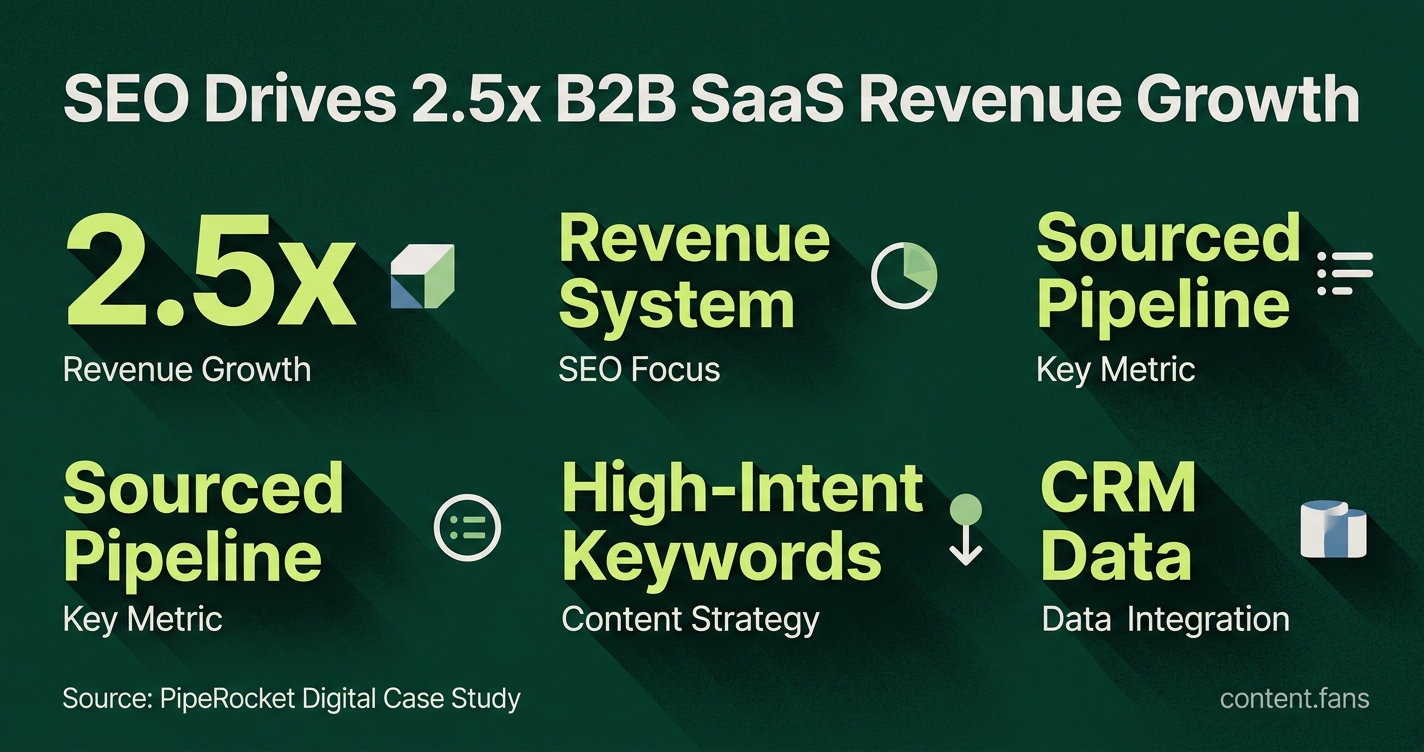
Recent headlines highlight how PipeRocket Digital expands B2B SaaS revenue 2.5x by treating SEO as a revenue system, not just an awareness channel. This reflects a major shift in SaaS marketing, where success is no longer measured by traffic but by closed-won deals. According to industry reports, this revenue-focused approach can deliver significant payback when CRM data is integrated from the start.
Analysts confirm this structural change, noting that SEO spend is now evaluated against metrics like sourced pipeline, influenced pipeline, and Customer Acquisition Cost (CAC) payback. This rigor ensures SEO budgets are defended in boardrooms where every investment must demonstrate a clear link to revenue.
From traffic to revenue metrics
The strategy involves shifting focus from vanity metrics like traffic to concrete business outcomes. By connecting SEO efforts directly to CRM data, marketers can measure sourced pipeline, track converting keywords, and prove ROI, justifying budgets with attributable revenue growth rather than just session counts.
Industry experts advise tracking sourced and influenced pipeline as distinct metrics, ensuring every sales opportunity is tied back to the specific search query that generated it. Marketing guidance echoes this, stating that organic traffic's primary purpose is to "fuel demos, trials, and revenue." The content strategy prioritizes high-intent commercial keywords - such as pricing, comparison, and integration queries - which reportedly convert at significantly higher rates than top-of-funnel content.
Best SaaS SEO Agency in 2026: How PipeRocket Digital Turned Organic Search into a 2.5x Revenue Channel for B2B SaaS
Industry reports detail PipeRocket Digital's success with a mid-market SaaS client, achieving significant organic traffic growth and a 2.5x revenue lift in a single quarter. While the client name remains confidential, the company's Associate Director of Marketing confirmed these figures were based on CRM-attributed data. PipeRocket's own blog outlines its process, which starts with analyzing sales call recordings to map customer profiles before publishing high-intent pages like comparisons and pricing tables.
In a separate engagement, the agency delivered substantial traffic gains and meaningful increases in organic leads over several months. This success came from tracking all pages against MQLs, SQLs, and pipeline contribution, not just rankings. Experts believe this deep alignment between SEO and sales outcomes explains the significant revenue multiples, though independent financial audits are not available.
What a 2026 SEO dashboard tracks
Analysis from industry sources reveals common elements for a modern, revenue-focused SEO dashboard:
- Organic Sourced SQLs and Demo Requests
- Sourced and Influenced Pipeline in Dollar Terms
- Average Deal Size from Organic-Assisted Deals
- CAC Payback Period by Channel
- Brand Citation Rate in Google AI Overviews and Other Generative Answers
Marketing experts add that high-intent signals continue to matter through onboarding and renewal, so dashboards should extend beyond acquisition into expansion revenue. Furthermore, industry analysts note that vendors must audit their "citation supply chain" and ensure key pages are easily extractable by language models, as AI answers increasingly guide late-stage buyers.
The emerging paradigm for B2B SaaS SEO is a convergence of revenue attribution, content strategy, and AI visibility. As highlighted in industry reports, agencies that master this alignment - prioritizing bottom-of-funnel (BOFU) content and integrating deeply with CRM data - are setting new standards for best practices.
How did PipeRocket Digital deliver 2.5x revenue growth for a B2B SaaS client in one quarter?
By rebuilding the SEO program around pipeline contribution instead of traffic. The agency wired CRM attribution from day one, tracked every keyword to an opportunity dollar, and published only bottom-of-funnel pages (comparison, pricing, integration). Industry reports credit the approach for significant organic traffic growth and 2.5x revenue growth inside a single quarter, although the client name and full methodology have not been released for audit.
Why are many B2B SaaS companies still "invisible" to AI-assisted buyers?
Industry benchmark studies found that 44% of B2B SaaS companies scored below 50 in AI visibility. The missing layer is structured, extractable content (comparison tables, plain-language answers in the first 200 words, third-party validation). PipeRocket closes the gap by auditing each client's "AI citation supply chain" and updating pages for extractability before pursuing backlinks.
Which pages convert best in B2B SaaS SEO?
Decision-stage assets: comparison, alternatives, integration, use-case and pricing pages. Industry data show these page types produce the first attributable pipeline more quickly because they match queries that prospects type when the buying committee is already formed. PipeRocket prioritises these pages first, often launching them before any top-of-funnel blog content.
How long does it take for a SaaS SEO program to pay back?
When CRM attribution is wired on day one, payback can arrive within the first year, according to industry guidance. The timeline shortens if the initial sprint focuses only on high-intent keywords and if marketing ops pipe lead source, opportunity value and closed-won revenue back to the SEO dashboard.
What metrics should replace "traffic" in 2026 board reports?
Board-ready SEO KPIs now include:
- sourced pipeline
- influenced pipeline
- SQL velocity
- deal-size uplift
- CAC payback
Organic sessions and keyword rankings are supporting indicators, not headline numbers. PipeRocket's public playbook shows a monthly "closed-won keyword audit" where any term that fails to generate pipeline after two sales cycles is dropped or re-optimised.