
PCMA Unveils AI-Powered DestinAItor Platform for Event Planning
Serge Bulaev
PCMA has introduced DestinAItor, an AI-powered platform designed to help event planners choose destinations more efficiently. The tool may help users by quickly analyzing requests and comparing cities using verified data on factors like sustainability, safety, and infrastructure. Planners can see live demonstrations and ask questions in a webinar on April 30, 2026. Early reports suggest DestinAItor could shorten research time and make it easier to create shortlists. Only a few partners have joined so far, but experts believe there is potential for wider adoption if the platform proves useful.

PCMA is transforming event planning with DestinAItor, its new AI-powered platform that streamlines destination selection. The tool helps business event strategists quickly create shortlists by analyzing RFPs and comparing cities using verified data on key factors like sustainability, safety, and infrastructure. This new AI search and matching tool was developed according to industry reports (TTGassociations).
Event planners can get a first look during upcoming webinar sessions designed to showcase AI-powered insights for event planning. The live demo will guide attendees through translating data into smarter site selections.
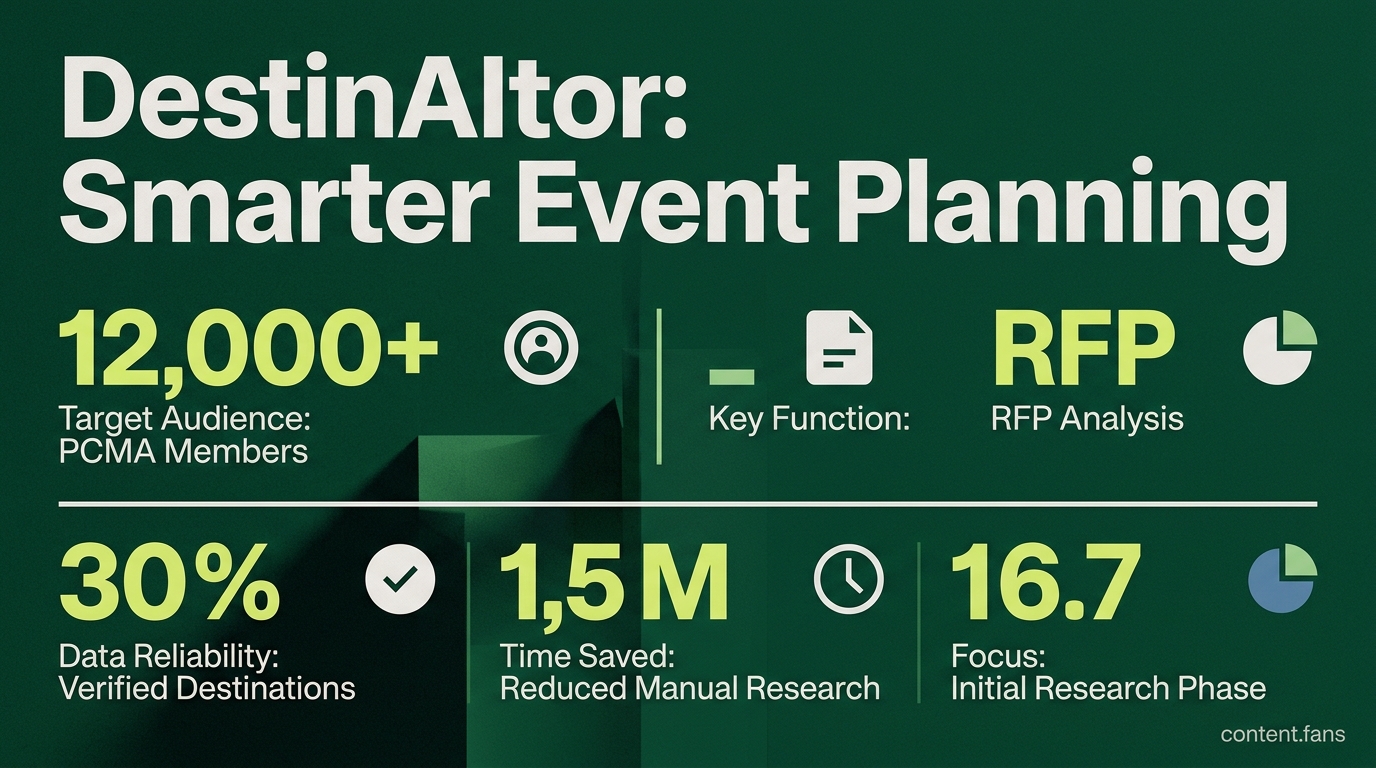
How DestinAItor Streamlines Destination Sourcing
DestinAItor is an AI-powered tool that analyzes a planner's Request for Proposal (RFP) to generate a ranked list of suitable destinations. It compares cities using verified data on infrastructure, sustainability, and safety, significantly reducing manual research time and helping create data-backed event shortlists quickly.
The platform's core function is its RFP Analysis, which reviews an uploaded proposal and returns ranked destination options in seconds. By surfacing structured data on citywide events, hotel pipelines, and transit developments, DestinAItor may reduce manual research time. Early adopters reportedly cite quicker shortlists and fewer clarification emails to destination marketing organizations.
The "Verified Destination" Badge: A Mark of Trust
To ensure data reliability, DestinAItor draws from metrics that destinations update through a validation workflow. Participating bureaus that confirm the accuracy of their records - from economic sectors to upcoming infrastructure projects - earn a "Verified Destination" badge. This badge signals to planners that the information is current and trustworthy.
DestinAItor's Position in the Event Tech AI Landscape
While competitors like CventIQ and VenueGenius have added AI layers for logistics and venue sourcing, DestinAItor differentiates itself by focusing on the initial research phase. Crucially, access is complimentary for over 12,000 members of the PCMA Spark community. This approach targets the industry gap where many planners have yet to adopt AI strategically, despite growing recognition that a significant portion of event workflows could be automated.
What to Expect from the Live Demo
Upcoming webinars will feature product specialists and planner beta testers demonstrating real-world scenarios including:
- A large medical conference seeking cities with strong life-science clusters.
- An incentive trip prioritizing destinations with carbon-conscious transit links.
- A regional sales meeting with a tight lead time and mid-scale budget.
These examples will show how the platform weighs complex factors like hospital density, airline lift, and renewable energy commitments - data planners typically track manually.
Early Adoption and Market Outlook
Six partners, including the Nashville Convention & Visitors Corp and Visit Kansas City, have already subscribed and earned verified status. Furthermore, an agreement with Open Data MICE Germany extends the verified badge concept to European bureaus. While these numbers are a fraction of the 430+ U.S. destination organizations, they signal a growing commitment among tourism boards to unified data standards.
Future of DestinAItor: Product Updates and API Access
Following the webinar series, PCMA plans quarterly product updates and is already fielding requests for API access. This would allow planners to integrate DestinAItor's insights directly into their existing event management systems. The industry will be watching to see if more destinations adopt the validation workflow and if planners prioritize sourcing from "Verified Destination" badge holders.
What exactly is DestinAItor and how does it differ from traditional venue search engines?
DestinAItor is PCMA's AI-powered platform that replaces keyword browsing with data-driven matching. Instead of filtering by dates, rates, and space, the system reads your RFP, compares it against verified destination datasets (sustainability, safety, infrastructure, city-wide events), and returns a ranked shortlist in minutes. Early adopters report significant reductions in planning cycles because the engine surfaces objective insights rather than marketing copy.
How does the "Verified Destination" badge protect planners from outdated information?
Any destination or venue that wants the green "Verified Destination" badge must log in, review every data point, and republish corrections. Only badge holders can edit their profiles, so planners see a real-time trust signal instead of static brochures. Since launch, six partners - including Nashville Convention & Visitors Corp and Visit Kansas City - have completed the process, giving planners confidence that capacity figures, sustainability scores, and transport links are current.
Is DestinAItor free for event professionals and what does it cost destinations?
Complimentary access is available to PCMA members and qualifying business-event strategists through the platform's membership program. Destinations pay an annual subscription that includes performance dashboards showing how often they appear in searches, which planner personas are clicking, and what keywords drive traffic - data they can use to sharpen sales messaging and reduce RFP spam.
Which AI features help forecast attendance and budget impact?
The platform layers predictive analytics on top of historical convention data: it cross-factors local city-wide events, hotel occupancy curves, and seasonal airfares to estimate likely attendance and suggest block-booking windows that may save costs on accommodation. Industry benchmarks suggest planners using such insights can improve hotel pick-up rates compared with static room blocks.
How does DestinAItor fit into the wider competitive landscape of Cvent, Bizzabo, and VenueGenius?
While CventIQ and Bizzabo Copilot focus on event execution (registration diagrams, writing assistants), DestinAItor specializes on the front-end research phase. It does not replace your EMS; instead it feeds qualified destinations straight into your existing RFP workflow, potentially reducing the typical destination shortlist cycle according to industry reports.