
Palantir Reports US Agencies Switch to Nvidia Open-Source AI Models
Serge Bulaev
Some U.S. government agencies have switched from closed commercial AI systems to Nvidia's open-source models inside Palantir's platforms. This change may be because officials worry that closed systems carry hidden data-security risks and make it hard to check for problems. Open-source models like Nemotron appear to let agencies control data flow, review the model, and fix issues themselves. Closed models such as GPT-4 still have a role for special tasks, but open-source options might be growing as agencies look for more control and safety. It is unclear how many agencies will make this switch or how quickly it will happen.

Palantir and NVIDIA announced a pilot partnership to deploy Nemotron open models for specific U.S. agency use cases, but a broad agency-wide switch away from closed systems has not been confirmed. CEO Alex Karp confirmed that federal teams are piloting the deployment of Nemotron open-weight models on Palantir platforms, but a full replacement of proprietary services has not been confirmed. The partnership announcement does not specify that the initiative is led by agencies handling classified information or driven by fears of vendor data exploitation.
Why open weights look safer to procurement officers
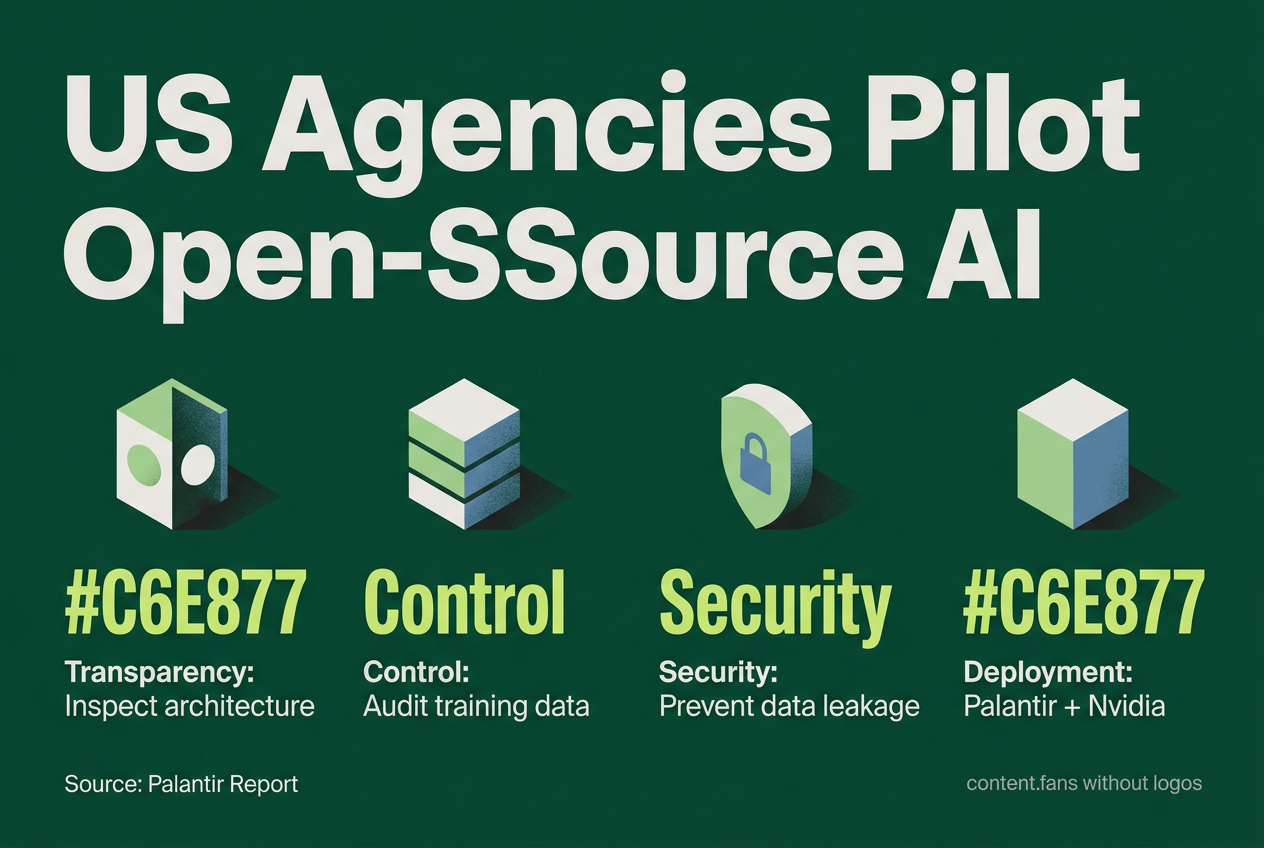
Government agencies are exploring open-weight models because they offer greater transparency and control. Unlike closed "black box" systems, open models allow officials to inspect the architecture, audit training data for bias, manage data security in-house, and prevent potential data leakage to third-party AI vendors.
Concerns from federal watchdogs validate this trend. A February 2024 FTC bulletin cautions AI companies to honor privacy commitments. Government agencies have expressed concerns about deploying AI systems without full visibility into their operations.
Key risks highlighted in official documents:
* Erosion of competitive or national advantage through data leakage.
* Lack of ability to audit training data for bias or malicious content.
* Supply-chain vulnerabilities if a third-party vendor's model is compromised.
* Legal and operational conflicts when vendor terms clash with mission requirements.
Open-source models provide a solution, allowing officials to examine the AI's architecture, control data flows, and customize models internally.
Palantir's deployment platform for Nemotron
To facilitate this deployment, Palantir and Nvidia announced their collaboration to deploy Nemotron open models for sovereign AI in 2024. The platform facilitates deploying Nemotron models using Nvidia NIM microservices within Palantir's software suite (AIP, Foundry, Ontology, Apollo) for sovereign AI applications. Available sources confirm the platform enables secure deployment of Nemotron models for government agencies.
Platform features include:
* Secure model deployment capabilities
* Policy enforcement mechanisms
* Integration with existing government systems
Closed models still have a role
Despite the pilot programs, proprietary models like GPT-4 retain a role in government AI applications. Karp explained this as a complementary strategy: agencies can use different models for specific, specialized tasks, while exploring open-weight alternatives for workloads requiring full transparency and in-house control.
The pace of adoption will depend on government procurement cycles. While Karp noted growing interest following the Nemotron announcement, he did not specify which agencies are evaluating the models. This suggests the move to open-weight AI is likely in an early pilot phase, driven by concerns over the long-term risks of opaque AI.
Which U.S. agencies are piloting Nvidia's Nemotron models?
While Palantir CEO Alex Karp declined to name specific agencies, the partnership focuses on government use cases requiring greater transparency and control over AI systems. The pilot programs are designed to test open-weight models in government environments while maintaining security and compliance requirements.
Why are government agencies exploring open-source AI models?
Karp identified concerns that proprietary providers might appropriate business "alpha" (competitive advantage) or use customer data inappropriately. The February 2024 FTC bulletin emphasized the importance of AI companies honoring privacy commitments. Government agencies have expressed concerns about deploying AI systems without full visibility into their operations, creating potential security risks for sensitive operations.
What role does Palantir play in this deployment?
Palantir serves as the platform provider that secures and tailors open-source models for government use. The company provides infrastructure to run and customize models on enterprise and government data through its AI platforms - combining NVIDIA's Nemotron models with Palantir's AIP, Ontology, Foundry, and Apollo systems. This allows agencies to explore training models on proprietary data while maintaining control over their data and systems.
What makes Nvidia's Nemotron models suitable for government work?
Nemotron models offer key advantages for government applications: they are open-weight (allowing architecture inspection and modification), they support complex operational workflows, and they can be deployed in secure, controlled environments. The models provide government agencies with greater transparency compared to closed proprietary systems.
How significant is this pilot program in government AI procurement?
This represents an important exploration in federal AI strategy. Karp noted strong interest since announcing the Nemotron deployment capabilities, indicating growing demand for transparent AI solutions. The move reflects broader government interest in AI systems that provide greater visibility and control. Palantir reports that customers show preference for open models when they see comparable performance to proprietary ones - suggesting performance gaps that once favored closed systems may be narrowing.