
NRF 2026 Playbook Expands Retail Asset Protection to Enterprise Risk
Serge Bulaev
The NRF 2026 playbook suggests that asset protection in retail is expanding beyond just preventing theft to cover broader risks like employee safety, supply chain problems, and reputational issues. Retailers may now expect asset protection leaders to use data and work with other parts of the business to manage these risks faster. New challenges such as global conflicts and tariff changes appear to make it important for leaders to monitor supply chain delays and employee safety more closely. Job postings also suggest asset protection roles are growing to include more responsibilities related to enterprise risk. This shift may help retailers respond more quickly to losses and outside disruptions.

Industry trends signal a significant evolution for retail asset protection, with many organizations expanding their scope from traditional shrink control to comprehensive enterprise risk management. This shift means leaders are increasingly expected to track and mitigate a wider range of threats - including supply chain shocks, employee safety issues, and reputational damage - using data to drive faster, more holistic business decisions.
From Shrink Control to Enterprise Risk: A New Mandate
This expanded mandate requires asset protection leaders to think like enterprise risk managers. They must now analyze diverse data streams - from geopolitical intelligence to social media sentiment - to provide strategic insights that protect the entire business, not just prevent store-level theft or fraud.
Industry observations suggest that retailers increasingly expect AP leaders to translate data into faster business decisions, particularly in surfacing organized retail crime patterns in real time. This expanded brief is critical amid rising geopolitical volatility. For example, Maersk warns that armed conflicts are disrupting key trade routes and destabilizing regional supply networks, which could lead to unexpected shortages of seasonal goods or safety equipment Maersk supply chain landscape. This reality demands that AP leaders develop contingency dashboards to flag inbound freight delays before they become critical issues on the sales floor.
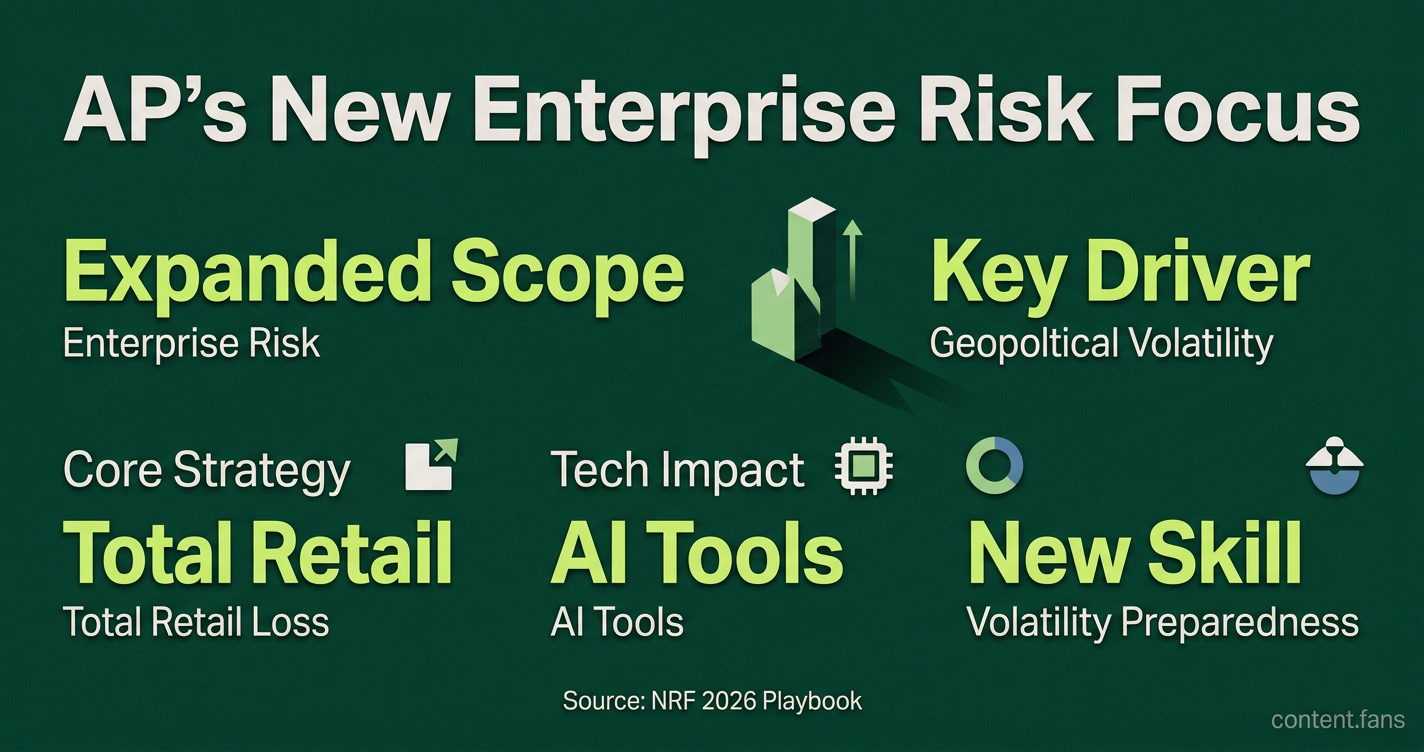
Key themes emerging from industry discussions highlight the core components of this new approach:
- Enterprise security risk management merges physical security, cyber, and operational risk data under one governance model.
- Total Retail Loss pivots teams away from exception-only reports toward holistic margin protection.
- Cross-functional playbooks push vetted insights to store managers, finance controllers, and merchants for earlier action.
- AI tools reportedly improve detection speed and free investigators for higher-value case work.
- Volatility preparedness training emphasizes rapid advisory skills so AP teams can brief executives during supply chain or reputational shocks.
The Evolving AP Job Description: New Skills and Responsibilities
This broader charter is increasingly being reflected in job postings, which echo the need for cross-functional expertise. Many asset protection manager roles now describe obligations to analyze shrink dashboards, lead safety committees, and present KPI decks to leadership. Regional postings now often pair theft investigations with responsibilities for workers' compensation claims and policy maintenance, indicating that boards expect AP leaders to own a slice of enterprise risk governance traditionally reserved for finance or legal departments.
To integrate these recommendations, retailers often begin by mapping every source of profit leakage, from tariff-driven cost increases to fraudulent returns. From there, many form cross-functional committees where asset protection chairs weekly updates alongside supply chain and brand teams to accelerate corrective actions.
Linking Supply Chain Volatility to Store-Level Risk
This shift requires asset protection leaders who once focused primarily on in-store theft to now model upstream disruptions. Industry reports indicate that tariff volatility represents a significant regulatory concern for trade professionals heading into 2026. Combined with Maersk's route disruption alerts, this suggests AP leaders must now account for shocks that could cascade into empty shelves or safety gear shortages.
Furthermore, S&P Global research associates armed conflict with energy and food inflation, adding another layer of workforce risk. Retail risk teams that monitor these macro signals can feed timely alerts into security operations centers, allowing local managers to adjust staffing and emergency protocols before volatility escalates.
Ultimately, the evolution of asset protection into an enterprise risk advisory role sits at the intersection of data science, operational control, and crisis communication. By embracing emerging frameworks, retailers can achieve earlier visibility into multi-channel losses, build faster responses to external shocks, and create stronger, more resilient organizations.
1. Why are retailers looking beyond traditional shrink?
Traditional loss-prevention language is shrinking in relevance. Industry guidance increasingly frames Total Retail Loss as a new yardstick, counting shrink, fraud, process errors, safety incidents, and reputation hits in one ledger instead of isolated store exceptions. By applying this broader lens, retailers free AP teams to act as enterprise risk advisers who optimize capital across the whole business rather than chase single incidents.
2. What non-traditional risks now sit in AP's wheelhouse?
Emerging industry practices identify four headline threats that once sat outside loss-prevention charters:
- Geopolitical instability - Recent Maersk data shows armed conflict has become a major supply-chain disruptor, forcing reroutes that push store and logistics crews into riskier corridors.
- Cybercrime - AI-enabled fraud is now grouped with physical theft under Total Retail Loss.
- Employee safety - delayed safety-equipment deliveries (GNFR) can stall operations and expose workers.
- Reputational damage - social-media flash boycotts translate into immediate revenue loss, a metric AP dashboards now track.
3. How should an asset-protection leader's job description change?
Current postings illustrate the shift. Many Regional Asset Protection and Risk Manager vacancies combine classic duties ("investigate theft") with cross-functional governance: workers-comp and general-claims oversight, safety-committee leadership, KPI dashboards for finance, and policy co-authorship with HR and legal. In short, the role is evolving from store enforcer to enterprise risk coordinator.
4. Which new skills and tools are required?
Industry trends suggest AP leaders increasingly need to wield:
- AI-driven analytics for predictive threat detection and real-time intervention.
- Cross-functional fluency - translating risk data into action plans for merchants, operators, finance, and store teams.
- Program ownership, including pilot launches and ROI measurement for enterprise resilience initiatives.
5. Where can readers learn more or benchmark peers?
Join NRF Protect 2026 (June 8-10) to see case studies and network with teams already embedding enterprise security risk management. The NRF Protect 2026 agenda details session tracks on AI, Total Retail Loss, and cross-functional execution tactics.