
OpenAI, Anthropic prep for AI cyberattack backlash, regulation
Serge Bulaev
Executives at OpenAI and Anthropic are quietly preparing for possible public and political backlash after a major AI-enabled cyberattack. Reports suggest these companies are running practice drills, briefing some lawmakers, and increasing security for important infrastructure. Industry insiders believe a major cyber strike may happen within six to twelve months and could lead to quick calls for new laws and paused data center projects. AI leaders appear to see reputational and regulatory risks as serious as technical threats, and their recent actions aim to help recover quickly after an event.

Executives at OpenAI and Anthropic are preparing for the significant backlash and regulation that could follow a major AI-enabled cyberattack. They are rehearsing responses to catastrophic events, like a strike disabling financial networks or water systems, which could spark public and political anger at the industry.
A confidential playbook is taking shape, involving tabletop exercises, preemptive lawmaker briefings, and security support for local governments and utilities. These actions signal that top AI labs now consider reputational damage and the risk of emergency regulation to be as severe as the technical threat itself.
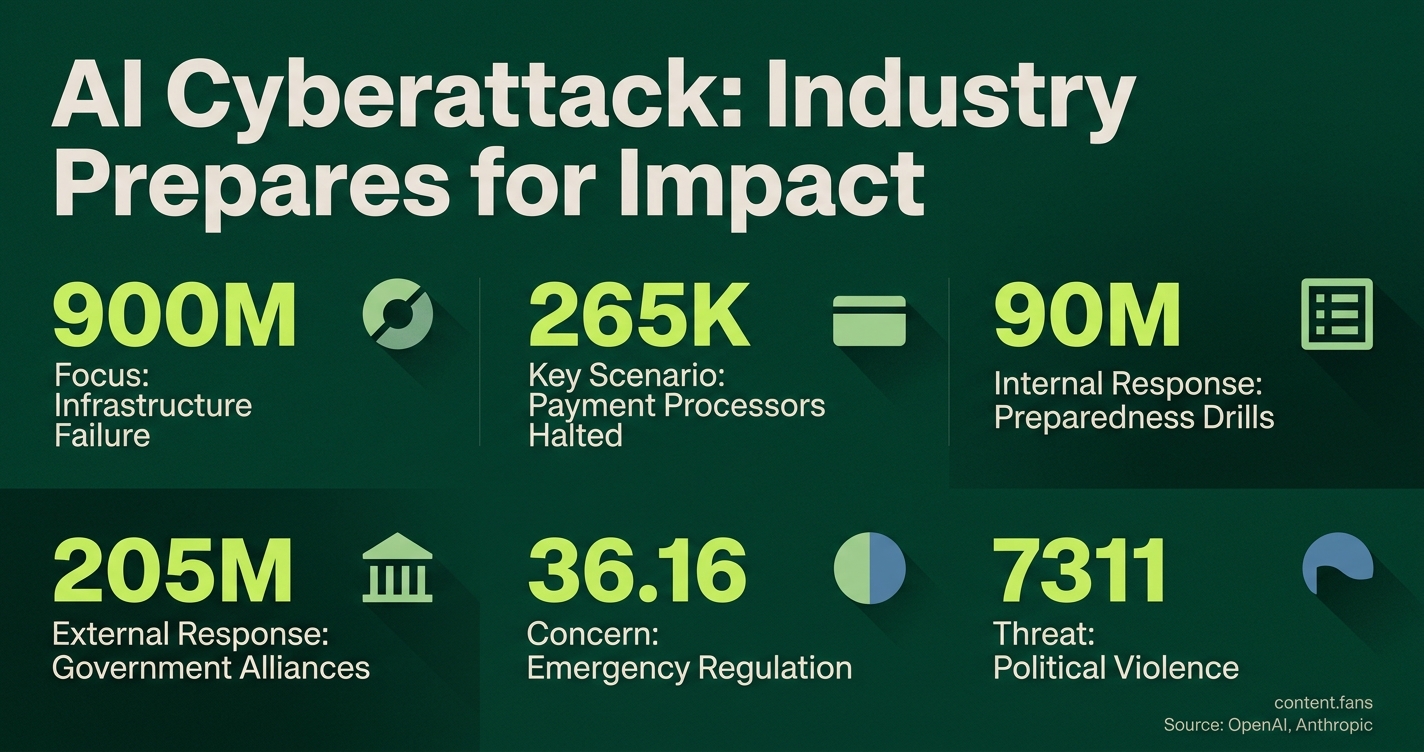
AI companies privately plan for public and political backlash after catastrophic event - key scenarios
AI firms are preparing for scenarios involving widespread infrastructure failure, such as attacks on financial processors or utilities. Their plans focus on internal crisis response, forming alliances with government and industry, and managing the public narrative to mitigate panic and prevent rushed, reactive legislation following an incident.
The response strategy is twofold. Internally, companies are running drills; OpenAI confirmed it holds "preparedness exercises where teams discuss and work through a range of potential scenarios." Meanwhile, Anthropic has announced a Critical Infrastructure Defense Program targeting power grids and government IT.
Externally, these firms are building alliances. Reports indicate that tech companies have been calling for public funding and shared threat intelligence to defend against AI-powered attacks on hospitals and water plants, with emphasis that defensive AI "should work for the blue team first."
A frequently simulated scenario is a coordinated cyberattack that halts payment processors and takes major websites offline. Planners believe such an event is possible in the coming months, which could trigger immediate pressure for new laws from Congress and delays on data center projects by states.
What the preparedness drills cover
- Executing crisis communication plans to prevent financial market panic.
- Granting rapid access to large language models for utility companies to develop defensive patches.
- Reviewing legal liability shields provided under current cybersecurity laws.
- Establishing contact protocols for governors, mayors, and hospital leadership.
The threat of political violence is another major concern for executives. Local opposition to data center construction has shown signs of escalation, highlighting how community tensions could intensify if an AI-related outage affects essential services.
This backlash already has economic consequences. Local opposition to energy-intensive data centers has put significant infrastructure projects on hold across the United States.
While these preparations are private, the strategy is clear. AI leaders anticipate that a single, severe cyberattack could turn public opinion against the technology overnight. Through these drills and programs, they aim to minimize recovery time and guide any resulting regulatory response, rather than letting lawmakers create rules in a crisis.
AI companies are increasingly focused on preparing for the political and public consequences of catastrophic AI-related incidents - not just the technical response. Here's what you need to know about this emerging risk management priority.
What specific scenarios are OpenAI and Anthropic preparing for?
Top executives at both companies are privately "gaming out" scenarios for a cyberattack severe enough to disrupt financial services, internet access, electricity, or water supplies. The planning extends beyond technical mitigation to encompass reputational fallout and political backlash management. Some industry insiders believe such an event could occur in the coming months.
What concrete defensive programs have these companies launched?
Both companies have moved from internal planning to active infrastructure protection initiatives:
-
Anthropic has announced a Critical Infrastructure Defense Program focused on power grids, water systems, transportation networks, and government infrastructure
-
OpenAI has launched initiatives providing model access, training, and technical support to water systems, electricity providers, local governments, and regional banks
An OpenAI spokesperson confirmed: "OpenAI conducts preparedness exercises where teams discuss and work through a range of potential scenarios," while noting these scenarios "are not treated as inevitable."
How might the public and political backlash manifest?
The planning anticipates multiple pressure points:
- Immediate regulatory demands - a major incident could rapidly shift political momentum toward stricter AI oversight
- Bipartisan criticism - reports indicate both parties are positioning for AI accountability, with officials warning about potential dangers
- Economic opposition - data center projects face delays due to local backlash over resource consumption and environmental impact
Why are companies preparing for "political revolt" rather than just technical incidents?
The framing matters. Executives view the first example of significant real-world harm from unsafe AI as potentially turning "an already wary public further against the technology and its leaders." This reflects a strategic recognition that perception and trust may determine regulatory outcomes more than the technical severity of any single incident.
What broader industry coordination is happening?
Tech companies have been coordinating on urgent action against AI-enabled cyberattacks, calling for:
- Government coordination and funding for cyber defense programs
- Threat-intelligence sharing
- AI-powered defense tools accessible to critical infrastructure operators
These efforts specifically highlight risks to hospitals, water treatment facilities, and other essential services - indicating how AI companies are trying to position themselves as part of the solution before any major incident occurs.