
Meta develops 'Meta Compute' to monetize excess AI capacity
Serge Bulaev
Meta is working on a project called 'Meta Compute' to make money from its extra AI computing power, but there is no confirmed launch date, pricing, or official announcement yet. Reports suggest Meta may offer AI model APIs and rent out GPU clusters, but these products are not available to the public now. Some experts think this could make cloud computing cheaper and put pressure on other big companies, though Meta's business focus appears to be on smaller startups and research labs for now. Many details remain unknown, including when the service will launch and what the prices will be. Overall, it appears Meta is exploring turning its extra AI resources into a new cloud business, but the plan is still in early stages.

Meta's plan for 'Meta Compute' to monetize excess AI capacity is moving forward, signaling a major strategic push into cloud services. Recent reports confirm the internal initiative, positioning the social media giant to compete with established players like AWS, Microsoft Azure, and Google Cloud. Following the news, investor confidence grew, with Meta's stock surging after the story surfaced (TheAgentTimes).
What is Meta Compute?
Meta Compute is an internal project aimed at converting Meta's surplus AI computing power into a commercial cloud service. The initiative plans to offer both AI model APIs and raw GPU cluster rentals, though specific products, pricing, and a launch date have not been officially announced.
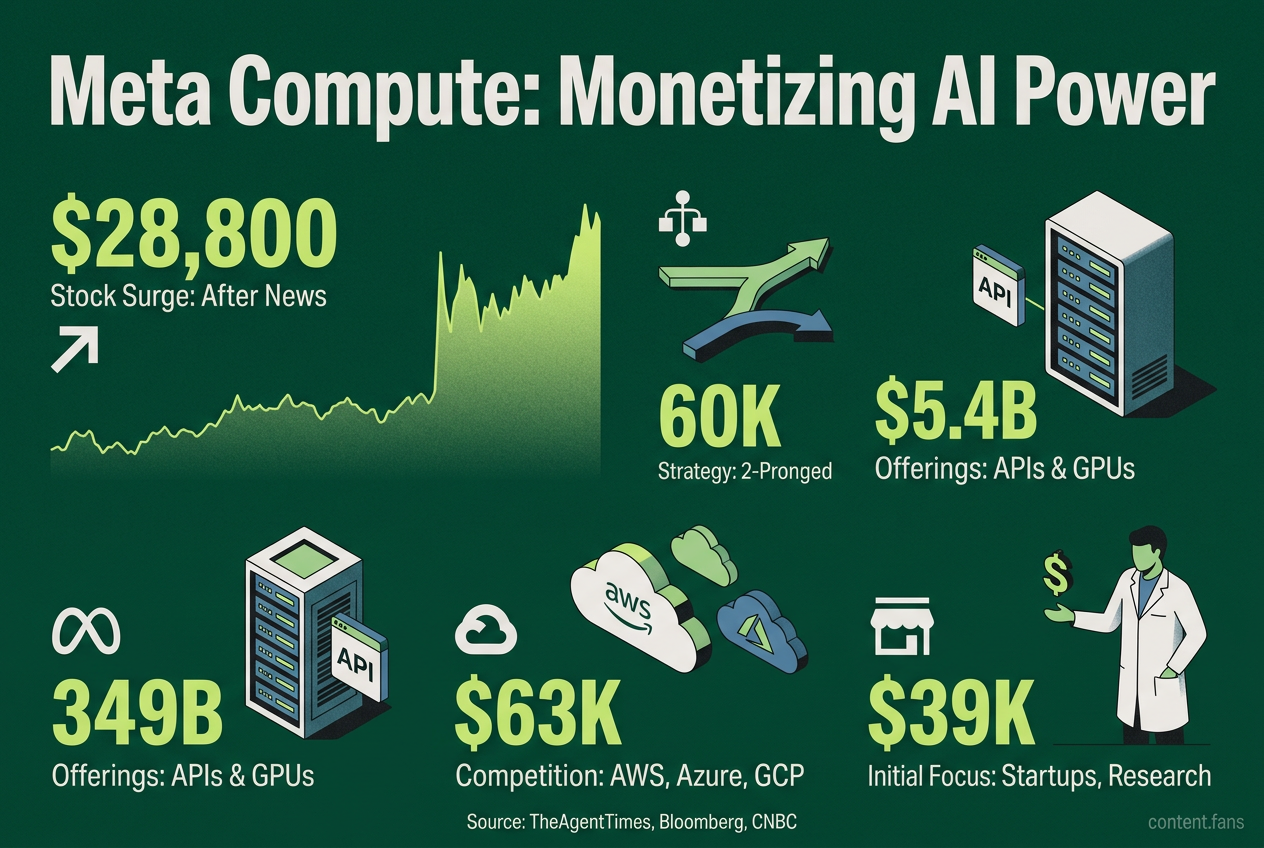
Bloomberg reports that the project is in development, a move seen by analysts as a bid to convert its vast AI infrastructure into a new revenue stream. This strategic pivot could also help offset escalating AI capital expenses, which CNBC has described as the "biggest overhang" on Meta's stock.
A Two-Pronged Strategy to Compete
According to reports, Meta's strategy involves two distinct product lines targeting different segments of the AI market:
- Hosted AI Model APIs: Offering per-token access to Meta's proprietary Muse Spark models and open-source LLaMA series. This would compete directly with platforms like AWS Bedrock and Azure OpenAI Service.
- Bare-Metal GPU Rentals: Providing hourly rental of GPU clusters for customers who require raw, dedicated capacity, similar to services from CoreWeave.
This dual approach allows Meta to compete at both the platform (API) and infrastructure layers, serving a wide range of customers from developers to AI research labs.
Potential Impact on the Cloud Market
Analysts have noted potential competition and market dynamics, but no specific price drop predictions within 18 months have been reported. A June 2026 analysis by investment bank TD Cowen projected that GPU cloud pricing could fall 30-40% within 18 months if two or more hyperscalers began actively competing on compute commodity sales.
However, experts believe Meta's lack of a mature enterprise sales channel means its initial focus will likely be on startups and research labs rather than large-scale corporate migrations.
Key Questions Remain Unanswered
Despite the ambitious plans, Meta Compute is still in its early stages. Key details remain unconfirmed, creating uncertainty for developers and investors. According to reports from sources like Byteiota, there is currently "no sign-up page," which suggests a public launch is not imminent (Byteiota).
Major open questions include:
- Launch Timeline: No official launch date or beta program has been announced.
- Pricing Model: Specific pricing for token-based APIs or hourly GPU rentals has not been released.
- Enterprise Features: There is no evidence of the development of compliance, support, or other tooling required by large enterprise customers.
As TechCrunch observed, while Meta "looks to turn excess AI compute into cash," the project's success hinges on the company disclosing concrete commercial terms. For now, the evidence points to a well-funded initiative, but the tech world awaits an official announcement on how Meta will transform its AI hardware surplus into a public cloud business.