
Google updates Search with AI-powered 'intelligent search box'
Serge Bulaev
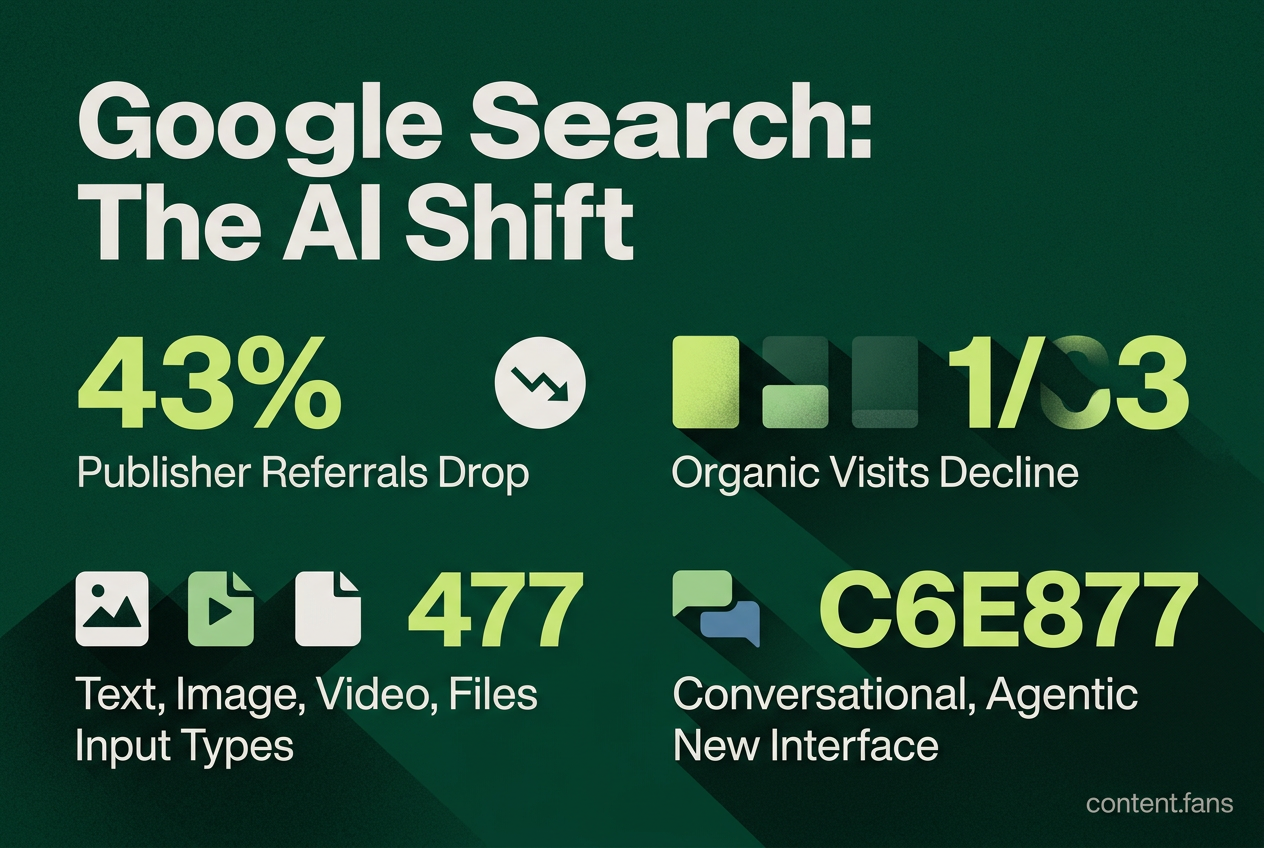
Google has updated its search with an AI-powered 'intelligent search box' that may change how people use the service. Early data suggests these new AI features answer many user questions directly, so fewer people might click on outside links. Some studies report that website visits from Google may have dropped by about one-third, and publishers warn search visits could fall by 43 percent in three years. Experts suggest websites focus on providing original, expert information that the AI can reference. These changes appear to make it harder for pages with generic content to get noticed, while sites with high-quality information might still do well.

Google is updating Search with AI-powered features, changing how users interact with information. Google says it is updating Search with AI-powered and more conversational features, moving from a list of links to a conversational, agentic interface, as detailed on the official Google Blog.
What are the new AI-powered features and why is Google emphasizing this change?
Google's updated search interface is a rebuilt, conversational system that accepts text, image, and file inputs to generate direct AI answers. It moves beyond traditional links to provide a single, agentic surface where AI models can reason, follow up, and complete multi-step tasks.
The update marks a definitive shift from the "ten-blue-links" era to an interactive experience. Key features include:
- Multimodal Input: The search box now accepts multi-sentence prompts, images, videos, and files.
- AI-Powered Responses: Google has discussed Gemini-powered conversational experiences and AI features for generating conversational answers and monitoring capabilities.
- Generative UI: Google is previewing features like on-the-fly visual tools, booking flows, and a Universal Cart that tracks prices across merchants.
How will the AI-powered search features affect publisher traffic in 2025-2026?
Early traffic data points to a significant drop in outbound clicks as AI Overviews answer user queries directly on the results page. A Search Engine Land report highlights that publishers expect search referrals to fall by 43 percent within three years as search becomes an "AI-driven answer engine."
Traffic measurement firms are already seeing this trend. A compilation on SHNO shows Chartbeat data where global organic visits declined by one-third between late 2024 and late 2025. Furthermore, industry reports indicate that the presence of an AI Overview can significantly lower the click-through rate of the top-ranked page.
What new tools can users expect with Google Search agents and mini-apps?
Google is introducing new interaction layers:
- Information Agents: These agents work in the background to monitor topics like price drops or news updates and send alerts.
- Mini-Apps: The search interface can generate lightweight, tailored widgets on the fly to solve specific tasks, like finding a karaoke room by checking location and booking APIs.
- Universal Cart: This AI-powered shopping cart can track items across different merchants, monitor stock levels, and automate bookings.
How should SEO and content strategies adapt?
The new paradigm shifts focus from ranking for clicks to optimizing for AI citation. Experts recommend adapting content strategies in the following ways:
- Prioritize Expertise: Produce original reporting, data, and expert commentary that AI models can use as a credible source. According to industry reports, authoritative sites have seen significant traffic gains after recent updates.
- Structure for Extraction: Use clear headings, definitions, and FAQ formats so language models can easily extract and quote snippets.
- Avoid Generic AI Content: Mass-produced, unedited AI articles have seen significant negative impact according to industry reports.
- Build Direct Channels: Develop newsletters, communities, and other owned channels to hedge against potential losses in search traffic.
Where can developers and businesses start building with the new APIs?
Google is providing partners with access to the same infrastructure powering its new search features:
- Gemini API: The Gemini API in Search is now accessible through Google AI Studio.
- Smarter Ad Campaigns: Google Ads App campaigns can now be optimized for deep-funnel events, such as subscription starts, aligning with the new AI-driven engagement model.
- App Integration: Android's Collections and "You" tab already surface content from installed apps, offering an immediate re-engagement opportunity.
For detailed guidance, developers can consult available resources for event optimization and tracking.
Ultimately, Google's evolution toward a conversational, agentic search engine compresses the journey from question to answer. Websites that demonstrate deep expertise and provide information worth citing are best positioned to maintain visibility, while those reliant on generic content may struggle to appear in the new AI-first results page.