
FDA adopts PreCheck Pilot for drug facilities, selects 7 finalists
Serge Bulaev
The FDA has chosen seven finalists for its PreCheck Pilot program, which may help new U.S. drug facilities reduce surprise inspection risks. The program appears to follow a two-phase review, requiring facilities to meet strict eligibility and prepare detailed documents about their operations and quality systems. Early reports suggest that good preparation and daily-ready quality systems are important, as inspectors may focus on change management and data integrity. Some participants report that having a dedicated project manager may prevent problems with timing and eligibility. The FDA has not confirmed when the next round of applications will open, but updates might be posted online with about 30 days' notice.

The FDA has selected seven finalists for its new FDA PreCheck Pilot Program, an initiative aimed at helping new U.S. drug manufacturing facilities reduce inspection risks and streamline market entry. This guide outlines the program's structure, eligibility requirements, and key preparation steps for manufacturers looking to participate in future cohorts.
What is the FDA PreCheck Pilot Program?
The FDA PreCheck Pilot Program includes Phase I for the initial cohort, with additional cohorts anticipated based on learnings. It provides early regulatory engagement and pre-operational reviews before a product application is submitted, aiming to proactively resolve issues, reduce inspection surprises, and accelerate approval timelines for human drugs and biologics.
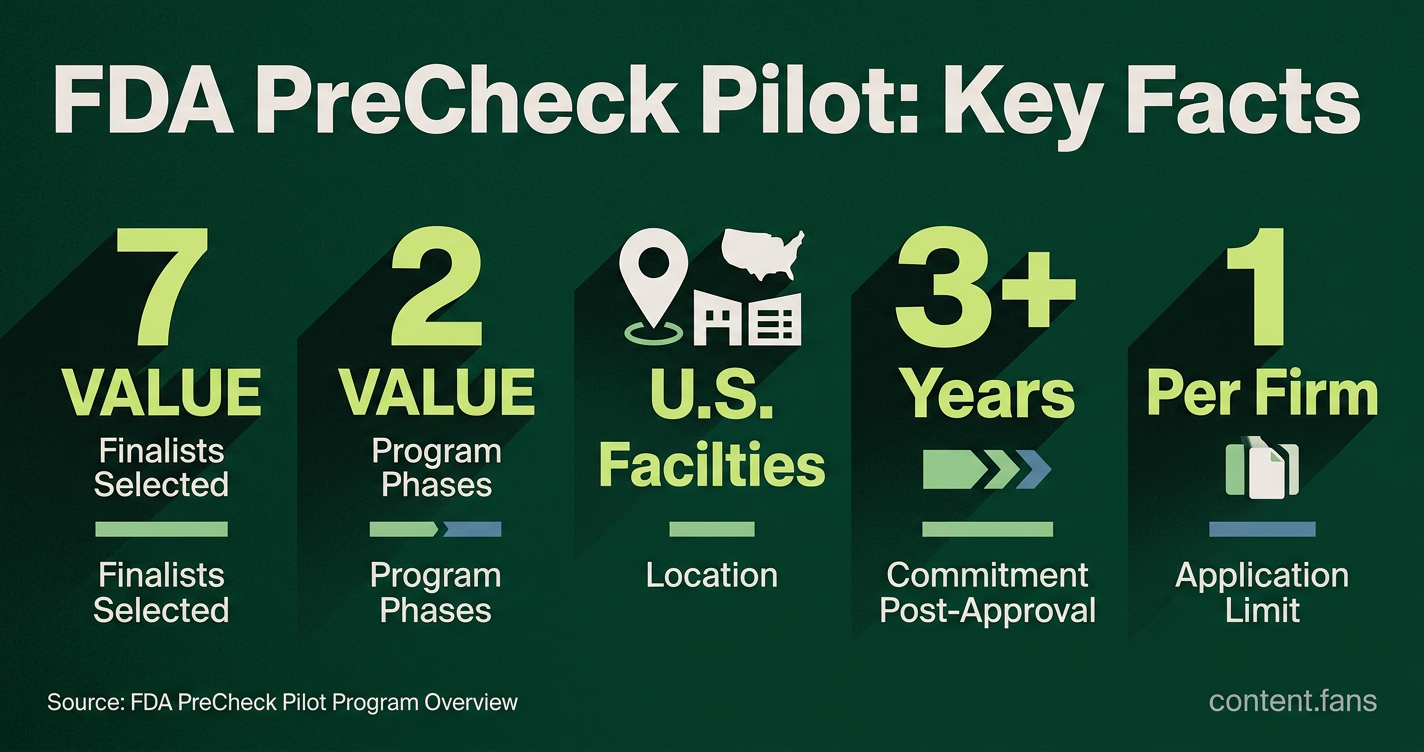
The program is designed to replace reactive, post-submission inspections with a proactive, collaborative approach. It is structured in two distinct phases:
- Phase 1 - Facility Readiness: This phase involves pre-operational meetings, virtual facility walkthroughs, and early technical consultations. The core deliverable is a comprehensive, facility-specific Drug Master File (DMF) that details the site's utilities, operational flows, and quality systems.
- Phase 2 - Application Submission: Following Phase 1, participants engage in pre-submission meetings with the agency. This leads to a focused inspection or a Remote Regulatory Assessment (RRA) before the final submission of the drug application (e.g., NDA, BLA, ANDA) that references the facility DMF.
Who Qualifies for the PreCheck Pilot?
Participation is limited to new, domestic facilities manufacturing human drugs or biologics. According to the official program overview, applicants must meet several strict criteria:
- The facility must be new and located in the U.S.
- The sponsor must commit to filing a new drug or biologics application (NDA, ANDA, BLA, supplement, or Type II DMF) during the pilot.
- The sponsor must pledge to manufacture at the site for at least three years post-approval.
- Each firm is asked to submit only one facility application per request.
Teams can monitor evolving eligibility requirements through resources like the FDALawBlog eligibility review.
Current Status and Future Openings
The application window for the inaugural cohort closed on March 1, 2026. The agency selected seven participants, with finalists notified by April 1, 2026, and final pilot program participant selections made on June 29, 2026.
The FDA has not confirmed when the next round of applications will open. Manufacturers interested in future cohorts should monitor the official PreCheck webpage for updates. Historically, the agency provided a 30-day notice before the application deadline.
Key Preparation Steps for Manufacturers
Early reports from participants and FDA guidance suggest that success in the PreCheck program hinges on robust preparation and a "daily-ready" quality posture.
1. Build a "Daily-Ready" Quality System
Inspectors are reportedly focusing on data integrity and change management. Your quality system must operate at a commercial level from day one. This includes having mature processes for document control, CAPA tracking, and change management, as lapses are a common source of Form 483 observations. Conducting mock RRAs can help identify data integrity gaps early.
2. Prepare a Comprehensive Core Dossier
Applicants should compile a detailed dossier organized into key sections:
- Facility Profile: Layout drawings, HVAC schematics, and utility qualification packages.
- Quality Manual: A cGMP alignment matrix, risk management plans, and training curriculum.
- Product Bundle: Process flow charts, Stage 1 Process Performance Qualification (PPQ) data, and stability protocols. Robust validation plans are critical, as incomplete Stage 2 PPQ has not always blocked recent approvals if the plans were solid, according to RAPS' analysis of FDA's revised Compliance Program Guide.
3. Plan Proactive FDA Engagement
Maintain a structured communication plan. This includes responding to finalist questions promptly (within 30 days), hosting high-quality virtual walkthroughs, and scheduling pre-submission meetings once the facility DMF is filed. A shared evidence library allowing reviewers real-time file access is also recommended.
4. Allocate Sufficient Resources
The program demands significant resource commitment. Early participants suggest assigning a dedicated project manager with authority over both construction and quality budgets to prevent schedule slips that could jeopardize eligibility. Firms must also be prepared for a potential onsite follow-up inspection, even after a successful RRA.
Internal Readiness Checklist:
- Verify the new facility meets all four core eligibility criteria.
- Assign a cross-functional readiness team with a dedicated project manager.
- Begin drafting the facility-specific DMF at least six months before structural completion.
- Conduct quarterly unannounced internal audits modeled on RRA criteria.
- Establish and maintain a shared evidence library aligned with eCTD granularity.