
Donohoe Urges Policymakers to Treat AI as Public Infrastructure
Serge Bulaev
Paschal Donohoe's column suggests that how artificial intelligence is managed today may either help reduce or worsen inequality. He argues that if governments treat AI as public infrastructure, more people might benefit, but if they do not, the advantages may go mostly to those with money and resources. Donohoe highlights the need for affordable digital access, ethical rules, and ways for workers to help shape AI's use. Some experts think AI could help lower wage gaps, but others warn wealth inequality might still grow. The evidence appears mixed, so the final outcomes may depend on the rules and choices made now.
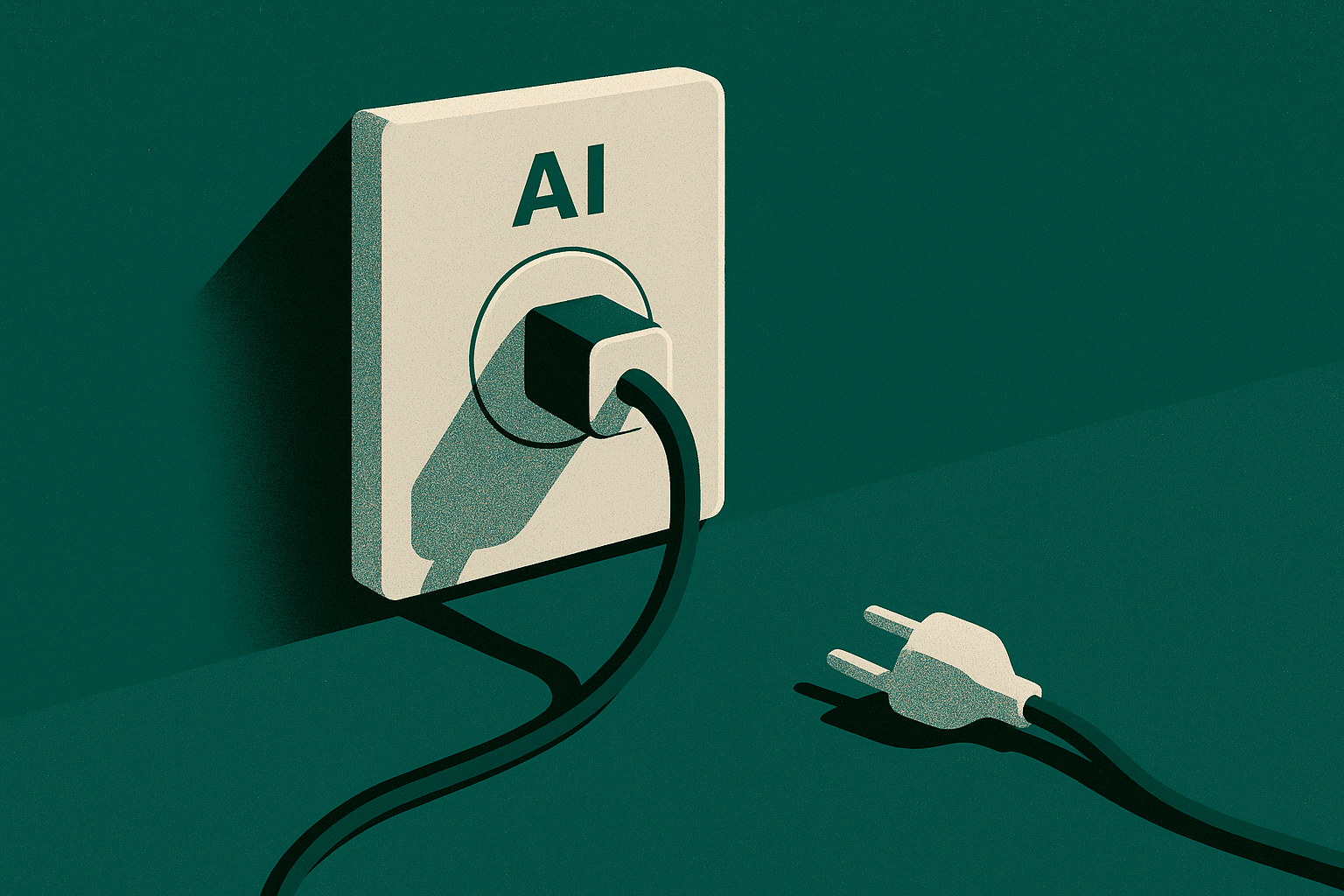
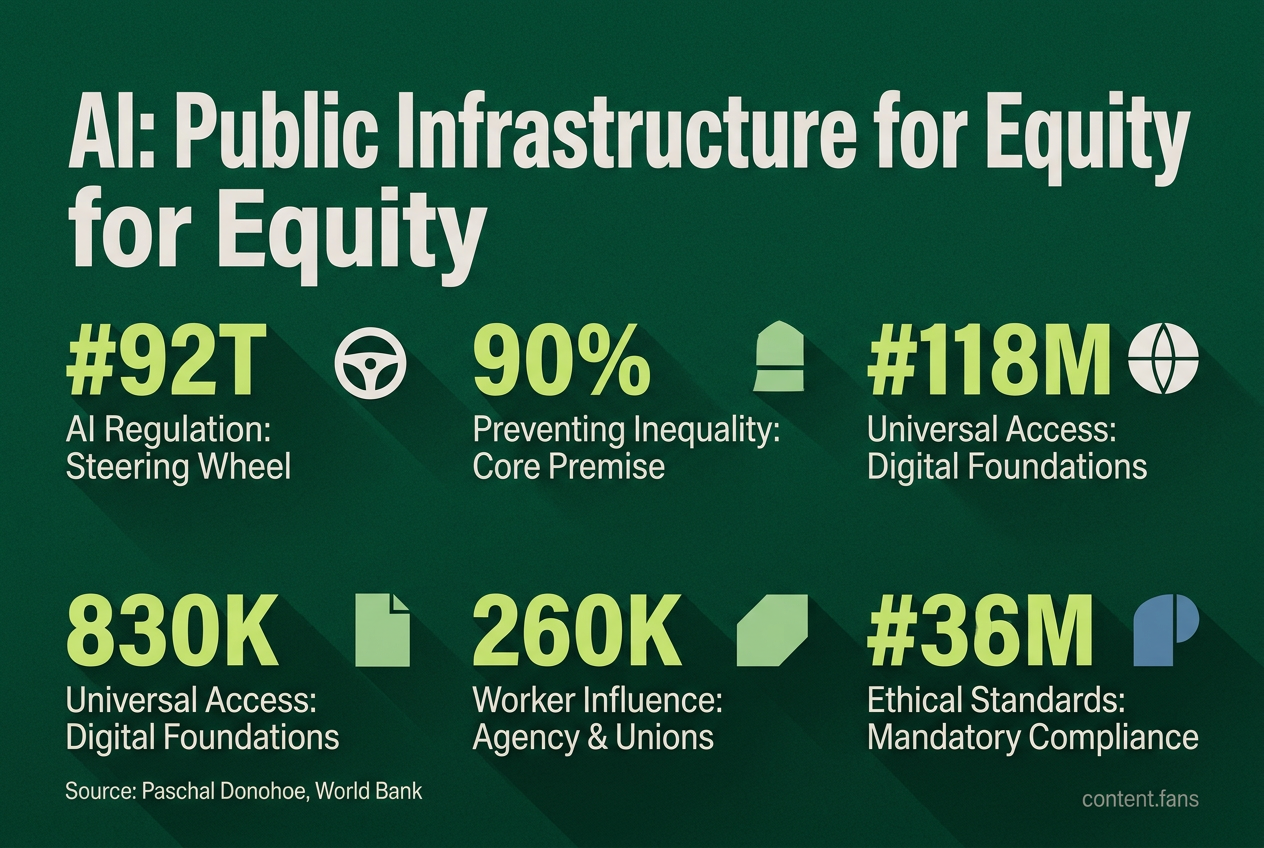
Paschal Donohoe urges policymakers to treat AI as public infrastructure, framing this as the necessary path to prevent deepening global inequality. According to industry reports, the World Bank Managing Director argues that regulation is a "steering wheel, not a brake," needed to expand opportunity rather than reinforce privilege. The core premise is that without proactive governance, AI's gains will concentrate among those with capital and compute access, widening the gap between the rich and poor.
Why does Paschal Donohoe argue AI should be treated as public infrastructure?
Donohoe argues that AI's societal impact is not predetermined but hinges on deliberate policy choices. He advocates for treating AI as public infrastructure - like roads or electricity - requiring government oversight and investment to ensure its benefits are broadly distributed and do not solely serve private, market-driven interests.
Drawing on his experience as a former Eurogroup President, Donohoe contends that governments cannot allow market forces alone to dictate AI's development. He advocates for a framework of public policy guardrails, standards, and supports to ensure that technological advancement serves the common good, mitigating harms and sharing gains equitably across society.
What specific policies does Donohoe propose for equitable AI?
Based on his public statements, Donohoe outlines a clear agenda for turning AI into a tool for shared prosperity:
- Invest in Digital Foundations: Ensure universal access to affordable connectivity, reliable electricity, and trusted data systems.
- Mandate Citizen-Centric Design: Require AI applications to prioritize accessibility, inclusiveness, affordability, and trust.
- Guarantee Worker Agency: Give employees a seat at the table through unions or councils to help shape AI deployment in the workplace.
- Enforce Ethical Compliance: Mandate that public-sector AI adheres to established ethical standards, such as the EU's seven requirements for human agency, privacy, transparency, and accountability.
How might AI impact economic inequality according to experts?
Expert analysis presents a divided but policy-dependent outlook on AI's economic consequences.
An optimistic view, shared by MIT economist David Autor, suggests AI could augment novice workers' skills and reduce wage gaps. This is supported by economic modeling suggesting significant potential improvements in wage equality as high-paid roles face displacement pressure.
However, the same research warns that wealth inequality could widen significantly as capital returns from AI outpace wage growth. This concern is echoed by Brookings researchers, who find that AI productivity gains are concentrated at the higher end of the income distribution, peaking at approximately $90,000/year, but within specific high-skill occupations, the least experienced workers often see greater gains than their more experienced peers. Furthermore, the Center for Global Development cautions that without global support, AI could reverse decades of progress in reducing inequality between nations.
What governance frameworks are already in place?
Several international frameworks are emerging that align with Donohoe's vision, though implementation remains uneven. Key initiatives include:
| Framework | Key Features and Alignment |
|---|---|
| EU AI Act | The first binding, horizontal law for AI, as described by the Swiss Cyber Institute. It mandates safety checks and transparency to protect vulnerable groups. |
| UN Global Dialogue on AI | The UN Global Dialogue on AI Governance was established by UN General Assembly Resolution A/RES/79/325 on August 26, 2025. The first session took place on July 6 - 7, 2026, in Geneva. The official website is https://www.un.org/global-dialogue-ai-governance/en. |
| OECD AI Principles | These non-binding principles, adopted by 47 governments, provide a strategic guide for trustworthy and accountable AI. |
A critical gap remains, as reports note that 118 nations have been largely excluded from earlier AI initiatives. To address this, the UN dialogue proposes allocating national compute capacity to public-interest projects to prevent them from being crowded out by private demand.
What is the ethical foundation of Donohoe's argument?
Donohoe's call for action is rooted in a deep ethical conviction that economic progress must serve human dignity. According to his public statements, he insists that AI cannot be treated as morally neutral. He argues that accountability must be built into every stage of AI's lifecycle to justify its use, monitor its impact, and rectify harms. This focus on human-centric outcomes distinguishes his approach from purely technical or market-driven governance models, placing the common good at the center of digital transformation.