
EU Lawmakers Push 'Youth Mode' to Ban Addictive Social Features
Serge Bulaev
EU lawmakers are pushing for a new "youth mode" on social media that may turn off addictive features like targeted ads and autoplay for users under 18.

A coalition of EU lawmakers is pushing for a 'youth mode' on social media, a concrete policy demand in Brussels to limit addictive features for minors. The proposal would mandate a safer, default setting for users under 18 by disabling targeted ads, infinite scroll, and other engagement-driven designs.
This initiative builds on the existing Digital Services Act (DSA), which already restricts profiling-based advertising for underage users. Officials aim to formalize these protections with a dedicated bill expected in the coming period.
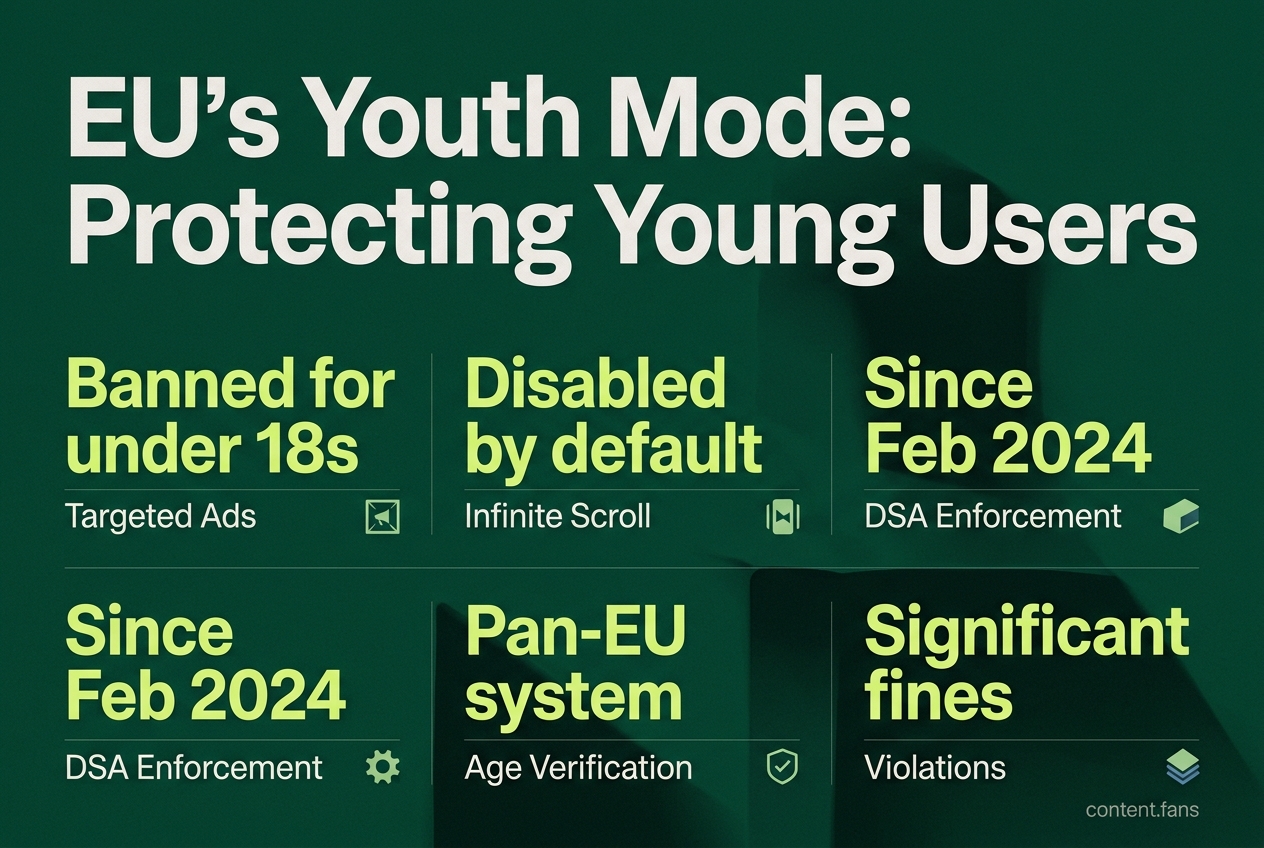
What is the EU's 'Youth Mode' Proposal?
The proposed 'youth mode' is a mandatory setting for users under 18 that would automatically disable addictive features. This includes targeted advertising based on profiling, infinite scroll, and autoplay video feeds, aiming to create a safer, less manipulative online environment for children across the European Union.
The legal groundwork for this push is already in place, drawing from major pieces of legislation:
- The Digital Services Act (DSA): Enforceable since February 2024, Article 28 of the DSA requires large platforms to mitigate algorithmic risks to minors and bans targeted ads based on their profiling. Repeat violations could lead to significant fines.
- The AI Act: This act will forbid AI systems that exploit the vulnerabilities of children, with various provisions taking effect over time.
What Could the Final Legislation Look Like?
A full proposal is expected to be tabled by EU officials in the coming period. Draft recommendations currently circulating in Parliament suggest the youth mode would include:
- A minimum digital age requirement, with higher thresholds without parental consent.
- Default disabling of targeted ads, infinite scroll, and autoplay.
- A ban on recommender algorithms that rank content based on predicted engagement.
- Personal liability for senior managers who systematically ignore age-verification obligations.
Parliamentary reports have also proposed banning loot boxes, curbing "kidfluencing," and developing a pan-EU, privacy-preserving age-verification system.
Industry Reaction and Unanswered Questions
Major tech platforms like Meta, TikTok, and X have remained publicly silent on the proposed Digital Fairness Act, especially as they face separate DSA investigations into "addictive design." Industry insiders privately note that removing personalized feeds for millions of young EU users would be a significant technical challenge requiring a complete overhaul of their recommender systems.
Complicating matters further, many EU member states are already drafting their own national age limits, creating a complex patchwork of regulations. The unified EU proposal aims to standardize these rules.
In the meantime, regulators emphasize that existing DSA rules are enforceable now. The possibility of significant fines gives lawmakers leverage to push for a mandatory youth mode without a lengthy legislative battle.
What is the EU's 'youth mode' proposal?
The upcoming EU initiative will require every major platform to offer a default-minor setting that:
- turns off targeted ads
- removes engagement tricks like infinite scroll, autoplay and push streaks
- blocks profiling-based recommendation so the feed is chronological or topic-curated, not personalised
Age verification will decide who sees this mode; the Commission is preparing a pan-EU, privacy-preserving tool.
How far along is the legislation?
There is no single enacted law yet, but the building blocks are already in force:
- Digital Services Act (Feb 2024) - bans profiling ads for known minors
- AI Act - outlaws manipulative or deceptive AI toward children
- A dedicated social-media package is expected from the Commission; MEPs have already endorsed the youth-mode concept and asked for personal liability of senior managers if rules are broken
What does current research say about algorithmic feeds and kids?
Studies show heavy exposure to engagement-driven algorithms is linked to:
- attention-span issues
- higher anxiety and depressive symptoms
- reduced social mobility because recommender systems lock children into narrow interest tracks
Low-quality or violent clips often sit in the same suggestion chain as child-friendly videos, fuelling concerning content loops.
How are platforms reacting so far?
Meta, TikTok and X have declined to comment publicly on the draft, likely waiting for the final text. Meanwhile:
- Meta faces preliminary DSA findings for Instagram's "addictive design"
- TikTok is being investigated for endless-scroll mechanics
- Many Member States are drafting national age-bans, so unified EU rules would simplify compliance
What happens next?
- Coming period - Commission expert group finalises impact assessment
- Later - formal legislative proposal, including possible EU-wide minimum age requirements for unsupervised social-media use
- Following period - Parliament and Council debate; if adopted, platforms will have to embed the youth mode and prove it works through annual risk audits
Keep an eye on updates; once the proposal is tabled, the industry will have a narrow window to adapt before penalties kick in.