
Ericsson, Net Feasa Partner on 4G, 5G, and AI for Maritime Shipping
Serge Bulaev
Ericsson and Net Feasa have formed a partnership to bring 4G, 5G, and AI technology to container ships, aiming for better cargo tracking and smarter decision-making at sea. The companies say this system may help owners, operators, and port authorities see cargo status from departure to arrival. Early uses include monitoring refrigerated cargo, handling dangerous goods, and spotting heat before damage happens. The first focus appears to be on container ships, with possible future expansion to other vessels and ports. Full ship autonomy is not expected soon, and the success of these AI features may depend on reliable connections, accurate sensors, and regulatory approval.
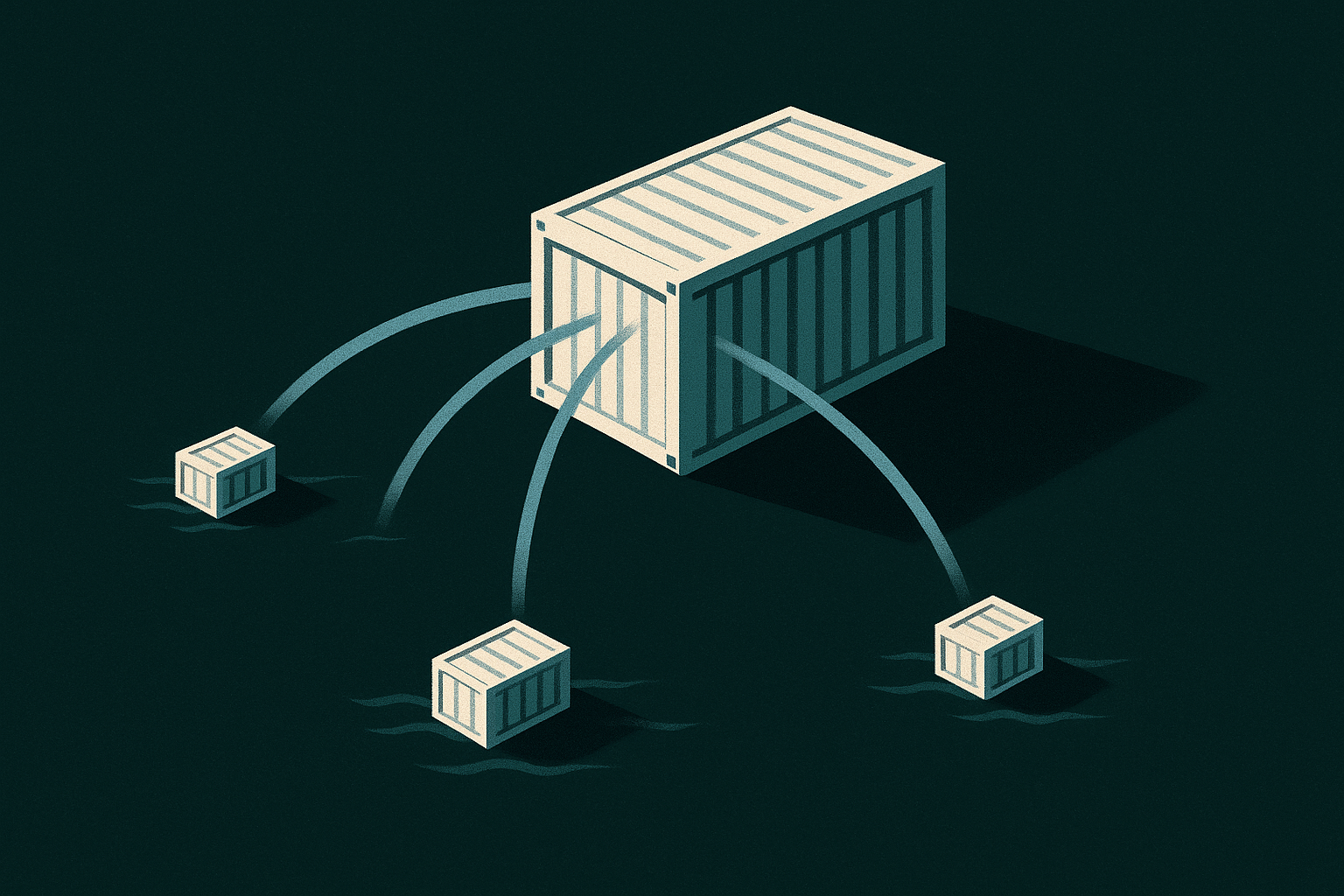
In a new partnership, Ericsson and Net Feasa are set to deploy 4G, 5G, and AI technology for maritime shipping, transforming container vessel operations. This global initiative, detailed in an Ericsson press release, uses carrier-grade cellular coverage to power real-time data analytics and AI-driven decision-making at sea.
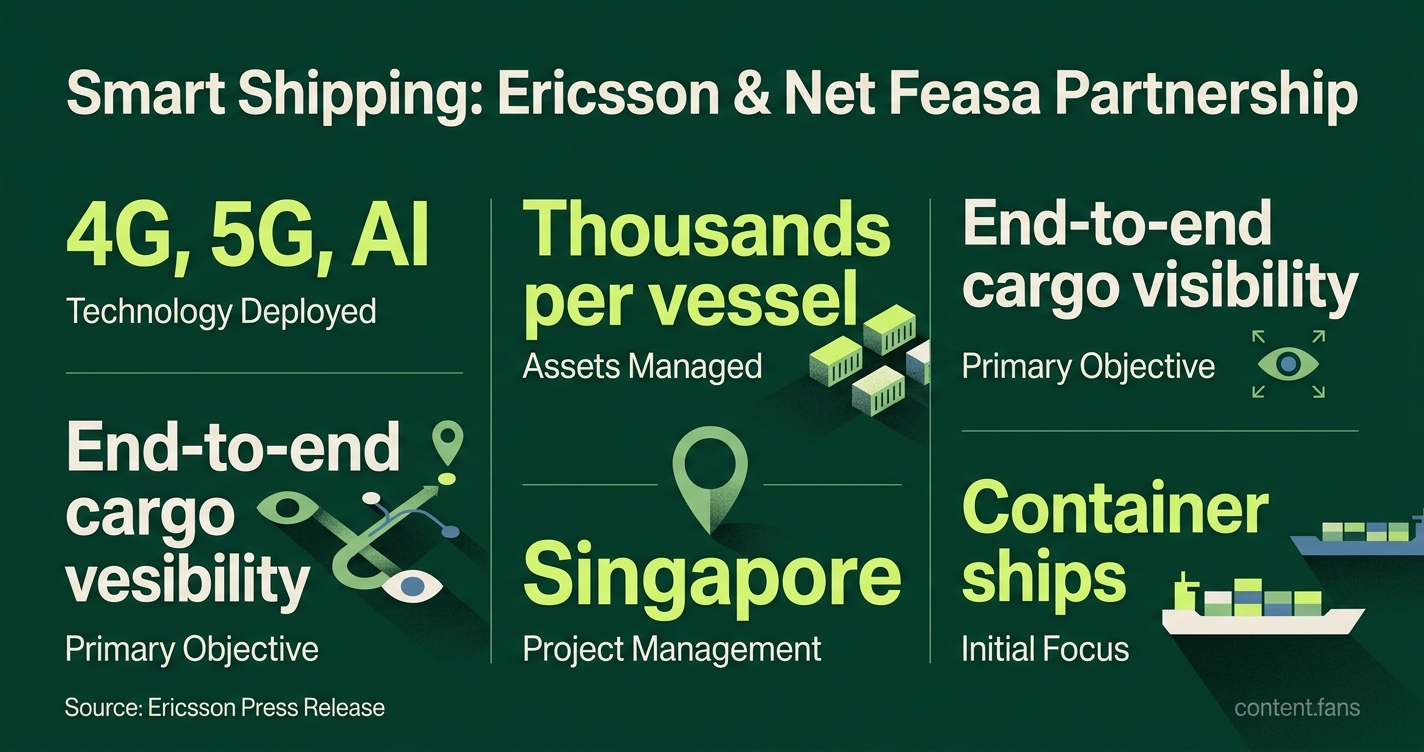
The partnership's primary objective is to achieve complete, end-to-end cargo visibility. This unified data environment will provide ship owners, operators, and port authorities with a single source of truth for tracking assets from departure through the entire voyage to port arrival.
What the partnership covers
The collaboration equips container vessels with Ericsson's 4G/5G cellular technology and Net Feasa's AI-powered Agentic Control Tower. This system provides a constant data connection for smart containers, enabling real-time monitoring of cargo conditions and asset locations, thereby improving visibility and operational control for shipping companies.
Under the agreement, Ericsson will provide its Radio System hardware and an on-demand 5G core network. Net Feasa will integrate this infrastructure with its Agentic Control Tower platform, a solution designed to process data from every smart container on a ship. The system is built to manage thousands of assets per vessel and is already being deployed globally, according to Computer Weekly.
Early use cases at sea
Initial deployments are focused on three high-value operational scenarios:
- Reefer Monitoring: Ensuring the integrity of temperature-controlled cargo.
- Dangerous Goods Handling: Enhancing safety protocols and incident prevention.
- Early Heat Detection: Identifying thermal anomalies to prevent cargo damage.
These use cases were prioritized for their significant commercial value and stringent compliance needs, which benefit greatly from reliable cellular connectivity, as noted by MarketScreener.
Geographic scope and timing
While project management is centralized in the major maritime hub of Singapore, Ericsson confirms that installation is "already under way globally." Specific fleet numbers remain undisclosed. The initial focus is on container ships, but the partners have a roadmap to potentially expand the technology to other vessel types and port infrastructures that require low-latency 5G capabilities.
Why 4G and 5G matter offshore
Onboard 4G and 5G networks offer significant advantages over traditional satellite connections, including lower latency and higher bandwidth. This enables more frequent sensor updates and richer data collection. Ericsson asserts this enhanced connectivity is the "foundation for data-driven operations and AI-enabled services," like predictive maintenance and dynamic routing. Continuous connectivity is expected to reduce cargo spoilage, improve disruption response times, and create more reliable audit trails. The partnership aims to deliver significant operational improvements for shippers through enhanced connectivity and data-driven workflows.
Agentic AI's role
The Agentic Control Tower from Net Feasa transforms each container into an intelligent software agent. These agents can issue alerts, suggest actions, and, in pilot programs, even autonomously book onward transport. The high bandwidth of 5G is critical for enabling powerful edge analytics and rapid feedback loops to support these functions.
Officials emphasize that full ship autonomy is not an immediate goal. The current phase (2025-2026) focuses on establishing a secure data layer that empowers human operators with earlier, context-rich intervention capabilities. The scalability of this agentic AI from specific applications to full fleet orchestration depends on consistent connectivity, sensor precision, and regulatory approval.