
Dairy Industry Pivots to Wellness with New Fortified Products
Serge Bulaev
The dairy industry appears to be shifting from just selling protein to offering products with added health benefits, like supporting gut health or appetite control. Analysts suggest that marketing dairy as a wellness product, backed by science, may help companies keep profits up in a changing market. Some new products, such as protein-fortified yogurts and drinks for immunity or energy, seem to reflect this trend. However, it may be challenging for some companies to develop these wellness products because they need new research and better marketing skills. While there is no guarantee of success, market reports suggest that these moves might help dairy companies handle price changes and meet growing consumer demand for healthier foods.

The dairy industry is pivoting to wellness, evolving from a commodity protein supplier to a source of multi-benefit nutritional products. This strategic shift is driven by rising consumer demand for functional foods and tightening margins on basic milk solids, compelling processors to reposition dairy as a science-backed wellness platform to protect profitability.
From protein to function
This strategic pivot is driven by economics and consumer behavior. With tighter pricing on basic milk products, companies are moving toward higher-margin functional foods. This shift allows them to meet growing consumer demand for products offering specific health benefits like gut support, satiety, and muscle maintenance.
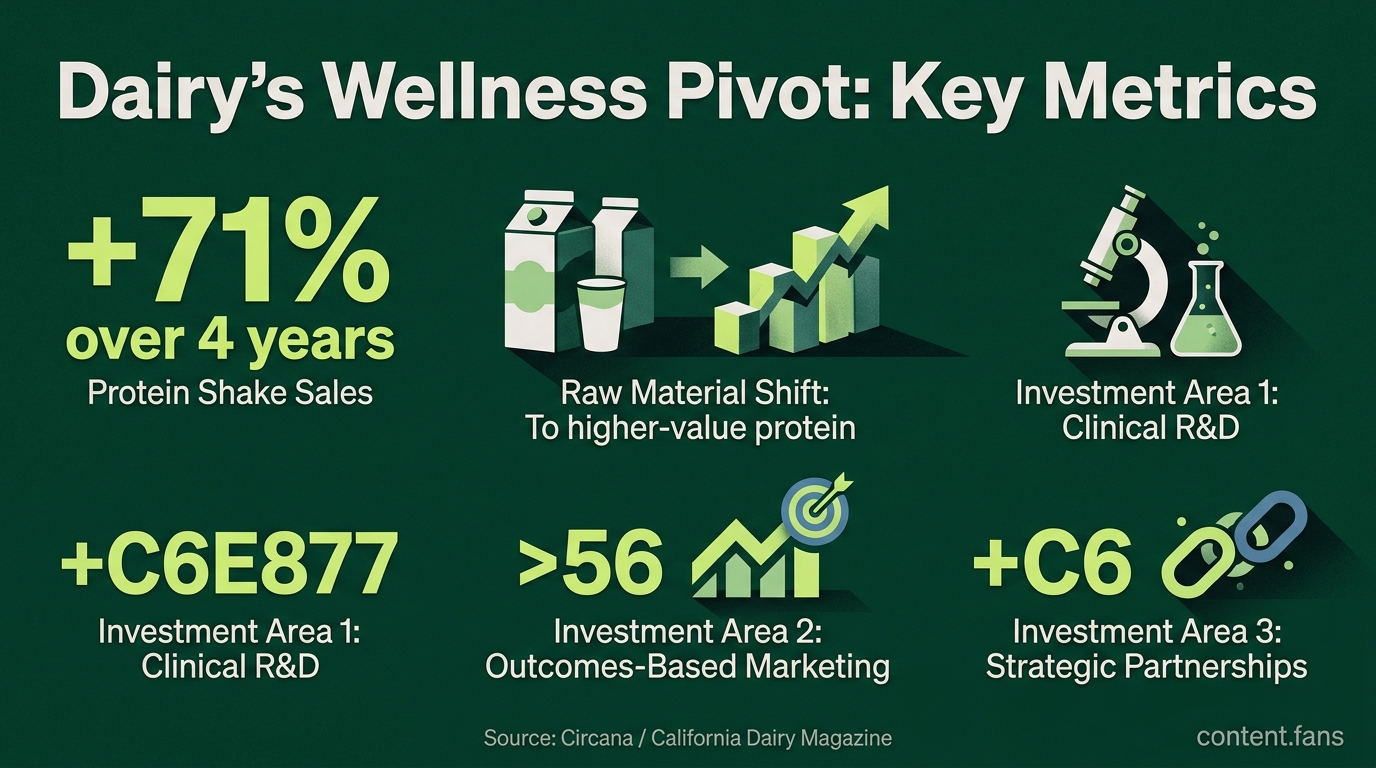
This trend is evident in new dairy beverages being developed for gut health, satiety, and even to support users of GLP-1 medications, according to industry reports. This benefit-led marketing strategy is validated by strong market performance. For instance, sales of ready-to-drink protein shakes climbed approximately 71 percent over four years, according to Circana (California Dairy Magazine). These figures confirm that added functionality commands both premium pricing and valuable shelf space.
Capability gaps to close
Transitioning into the wellness space demands new capabilities that many processors currently lack. Industry briefings highlight three critical investment areas:
- Clinical R&D: Investment in probiotic strains, advanced protein fortification, and clinical trials to validate health claims.
- Outcomes-Based Marketing: Developing consumer marketing that connects dairy products to measurable results like muscle maintenance or appetite control.
- Strategic Partnerships: Co-development with ingredient suppliers to speed up innovation, reduce risk, and accelerate product launches.
Supporting this, reports indicate that organizations like Dairy Management Inc. are funding innovation to embed dairy in wellness portfolios, with a long-term focus on precision nutrition and microbiome research.
Pricing and supply tensions
This strategic pivot occurs amidst increasingly complex supply dynamics. For instance, CME Group highlights a market paradox: despite growing overall milk output, supplies of nonfat dry milk are tightening. This suggests raw materials are being diverted to higher-value protein streams. Concurrently, new contracts demanding stricter documentation and paying premiums for higher protein content, as noted by The Bullvine, signal increased volatility for producers who remain in traditional commodity channels.
Early wellness playbooks
Early examples from the market illustrate how processors are successfully translating science into commercial growth:
- Transparent Yogurts: Prototypes with added whey protein appeal to consumers seeking clean labels and muscle health benefits.
- Carbonated Milk Drinks: Whey is being repositioned as a base for energy or recovery beverages.
- Concentrated Shots: Kefir and colostrum shots deliver immune and gut health benefits in convenient, single-serve formats.
- High-Protein Snacks: On-the-go cottage cheese portions are meeting consumer demand for satiety.
Each concept enhances dairy's natural protein with a specific health benefit, directly targeting the significant portion of U.S. shoppers who, according to Circana, prioritize wellness attributes in their food choices.
Strategic takeaways for leadership teams
For executive teams considering this pivot, key strategic actions include:
- Map current milk component flows against future protein and bioactive demand.
- Build cross-functional squads that unite R&D, regulatory, and brand to validate claims quickly.
- Pilot small-format, high-margin products in channels frequented by fitness or medical consumers before scaling.
- Partner with universities or third-party labs to generate publishable data supporting gut, muscle, or metabolic benefits.
While no single strategy guarantees success, market data indicates these steps can mitigate exposure to commodity market volatility and capitalize on consumer demand for proven health outcomes.