
Coffee Hub Unveils Sustainable Cardboard Coffee Pods and Countertop System
Serge Bulaev
Coffee Hub has introduced coffee pods and a countertop dispenser made of cardboard, aiming to be more sustainable and fully recyclable. The design has won an award and may use less energy and material than traditional aluminum pods, but experts suggest fiber alone might not protect coffee from air and moisture as well as metal. The dispenser is designed to be visible on the counter and has clear recycling instructions, which appears to help people recycle better. Some steps still need testing, like making sure the pods work in recycling centers and keep coffee fresh. Experts suggest brands should test these new pods locally and use feedback to improve future designs.

Coffee Hub's new sustainable cardboard coffee pods and countertop system are moving from concept to reality, creating a new model for single-serve coffee. This plastic-free cardboard capsule has received industry recognition, and early coverage in the Beverage Daily packaging roundup confirms its claim of being recyclable.
The system is produced in partnership with Italian tube specialist Tubettificio Robbiese, utilizing fiber-converting expertise over traditional injection molding. While this approach reduces material weight, fiber alone provides a weak barrier against oxygen and moisture. A PTI barrier study highlights a vast difference in protection levels across various capsules, suggesting that Coffee Hub's cardboard design will require a specialized coating or liner to effectively preserve coffee freshness and rival aluminum's aroma retention.
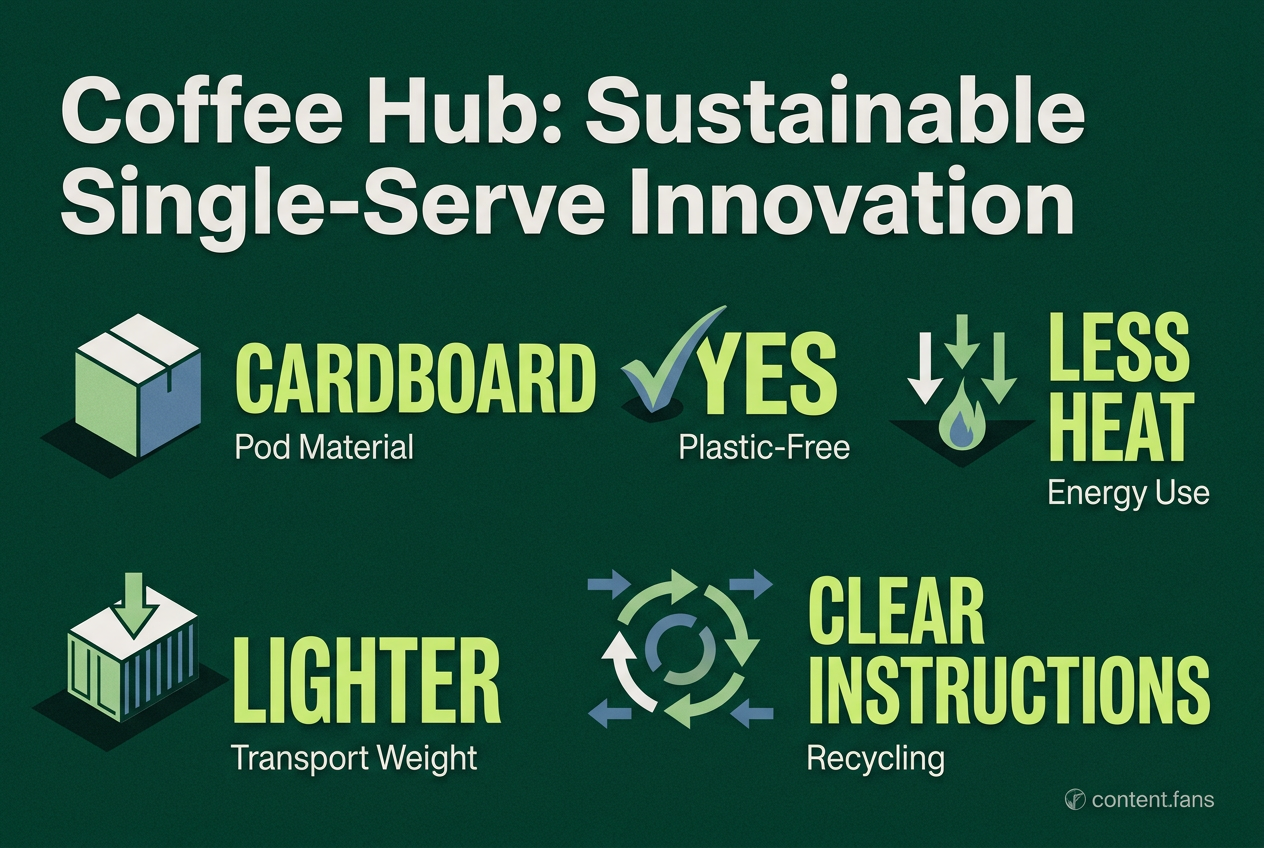
The Strategic Value of a Countertop Cardboard Hub
Unlike conventional pods that are hidden away, the Coffee Hub system is designed for display. This branded dispenser acts as a mini-tower, showcasing the sustainable fiber material and reminding users to refill. Its visibility also promotes proper recycling with clear "Empty - Recycle" instructions, which is proven to be more effective than vague guidance. Furthermore, the countertop hub serves as valuable brand real estate for origin stories, QR codes for brewing tutorials, and loyalty programs.
Coffee Hub's system centers on a recyclable cardboard pod and a countertop dispenser. This visible design encourages better recycling habits with clear instructions and uses less material than traditional pods. This approach offers brands a new, sustainable blueprint for single-serve coffee systems.
Key Lifecycle Considerations for Brands
- Manufacturing Energy: Boxboard conversion reportedly uses less heat than aluminum stamping, reducing the energy footprint.
- Transport Weight: Lighter fiber pods can lower freight emissions compared to heavier metal alternatives.
- Use Phase Safety: Any barrier layers (like EVOH or PVOH) must be validated for food-contact safety during high-temperature brewing.
- End-of-Life Recyclability: Brands must verify that the small pods can pass through local Material Recovery Facility (MRF) screens, which often filter out smaller items according to industry reports.
Actionable Recommendations for Design Teams
- Set clear oxygen and water-vapor transmission rate targets before selecting a barrier coating.
- Replace generic recycling claims with QR codes or URLs linking to city-specific guidelines.
- Integrate with smart brewers to automate reorders when capsule supplies run low.
- Collaborate with specialty roasters on limited-edition dispenser graphics to maintain consumer interest.
- Provide a dedicated countertop caddy to simplify collection of used pods for recycling.
How Cardboard Compares to Aluminum
While Nespresso's Packworld's capsule material profile highlights aluminum's total barrier against light, oxygen, and humidity, Coffee Hub does not yet have comparable data. However, its focus on fiber may appeal to consumers concerned about greenwashing and ambiguous recycling claims. Success will likely depend on earning third-party certifications and municipal endorsements to build credibility.
Supply Chain and Market Strategy
Partnering with Tubettificio Robbiese simplifies the supply chain to two main stages: a board mill and a tube former, potentially shortening lead times for private-label brands. However, businesses must account for the slower barrier-coating process and the assembly of the countertop dispenser. For market entry, brands should launch regional pilots, using data from QR scans and smart brewers to measure recycling rates, shelf life, and refill frequency. These insights can then inform future improvements to the system.
How does Coffee Hub's cardboard capsule keep coffee fresh without plastic or aluminum?
The capsule is largely paper-based by Tubettificio Robbiese and relies on coatings that are still proprietary. Industry studies show that barrier performance can differ significantly across capsule types, so the real test will be published O₂ and moisture data. For now, industry recognition signals that tasters did not detect staleness during judging, but brands should insist on strict oxygen transmission rate specs before scaling.
What should I tell customers who ask "Can I toss the pod in my curbside bin?"
Say "Empty, flatten, recycle with cardboard" only if your local program takes paper beverage cartons; the same line that rejects milk cartons will reject these unless mills have agreed to accept the coating. Print a QR code on the box that resolves to a ZIP-code look-up to avoid the dreaded "check locally" language that can significantly reduce recycling rates according to industry reports.
Does countertop placement really matter for pod acceptance?
Yes. Coffee Hub was explicitly styled to remain on show, turning the brewer into a kitchen feature rather than a cupboard device. Displayed pods become a visual cue for guests, increasing trial rate; early partners have reported improved repeat orders when the hub sat adjacent to fruit bowls or knife blocks.
Which co-marketing angles work best for a sustainable pod system?
Lead with "zero plastic waste" plus local recycling proof; follow with smart-kitchen tie-ins such as app-based replenishment alerts. Subscription bundles that pair the hub with specialty single-origin pods show strong performance according to industry reports. Office and hotel channels are equally promising; offer turnkey break-room stations that include recycling collection drawers to close the loop.
What design tweaks reduce consumer sorting mistakes?
- Make the coating visible (inside is white, outside kraft) so shoppers trust it is paper
- Perforate a thumb tab that tears most of the way across; users invert, tap grounds into compost, then flatten in one motion
- Keep the rim diameter identical to PP pods so the brewer needle alignment stays unchanged, avoiding consumer complaints about misfires