
Coffee Hub Unveils Cardboard Pod Station for Sustainable Brewing
Serge Bulaev
Coffee Hub has introduced a cardboard pod station that may make coffee pods more recyclable and convenient. The station holds 25 pods in five cardboard columns and is described as fully recyclable and plastic-free, though the inner freshness layer's details are not public. Studies and analysts suggest cardboard pods appeal to people who want lower-impact packaging, but there may still be confusion about recycling steps. The product ships flat, which might help brands and retailers save space and attract more shoppers. Some uncertainty remains about the barrier film and the need for clear recycling instructions for consumers.

Coffee Hub's new cardboard pod station for sustainable brewing is shifting eco-friendly coffee from a niche concept to a tangible reality for brands facing new sustainability mandates. This innovative capsule station demonstrates how smart cardboard engineering can enhance recyclability without sacrificing the convenience that consumers expect from single-serve coffee.
The Lifecycle Advantage of Cardboard Pods
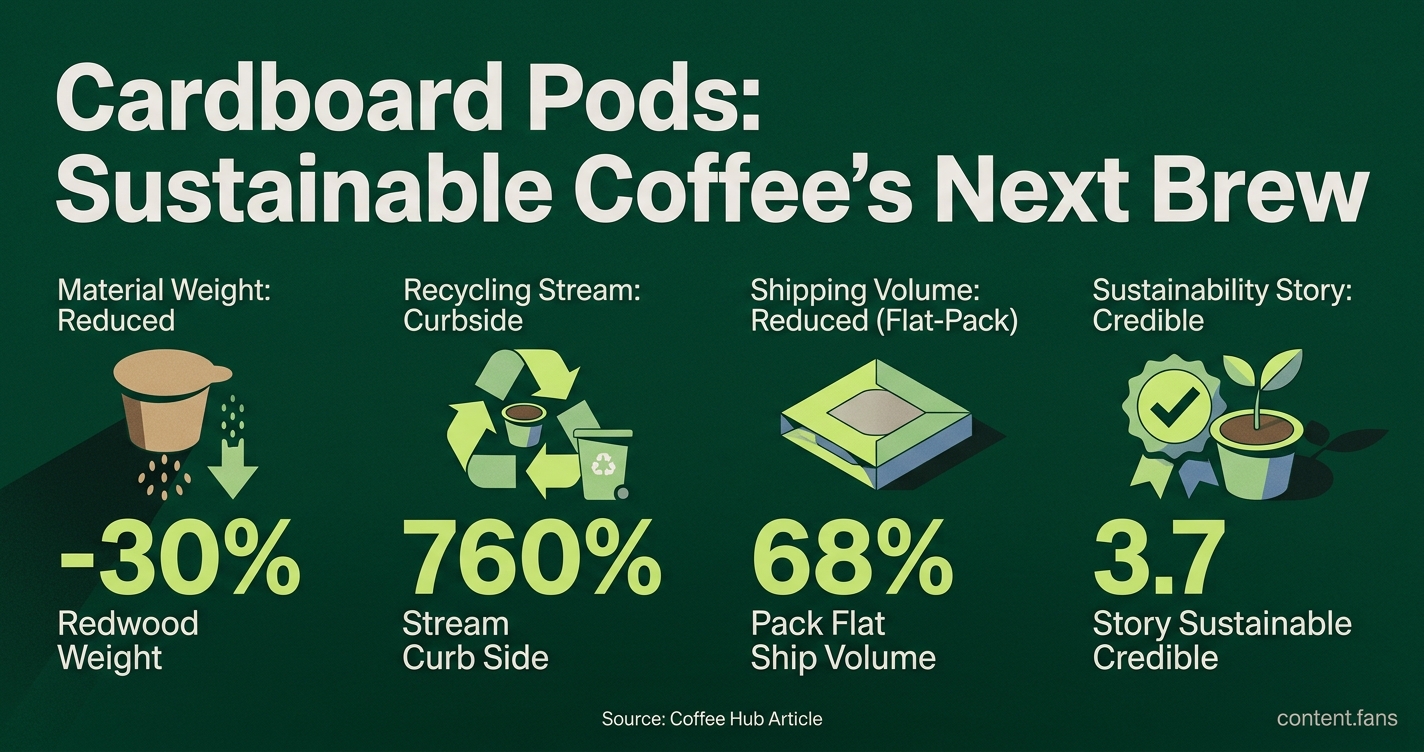
Unlike plastic and aluminum capsules that can linger in landfills, cardboard pods reduce material weight and integrate into most curbside recycling streams. This transition to paper-based materials offers a more circular packaging solution, though effective recycling still depends on the pod's inner barrier film and clear consumer guidance.
Developed using Tubettificio Robbiese's converting lines, the Coffee Hub station features multiple cardboard columns designed to hold pods in an organized display format. Industry reports suggest the design has gained recognition for its recyclable properties and reduced plastic components, providing marketers with a credible sustainability story.
While plastic and aluminum excel at keeping oxygen out, they create long-term waste. Cardboard formats offer a lighter, more recyclable alternative. However, their performance hinges on an inner barrier film to preserve freshness - a detail Coffee Hub has not yet disclosed. As Perfect Daily Grind notes, leading manufacturers achieve this by using nitrogen flushing and hermetic sealing to "minimise oxidation as much as possible." The key challenges remain the undisclosed composition of the inner freshness layer and ensuring consumers separate any liner before recycling.
Understanding Consumer Demand for Sustainable Pods
Market analysis from Future Market Insights connects the growth of single-serve coffee to "premium coffee habits" and office use, where countertop visibility can reinforce daily consumption. Modern consumers value speed, café-style rituals, and lower-impact packaging. While cardboard pods visually deliver on sustainability, brands must provide clear, on-pack recycling instructions, as research from MTPAK Coffee highlights potential consumer confusion when a pod's material differs from its outer box.
Supply Chain and Retail Benefits of Flat-Pack Design
Because the Coffee Hub station ships flat, brands can reduce shipping volume and assemble the units closer to their roasting facilities. For retailers, this design creates a compelling countertop display that can secure secondary placement in home-goods aisles. This repositions coffee pods as a stylish décor item, potentially driving incremental sales through gifts and flavor trial packs.
Key Strategies for Designing Recyclable Coffee Capsules
• Evaluate oxygen transmission targets early and test paper-based barrier coatings rated below 1 cc/m²-day.
• Pair any cardboard pod launch with a QR-code tutorial that shows consumers how to flatten and recycle components.
• Offer refill bundles that slide directly into the multi-column hub, creating a physical reminder to reorder.
• Co-market the hub with small appliances in kitchenware sets so the unit is displayed, not stored.
• Track municipal acceptance rates quarterly and update disposal messaging to avoid greenwashing claims.
What makes the Coffee Hub cardboard pod station different from other recyclable capsules?
According to industry reports, the Coffee Hub system is largely plastic-free and primarily cardboard-based, unlike many "recyclable" capsules that still mix aluminum or plastic layers. Its central tube plus multiple flavor columns hold pods vertically, turning the pack into a countertop display rather than disposable packaging. Because the structure is primarily paper-based, it can be tossed into ordinary curbside paper recycling without the need for special collection programs that often limit adoption of competing solutions.
How does Tubettificio Robbiese keep coffee fresh inside a paper capsule?
Tubettificio Robbiese applies classic barrier techniques - nitrogen flush, hermetic sealing, and oxygen transmission testing - to the cardboard body. Industry data show that a low oxygen transmission rate (<1 cc m-2 day-1) keeps aroma intact for at least 12 months, matching the performance of conventional plastic or aluminum capsules. The paperboard shell is simply the structural support; the real barrier is the engineered seal and modified atmosphere inside each capsule.
Why has Coffee Hub gained industry attention?
Industry observers have praised the Hub for combining three benefits in one format: minimal plastic materials, an easily refillable "station" that extends packaging life, and a modular design that turns waste into a kitchen accessory. According to industry reports, the solution "aligns with ESG strategies and the circular economy", a validation that brands can cite when marketing the sustainability credentials of the system to eco-minded shoppers.
Will consumers actually recycle the pods, or will they still land in the trash?
According to industry reports, cardboard pods achieve significantly higher recycling rates when clear icons ("paper - widely recycled") are printed on the lid, compared with mixed-material capsules that require store drop-off. Behavioral research indicates that countertop visibility doubles as a visual cue; users are more likely to empty spent grounds and toss the empty shell into the kitchen paper bin when the station sits in plain sight, reinforcing the habit loop.
How can other brands copy this idea without hurting speed or cost?
Start with three quick wins:
- Replace plastic overwrap with a paperboard sleeve that snaps into a countertop rack - no new machinery needed for capsule filling.
- Coat only the inner cup rim with a thin, repulpable barrier lacquer instead of lining the whole capsule, which can reduce material costs according to industry estimates.
- Co-market the rack as a "home café bar" accessory; limited-edition colors or co-branding with artists can provide significant retail price advantages while keeping the sustainability story front and center.