
Anthropic commits $200B to Google Cloud, testing vendor lock-in
Serge Bulaev
Anthropic may spend up to $200 billion on Google Cloud and chips, which could be over 40% of Alphabet's cloud revenue backlog, but Reuters could not confirm the contract details. The reported commitment appears to include data-center space, TPU chips, and cloud services, though exact terms and payment schedules are not public. Analysts say the deal highlights how big AI companies try to secure resources and discounts, but it might also create risks around relying on one vendor and lead to regulatory questions. There are still uncertainties about what the $200 billion covers and how the contract works. Policymakers and investors are watching for more details before making further decisions.

Reports indicate that Anthropic commits a significant amount to Google Cloud and its custom chips, an unprecedented five-year investment that could reshape the AI infrastructure landscape. The deal, if confirmed, would represent a substantial portion of Alphabet's cloud revenue backlog, but key details have not been verified (Reuters report). This massive commitment highlights the high-stakes strategy of securing long-term computing power while exposing AI developers to significant vendor lock-in risks and potential regulatory oversight.
What Does the Reported Major Commitment Include?
While official payment schedules are not public, the reported deal is widely believed to cover a combination of Google's specialized TPU chips, reserved data-center capacity, and discounted cloud services. This follows Anthropic's separate public announcement of a major compute partnership with Google and Broadcom.
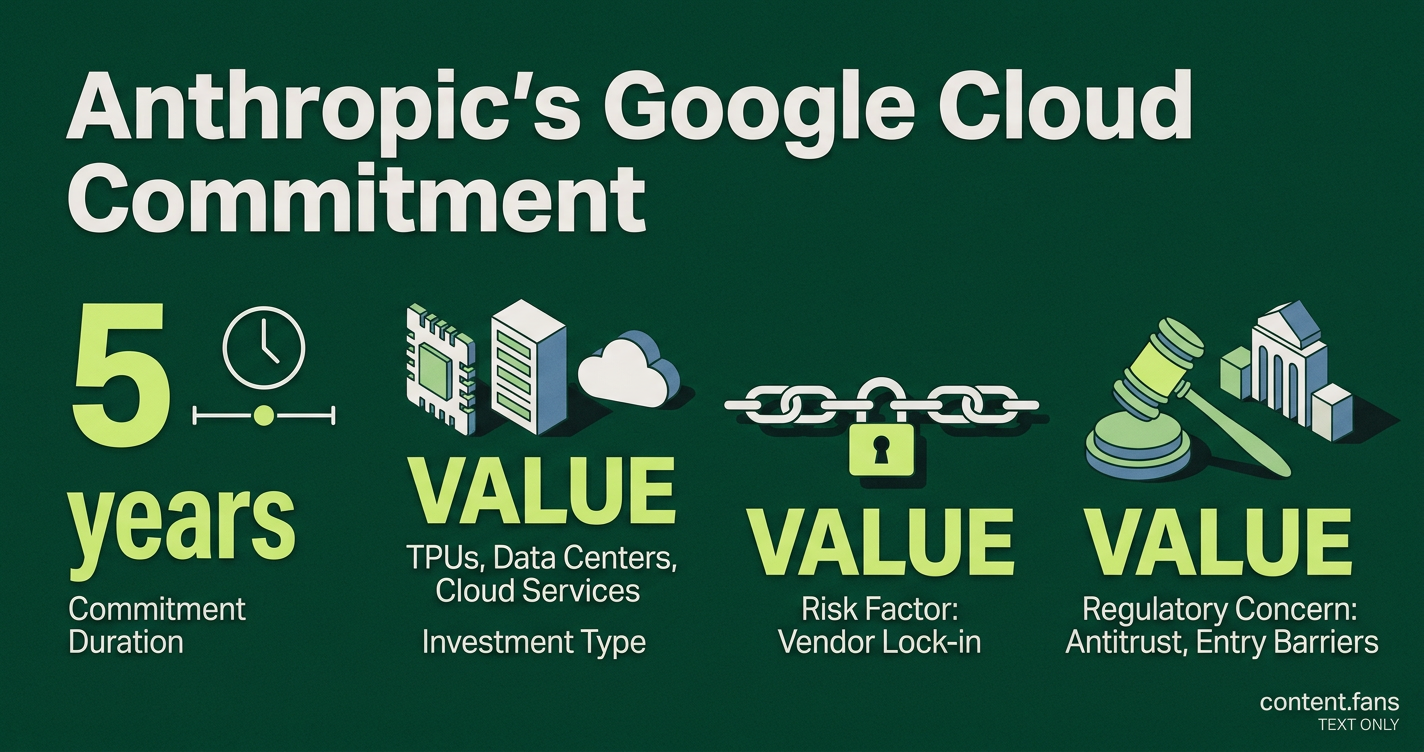
Official filings lack a payment schedule, but industry observers connect the rumored deal to a confirmed partnership. According to industry reports, Anthropic announced a major collaboration with Google and Broadcom for significant next-generation TPU capacity (Anthropic press release). Analysts speculate the reported figure encompasses this TPU allocation alongside data-center space and cloud services, with specific pricing tiers remaining confidential.
To put the scale in perspective, according to industry reports, Anthropic's reported single-customer spend rivals the entire planned infrastructure capex for major cloud providers.
Key questions about the contract remain unanswered in public reporting:
* Does the total combine cloud services with direct hardware purchases?
* What are the terms for termination or adjusting committed volumes?
* How will the amount be recognized toward Alphabet's revenue backlog each year?
How Are Regulators and Competitors Viewing Mega-Cloud Deals?
The sheer capital required for AI infrastructure is already raising entry barriers. With U.S. hyperscalers spending substantial amounts on data centers, large-scale, exclusive deals like the one between Anthropic and Google are drawing regulatory attention (Brookings analysis).
Competition authorities are concerned that such vertically integrated partnerships could foreclose smaller rivals by bundling scarce compute resources with AI services. This could give incumbents an insurmountable advantage, prompting antitrust investigations into the AI supply chain.
What is the Financial Logic Behind a Major Commitment?
For AI developers, massive pre-commitments serve a strategic purpose: securing resources and controlling costs. The primary benefits include:
* Securing Supply: Gaining priority access to specialized hardware like TPUs during supply shortages.
* Price Stability: Locking in fixed-rate pricing and significant discounts, potentially exceeding the typical discounts given for multi-year enterprise deals.
However, this strategy introduces a significant trade-off. By locking billions into a single vendor, a company like Anthropic loses the flexibility to pivot to new, more efficient chip architectures or capitalize on more favorable energy pricing in different regions.
How Do Power and Grid Limitations Impact AI Infrastructure?
The demand for substantial power capacity, as mentioned in Anthropic's TPU announcement, is equivalent to the output of several large power plants. This immense energy consumption is straining electrical grids, forcing policymakers to act. State-level regulators are now implementing stricter rules, requiring data-center developers to fund transmission upgrades and verify their use of renewable energy sources. Grid planners also warn that concentrating such massive electrical loads in one area could increase utility rates for all customers if cost allocation policies don't keep pace.
What to Expect Next from Anthropic and Google
Moving forward, both investors and policymakers will be watching closely for more transparency. Investors are seeking concrete details from Anthropic or Alphabet regarding contract specifics, including revenue recognition and any potential escape clauses. Simultaneously, policymakers concerned with market concentration and energy consumption will likely use this deal as a case study to inform future regulations for the rapidly growing AI infrastructure sector.