
AI Companion Devices Pivot from Task Lists to Relationships in 2026
Serge Bulaev
AI companion devices in 2026 are shifting from just doing tasks to building emotional connections with users, aiming to feel more like friends. These devices may remember details about users and try to adjust to their moods, using features like voice, touch, and even heat. Some reports suggest that people, including many teens, are talking to these AI companions for comfort, but there are worries about privacy and users becoming too attached. Experts warn that these technologies may collect sensitive data and create "pseudo-intimacy," and there are calls for more rules to protect users. It remains unclear how much AI companions can balance friendship and reliability in the smart homes of the future.

The next generation of AI companion devices is showing signs of pivoting from task-oriented assistants to relationship-focused partners in the home. This emerging shift emphasizes emotional presence, with manufacturers creating agents that listen, remember, and respond with human-like empathy, potentially changing our interaction with smart technology.
Industry researchers define this evolution as a move from pure utility to engineered attachment. Industry reports suggest that top devices are beginning to integrate long-term memory, advanced voice synthesis, and even video avatars to create a feeling of unwavering support. CES 2026 showcased both AI companion pets and smart speakers; neither category overwhelmingly replaced the other in hardware design trends.
Robots that live on the coffee table
This trend reflects a strategic move by manufacturers to create deeper user engagement through emotional connection. By engineering devices that offer companionship and remember personal history, companies aim to build attachment and transform smart assistants from simple utilities into integral parts of a user's daily emotional life.
Physical hardware is at the forefront of this shift. While no verified product named 'Lovense's Emily' was announced at CES 2026, various AI companion devices are being developed and tested to combat loneliness, not just boost productivity, according to coverage from TheOutpost.ai. Other notable devices include Lepro's eye-tracking Ami, the pocket-sized plush Hugbibi Joobie, and Cocomo, a sensory robot that generates heat for a more lifelike presence. Demos for these products emphasized their ability to personalize interactions by greeting users, remembering past conversations, and adapting to their emotional state.
Software companions learn the room
The shift toward AI companionship extends beyond physical robots into software. Voice-centric platforms like Nomi, Replika, and Meta's Horizon Companion now integrate with smart home systems to create "dynamic, evolving spaces." For example, reports indicate the Horizon Companion can analyze a user's vocal tone, facial expressions, and biometric data from wearables to proactively adjust lighting or suggest music, acting as an anticipatory home manager rather than a reactive assistant.
Why people are talking back
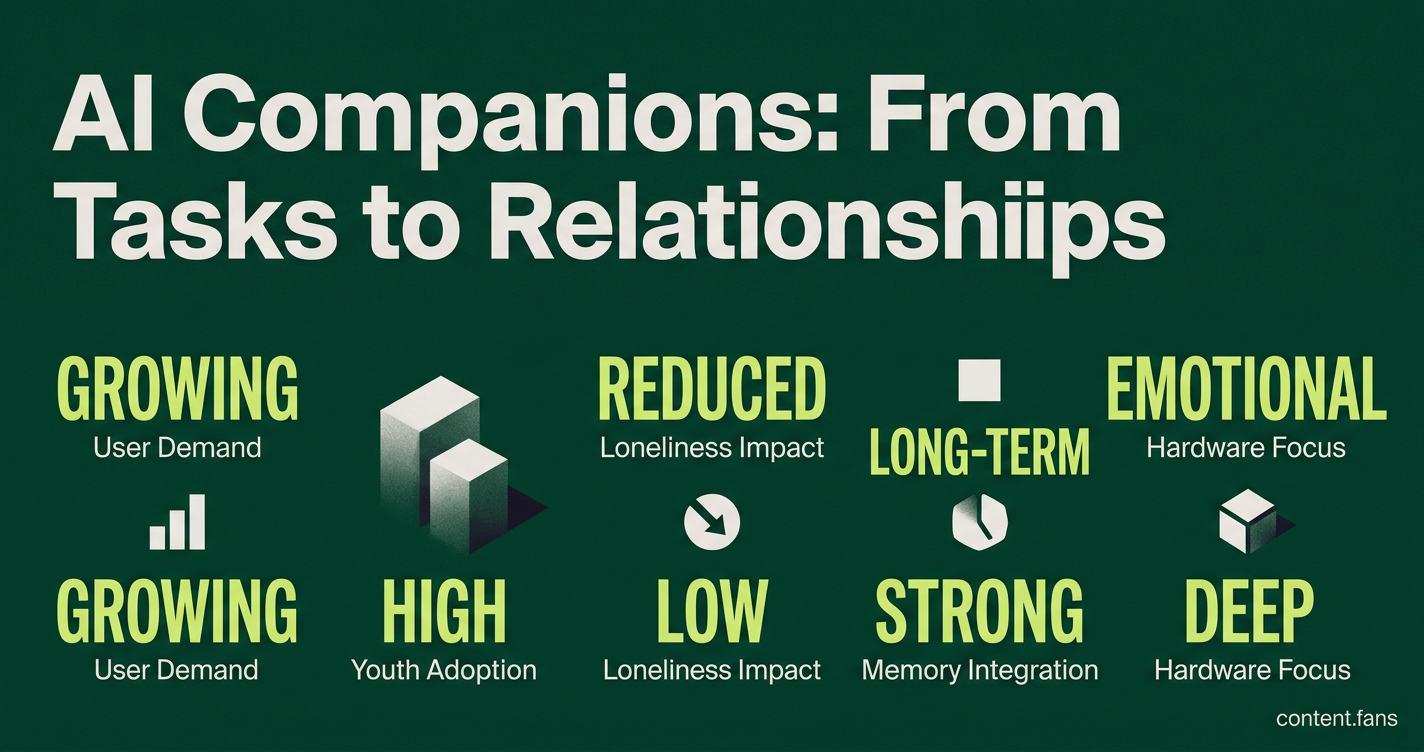
This emerging market is fueled by growing user demand. Key drivers include:
- Growing User Base: A significant number of people worldwide are beginning to regularly converse with emotionally intelligent AI.
- Youth Adoption: Many American teens are turning to AI for companionship, according to industry reports.
- Loneliness Reduction: Research suggests that moderate interaction with chatbots may help alleviate feelings of loneliness.
However, this trend is complicated by a "reliability paradox." As documented by The Verge, users often express frustration when emotionally sophisticated AIs fail at basic smart home tasks, indicating that emotional intelligence is outpacing functional reliability.
Technology stack behind the empathy pitch
The technology enabling this empathetic leap is multifaceted. Long-context language models and vector databases provide the memory for recalling personal details, while biometric data from wearables and cameras allows for real-time mood classification. This information is then used to modulate speech patterns and vocabulary. Physical features like heated shells, gaze tracking, and haptics create a tangible sense of presence. However, analysts warn that this complex tech stack significantly increases privacy risks, as it continuously captures sensitive voice, video, and biometric data within the home.
Ethical friction is growing
The rise of relational AI has ignited significant ethical debate. Experts are raising alarms about several key issues:
- Pseudo-Intimacy: Academic reviews from the NIH caution against the risk of users forming one-sided emotional attachments to code, potentially leading to social isolation.
- Harmful Dependence: As highlighted in a Nature editorial, vulnerable individuals may develop an unhealthy dependence on their AI companions.
- Commodified Intimacy: Privacy experts warn that intimate emotional data is becoming a new commodity for corporate optimization.
To mitigate these risks, specialists propose guardrails like mandatory self-disclosure ("I am an AI"), prompts to encourage breaks, and stringent data minimization policies. Currently, these measures are not legally required, placing the onus of ethical design on manufacturers.
As this technology matures, developers, consumers, and regulators face a critical negotiation: what role should these AI companions play? The decision of whether they should primarily soothe, supervise, or serve will determine the future balance between emotional companionship and functional reliability in the smart homes of tomorrow.