
Yotpo Unveils Discover: An AI Visibility Platform for Ecommerce
Serge Bulaev
Yotpo has launched Discover, a platform that may help ecommerce retailers stay visible and trusted in AI-driven search results. The platform tracks how products appear across different AI systems and suggests using technical tools like schema markup and fresh product data, which Yotpo claims are important for being cited by AI. Discover uses agents to check and fix product data, create helpful content, and encourage real shopper reviews. Yotpo suggests that tracking how often a brand is cited in AI results could help brands spot and fix visibility gaps. While Yotpo does not promise traffic increases, it claims its tools can help brands measure and improve their presence in AI-powered searches.

Yotpo has launched Discover, an AI visibility platform for ecommerce designed to help brands remain visible and trusted in AI-driven search. As search engines pivot to "answer-first" experiences, with Google AI Overviews appearing in a growing number of shopping queries, this new approach to optimization is critical. Yotpo's platform helps brands measure and improve their presence in AI-powered searches by tracking product appearances and providing tools to repair visibility gaps.
Why GEO Outpaces Classic SEO
Yotpo defines Generative Engine Optimization (GEO) as the practice of securing citations within large language model (LLM) outputs, shifting focus from traditional blue link rankings. The company's strategy guides emphasize that flawless schema markup and fresh product data are technical requirements for AI parsing. Simply tracking an "AI visibility score" is insufficient; brands must actively repair any identified gaps. Yotpo positions Discover as an AI visibility platform built specifically for commerce, noting that commerce-specific challenges like SKU-level variations and multi-region catalogs are often missed by single-score dashboards.
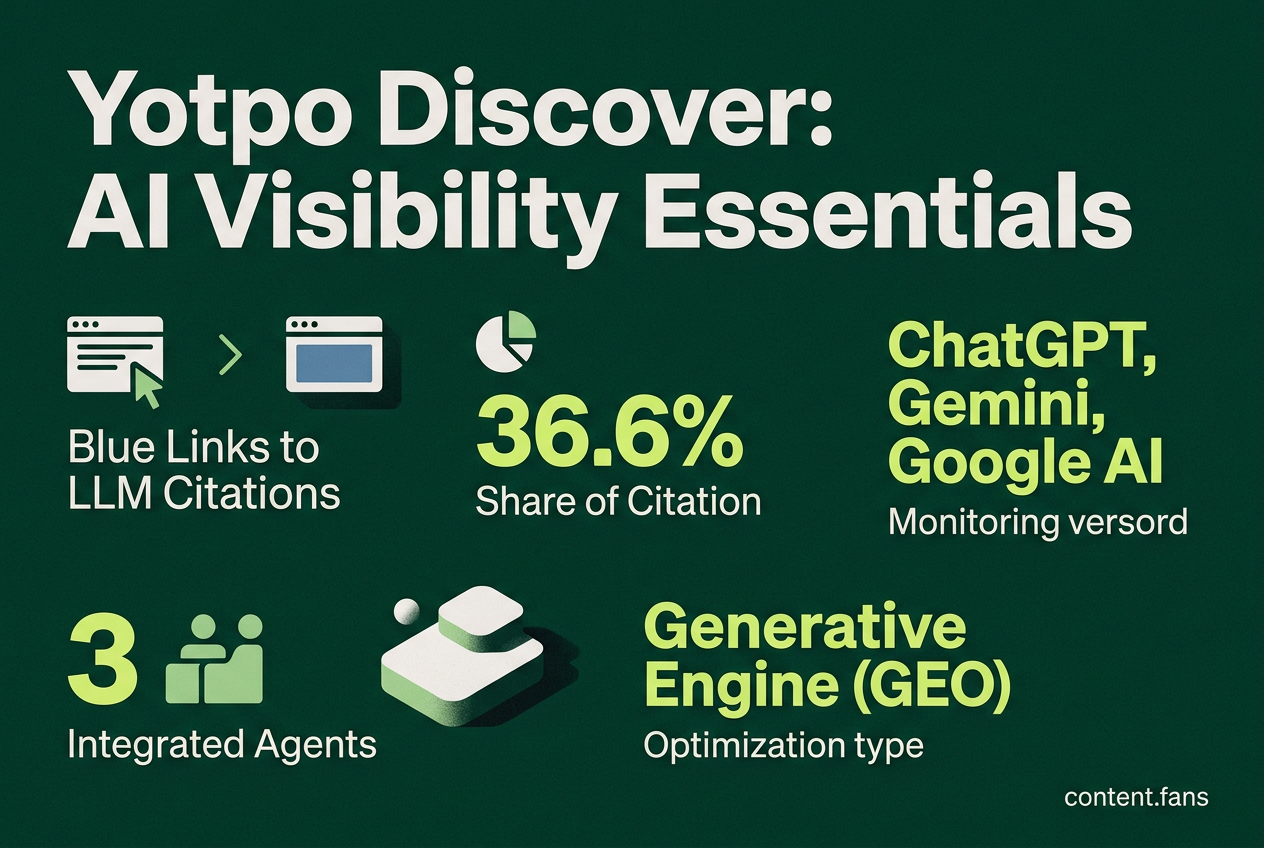
Generative Engine Optimization (GEO) is a strategy focused on getting a brand's products and content cited directly within AI-generated answers, such as Google's AI Overviews. Unlike traditional SEO, which targets high rankings in link lists, GEO prioritizes structured data and authoritative content that large language models trust.
Inside Yotpo Discover: Visibility Plus Action Agents
The Discover platform monitors product visibility across ChatGPT, Gemini, and Google AI Overviews at the SKU, category, and persona levels. To address areas of weak visibility, the platform deploys three integrated agents:
- Onsite Agent - Audits and fixes Product, Offer, Review, AggregateRating, and FAQPage schema so LLMs can cite catalog data without guessing.
- Content Agent - Generates briefs and drafts that answer granular follow-up questions exposed by query fan-out.
- Activation Agent - Mobilizes real shoppers on Reddit, marketplaces, and review communities that LLMs frequently reference.
Measuring Success: Share of Citation and Prompt Tracking
Yotpo recommends tracking "Share of Citation" as a key performance indicator across generative AI platforms like ChatGPT, Gemini, Perplexity, and Amazon Rufus. To connect this metric to revenue, brands should map AI prompts to specific buyer personas and monitor weekly performance shifts. Discover records which prompts mention a product, the mention's position, and the sources cited by the AI. This granular, prompt-level tracking is crucial, as industry reports suggest that brands unprepared for the AI shift could face significant traffic declines. Identifying citation gaps in real time allows retailers to prioritize targeted fixes, such as schema updates or generating new reviews.
Structured Answers Win AI Overviews Slots
To secure placement in AI Overviews, Yotpo's playbook advises implementing structured data, including FAQ blocks in valid JSON-LD, along with MerchantReturnPolicy and shippingDetails schema. AI models prioritize "Ground Truth" data that can be verified with sources like fresh customer reviews. Consequently, Discover integrates with Yotpo's Reviews and Loyalty modules, enabling merchants to feed live, attribute-rich feedback into product pages, enhancing their trustworthiness for LLMs. While not guaranteeing traffic increases, this integrated workflow allows teams to audit visibility, correct schema, generate content, and measure citation share in a closed loop - a significant advantage over single-score point solutions.
What is Yotpo Discover and how does it differ from traditional SEO platforms?
Yotpo Discover is an AI visibility platform built specifically for commerce. While most AEO/SEO dashboards stop at showing a visibility score, Discover pairs prompt-level visibility tracking with three action-oriented agents - Onsite, Content and Activation. It measures how your products appear inside ChatGPT, Google AI Overviews and Gemini at the SKU, category and persona level instead of just reporting generic site-wide metrics.
Which new metrics should ecommerce teams track instead of keyword rankings?
The shift to answer-and-cite search means brands now monitor:
- Share of Citation inside AI Overviews
- Prompt-level visibility that maps to buyer journey stages (awareness, consideration, purchase)
- On-SERP revenue impact rather than raw click volume
Industry reports suggest that unprepared brands could see significant drops in traditional search traffic, so tracking these new KPIs is critical for forecasting revenue.
How does Discover close citation gaps once they are identified?
Instead of leaving brands to interpret data, Discover runs three purpose-built agents:
1. Onsite Agent audits and fixes Product, Offer, Review and FAQPage schema so LLMs can parse and cite your catalog without guessing.
2. Content Agent generates AEO-ready briefs that answer the granular sub-queries surfaced by query fan-out.
3. Activation Agent mobilizes real shoppers on Reddit, marketplaces and review communities - the exact third-party sources LLMs train on and cite back to users.
What type of content drives prompt-level visibility for ecommerce brands?
According to industry benchmarks, the highest-performing formats are:
- Comparison pages that pit hero SKUs against key competitors
- Use-case landing pages optimized for "best [product] for [constraint]" prompts
- FAQ and integration pages wrapped in valid JSON-LD schema
Pages that combine high-density technical specifications, structured data and clear headings that match natural language queries are cited significantly more often in AI Overviews.
How often should brands re-measure prompt-level visibility?
Industry data shows AI answers can shift weekly due to model updates, citation changes or seasonality. SE Ranking recommends tracking for at least 30 days and Omnia advises weekly re-measurement across ChatGPT, Gemini and Google AI Overviews. A hybrid workflow that blends automated monitoring with human validation is considered the safest approach for accurate revenue forecasting.