
Tableau Pulse launches AI-powered insights, integrates with Einstein 1
Serge Bulaev
Tableau Pulse is a new feature that uses AI to provide insights and works with Salesforce's Einstein 1. Pulse may help users understand changes in their data by sending natural-language summaries and alerts to apps like Slack or email. Enhanced Q&A, now called Discover, lets users ask questions and get answers with charts and context, which reportedly makes data easier to use for global companies. Early reports suggest that Pulse is seeing strong adoption, with some companies saying it helps engage staff and explain data trends. Experts believe the demand for easy-to-understand analytics may be growing, but the move from old dashboards to new AI summaries is still happening.

Tableau Pulse is revolutionizing business intelligence by integrating generative AI with Salesforce's Einstein 1 platform. This new feature delivers proactive, natural-language insights directly to users through automated monitoring and analysis capabilities.
Key capabilities inside Pulse
Tableau Pulse represents an AI-powered approach to data analysis that focuses on delivering personalized insights. Instead of requiring users to search through dashboards, it proactively pushes metric changes and contextual summaries into applications like Slack and email, helping business users understand their data without technical analysis.
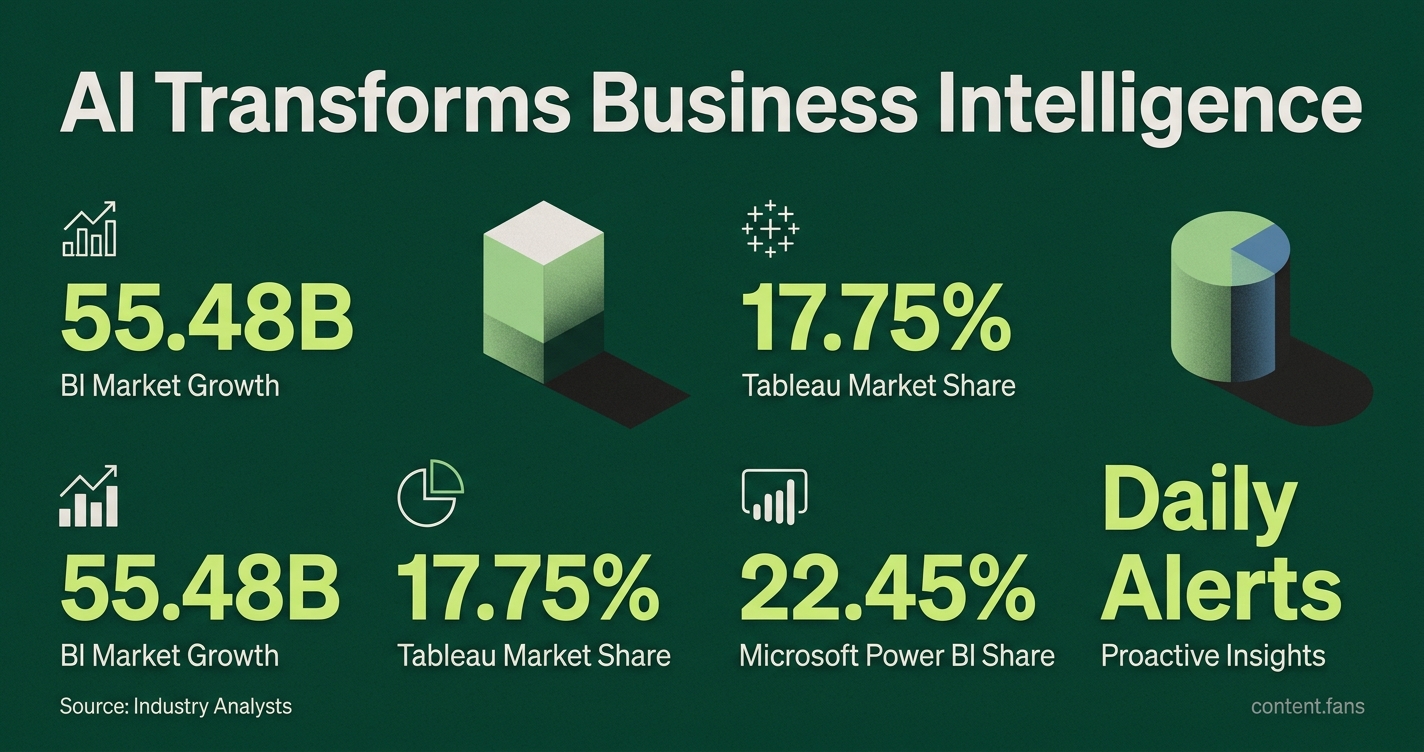
The system monitors key business metrics and detects significant changes, delivering insights as natural-language summaries that explain trends by identifying drivers, contributors, and outliers. These automated alerts are pushed directly to users in their preferred workflow tools - including Slack, Microsoft Teams, and email - in their configured language. The system can send alerts up to once per day, signaling a move toward always-on monitoring over scheduled reporting.
Conversational exploration with Enhanced Q&A
The feature also introduces "Discover," an evolution of Tableau's Enhanced Q&A capabilities powered by advanced language models. This conversational interface allows users to ask plain-language questions, such as "Which regions outperformed plan last quarter?," and receive instant visualizations, context, and suggested follow-up questions. To ensure low latency and support data residency for global companies, requests are routed based on the user's region and model capabilities. The organization ID is used for unique identification of the Salesforce instance.
How the feature aligns with Einstein 1 licensing
Advanced capabilities within Pulse are available through standard Tableau configurations, with routing options that can be configured based on organizational needs and data residency requirements.
Early adoption patterns
Early adoption trends indicate growing market interest. Industry reports suggest a significant number of organizations are exploring AI-powered analytics solutions. Notable examples include companies in telecommunications and insurance sectors that are piloting AI-driven data insights to improve employee engagement with critical business data.
According to industry analysts, there has been growing adoption of AI-enhanced business intelligence tools. As of 2026, Microsoft Power BI holds approximately 22.45% market share, while Tableau holds approximately 17.75% in the business intelligence space.
Market context
The launch of Pulse aligns with major trends in the broader business intelligence market. The global business intelligence and analytics market is projected to reach $55.48 billion by 2026. This growth is largely attributed to generative AI and agentic systems that dramatically accelerate the time-to-insight. While the industry-wide shift from reactive dashboards to proactive summaries is ongoing, the adoption of AI-powered analytics confirms a strong demand for easy-to-understand analytics that empower business users by explaining trends, not just visualizing them.
What exactly is Tableau Pulse and how does it use AI?
Tableau Pulse is a generative-AI layer that sits on top of Tableau Server or Cloud. Instead of making users hunt through dashboards, it pushes plain-language summaries, trend alerts, and conversational answers directly into Slack, Teams, email, or the Tableau mobile app. Behind the scenes, advanced language models detect drivers, outliers, and contributors for every tracked metric and wrap them into a short insight brief that reads like a news headline.
How does the Einstein 1 integration change the experience?
The integration utilizes routing capabilities that direct LLM requests to appropriate regions based on user location and data residency requirements. This keeps latency low and satisfies compliance rules. The system provides metric comparisons and intelligent routing, turning Pulse into a governed, enterprise-grade insight fabric rather than a simple alert tool.
How fast are companies adopting Pulse since its launch?
Adoption patterns suggest growing interest in AI-powered business intelligence tools. Industry reports indicate that many organizations are implementing conversational analytics solutions, with companies embedding these tools in their internal training programs and seeing employees without any prior data training start incorporating AI-generated insights into their workflows.
Does Pulse replace dashboards or sit alongside them?
It co-exists. Think of dashboards as the deep-dive library and Pulse as the personalized newsfeed. Users who only need to know "what changed and why" can stay inside Slack or Teams, while analysts still build full visualizations in Tableau Desktop. The metrics layer (headless BI) guarantees that both experiences reference the same KPI definition, so numbers never drift.
Is there measurable business impact so far?
Early adopters report improved decision-making speed for operational questions. Organizations are using AI-powered analytics to enhance client presentations and turn analytics into revenue conversations. The broader market shows strong growth potential, with the business intelligence sector continuing to expand as organizations seek more automated and intelligent data analysis solutions.