
Steam's Personal Calendar Boosts Game Wishlists by Thousands
Serge Bulaev
Steam's Personal Calendar suggests upcoming games to users based on what they and similar players have played. Developers report that this feature may quickly boost game wishlists by thousands, sometimes in just a few days. Some developers think it is now easier for smaller games to get front-page attention with this system, since it does not require manual applications. However, it is unclear if all these new wishlists will lead to more sales right away, as many users may add games without buying them at launch. Valve suggests that wishlist numbers are a helpful signal, but not a promise of sales.

Steam's Personal Calendar, a default feature on the storefront, is dramatically accelerating pre-launch wishlist numbers for upcoming games. According to developer reports, this personalized feed recommends titles based on a user's specific play history and the activity of similar players, rewriting the rules of visibility on the platform.
How the Calendar Drives Rapid Wishlist Growth
The Steam Personal Calendar boosts wishlists by algorithmically matching upcoming games to users with similar playtime profiles. Instead of relying on genre alone, it analyzes play habits to create highly relevant recommendations, placing games in front of the most likely players and driving thousands of targeted adds daily.
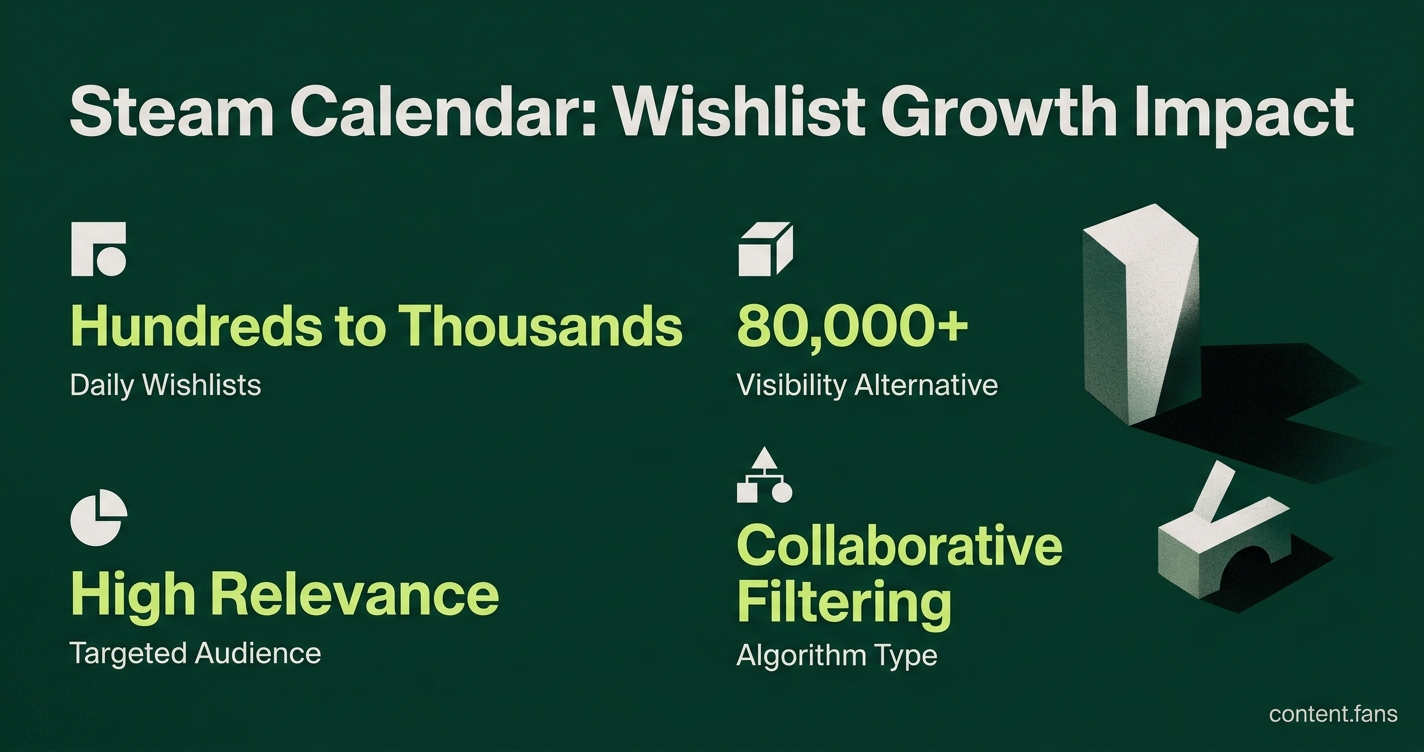
Developer data reveals a significant impact. A GameDiscoverCo analysis reported substantial wishlist gains for featured titles, with many projects experiencing dramatic increases in daily additions. Industry reports indicate that projects have jumped from hundreds of daily adds to several thousand, confirming Valve's claim that the algorithm prioritizes playtime affinity over simple genre tags.
A More Accessible Path to Front-Page Visibility
Developers note the calendar provides a crucial alternative to the "Popular Upcoming" list, which has an increasingly high barrier to entry. While that list can require over 80,000 wishlists, calendar placement is algorithmic and automatic. For example, according to industry reports, horror projects have seen their wishlist bases grow significantly within days of being featured.
Reported Wishlist Gains at a Glance
- Many featured titles experience substantial wishlist growth within the first few days
- Projects report adding thousands of additional wishlists per day above their baseline
- Industry reports indicate some games see their wishlist counts double in short timeframes
- GameDiscoverCo Case Study: A tracked project experienced significant growth during its pre-launch window
Do More Wishlists Guarantee More Sales?
The connection between calendar-driven wishlists and launch sales is still under review. While these additions come from a well-targeted audience, the ease of the one-click "add" button may lead to lower day-one conversion rates. Valve advises developers to view wishlists as a directional metric, not a sales guarantee. However, improved discovery directly impacts revenue; Valve said 5,863 games earned over $100,000 on Steam in 2025, and reporting described this as a record.
Understanding the Selection Algorithm
Steam's algorithm operates on a collaborative filtering model. It analyzes a user's play history - including session length and frequency - and identifies cohorts of similar players. The calendar then recommends upcoming games that these cohorts are following or have wishlisted. The system, which retrains daily, also highlights milestones like Early Access graduations, functioning as a personalized countdown for anticipated releases.
While Steam's discovery features will undoubtedly evolve, the Personal Calendar currently offers a significant opportunity for smaller games to gain front-page exposure without a large marketing budget. The ultimate value will be measured by how many of these new wishlists convert into sales, but for now, it's a powerful tool for getting on players' radars.
How does Steam's Personal Calendar decide which upcoming games to show me?
It analyzes your unique play habits - total hours, genres, and session patterns - to find players who play like you. It then shows you upcoming games that this "player cohort" has wishlisted. This creates highly personalized recommendations and can result in thousands of fresh wishlists for featured developers.
What size wishlist spikes are developers reporting right after calendar inclusion?
Industry reports indicate significant wishlist growth patterns:
- Featured titles often add thousands of wishlists within the first few days
- Many projects gain thousands of additional daily wishlists on top of their baseline
- Horror games have reportedly doubled their wishlist counts in short timeframes
- GameDiscoverCo-tracked title: Experienced substantial daily growth when featured on the front page
A GameDiscoverCo analysis notes significant wishlist growth for projects in their final launch window.
Does a calendar-driven wishlist boom guarantee higher launch sales?
Not necessarily. While the traffic is highly targeted, the one-click ease of adding a game from the homepage can lead to more casual, lower-intent wishlists. Valve cautions against expecting a 1:1 correlation with sales. The primary benefit is widening the top of the sales funnel.
Which types of releases are eligible for the calendar slot?
Any game with a public release date set within the next two months can be featured. This includes:
- Full 1.0 launches
- Graduations from Early Access
- Major updates designated by Valve as "new & upcoming"
Because the calendar is visible by default on the redesigned home page, it allows indie titles to gain visibility without needing massive pre-launch numbers.
How can studios maximize their chance of being picked by the algorithm?
Steam's model favors playtime similarity, recent wishlist velocity, and genre affinity. To improve your chances, studios should:
1. Use accurate Steam tags and clear capsule art to define the game's genre.
2. Build organic wishlist momentum early to signal positive velocity to the algorithm.
3. Set a firm release date 30-60 days in advance to align with the calendar's visibility window.
The calendar is a discovery booster, not a rescue parachute; it works best for games that already have some audience traction.