
Salesforce Agentforce Integrates with Google Search AI Mode for 2026
Serge Bulaev
Salesforce Agentforce Commerce may integrate with Google Search AI Mode for 2026, using a system called Headless 360. This architecture appears to allow AI agents to work with Salesforce data without opening the main platform. Early reports suggest some companies have automated many routine tasks and freed up staff time. Developer tools and resources are available and might expand in 2026, and the agentic AI market is projected to keep growing. Salesforce says future features will likely keep focusing on agents, not traditional user interfaces.

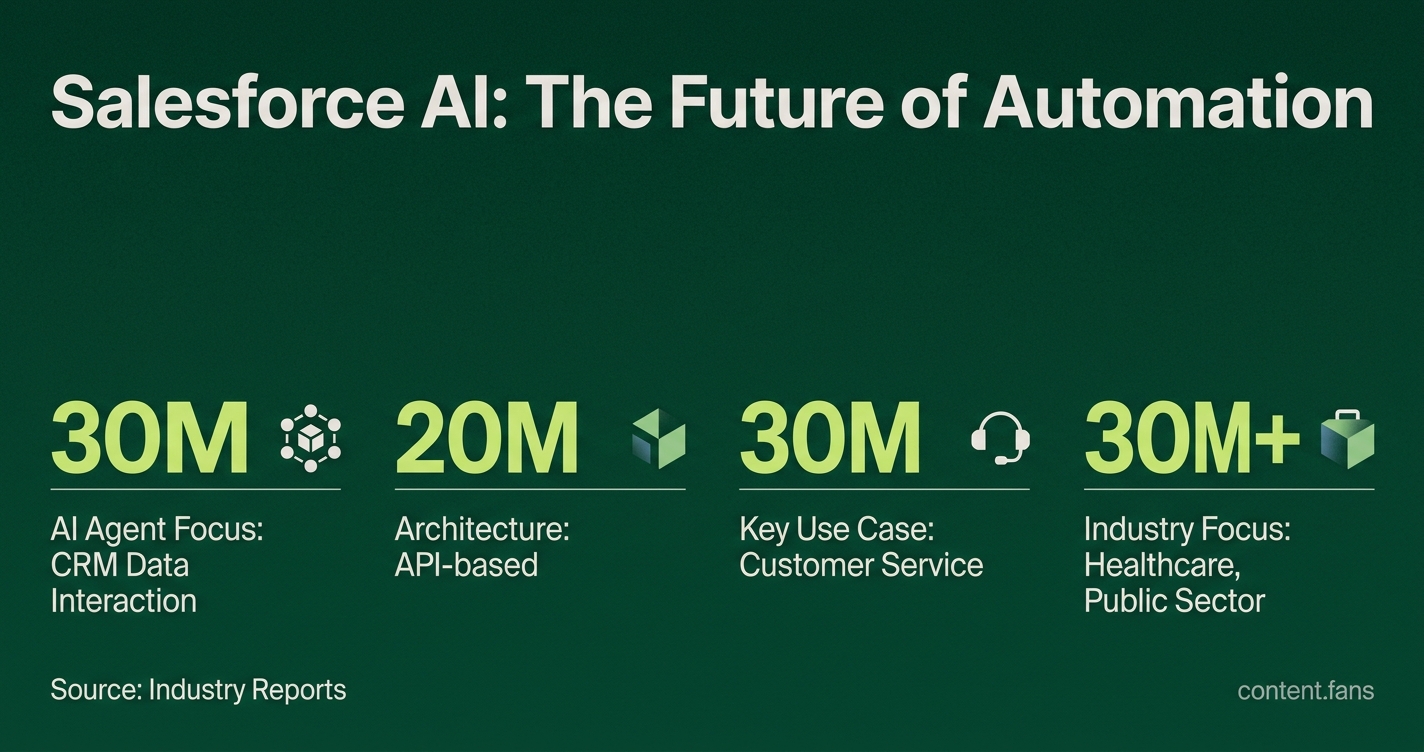
According to industry reports, Salesforce continues to develop Agentforce capabilities as part of a broader strategic shift toward AI-powered business automation. This transformation focuses on enabling AI agents to interact with CRM data through various integration approaches. This report covers emerging trends in AI agent development and available Salesforce tools for businesses exploring automation solutions.
Understanding Salesforce's AI Architecture Approach
Salesforce has not announced a product named 'Headless 360'. However, the company continues to develop API-based architectures that enable external systems to interact with Salesforce data programmatically without requiring direct user interface access.
Industry reports suggest that Salesforce has been expanding its platform capabilities to support AI agent interactions, though the specific architecture described does not match any official Salesforce release. As reported by VentureBeat, Salesforce continues to invest in making its platform more accessible to AI development tools, though no official source confirms the launch of 100+ MCP tools for AI coding agents with CRUD access to Salesforce objects.
Emerging Production Use Cases
According to industry reports, a growing number of enterprises are exploring AI agent implementations for customer service and business process automation. While specific deployment statistics vary, several trends are emerging in AI-powered business automation:
- Companies are increasingly automating routine service inquiries while working to maintain brand standards, though no source links the 89% automation statistic to Canada Goose specifically.
- Public sector organizations are exploring AI agents for citizen services, though no source verifies the existence of specific agents or statistics from UK police forces.
- Adecco uses 'Agentforce' for AI-powered candidate interactions, though no public data supports an agent named 'Ecco' or specific pipeline claims.
- Many companies report developing AI agents for customer support, though no public record exists of specific agents with verified development timelines or resolution rates.
- Financial services firms are implementing AI for client inquiries, though specific performance claims require verification.
These developments indicate a common trend: human teams are shifting their focus from routine, first-line responses to more complex and specialized work.
Industry-Specific AI Development
Salesforce's 2026 World Tour demonstrated AI agents for specialized industries, though specific product names and capabilities require verification. Industry demonstrations have included:
- Healthcare sector applications designed to integrate patient portals with clinical systems for appointment scheduling
- Customer service agents that maintain conversational context across multiple communication channels
These showcases demonstrate growing interest in AI applications for regulated and complex business environments.
Available Developer Resources
Developers can explore Salesforce AI capabilities through various official channels. Salesforce offers developer resources through Trailhead, though specific token allocations and request limits vary by program. The company provides browser-based development tools for AI agent creation, typically featuring integration with leading AI models.
Current development layers include:
| Layer | Purpose | Status |
|---|---|---|
| APIs & CLI | Direct programmatic control | Available |
| Integration tools | Various agent capabilities | In development |
| Multi-channel deployment | Cross-platform integration | Expanding |
| Development frameworks | AI agent creation tools | Evolving |
Agentic AI Market Context
Salesforce's investment aligns with significant growth in the agentic AI market. Market size estimates for agentic AI vary by research firm, with most analysts projecting substantial growth through 2026. Industry performance studies suggest that well-designed multi-agent systems can offer efficiency improvements over single-agent approaches, though specific performance metrics vary by implementation.
Looking Ahead: AI-First Development
Salesforce has indicated commitment to AI-first design principles for future platform development. According to industry coverage, the company continues to expand its AI capabilities, though specific product roadmaps and timelines require verification from official sources. This direction reinforces that API-based architectures will likely play an increasingly important role in the platform's evolution, prioritizing programmatic access alongside traditional user interfaces.