
Publishers Pivot to Brand and Direct Relationships as Zero-Click Search Grows
Serge Bulaev
More people are getting answers from AI overviews and chat tools without visiting publisher websites, which may reduce clicks and revenue for publishers. Studies suggest about 68% of Google searches in early 2026 may end without any clicks. Publishers are responding by building stronger direct relationships through email lists, apps, and unique content that is harder for AI to summarize. They are also changing technical strategies to help AI cite their work and focusing more on metrics like email sign-ups rather than just clicks. Data suggests that building a strong brand and direct audience ties might help publishers survive as traffic from search engines drops.

The rise of zero-click search is reshaping the digital landscape, as AI overviews and chatbots deliver answers directly to users, reducing website clicks and ad revenue. SparkToro research (reported by Search Engine Land) found that 68.01% of U.S. Google searches ended without a click in early 2026 (Jan-Apr). In response, publishers are strategically overhauling their content, technical architecture, and metrics to adapt to a world where being cited by an AI is the new click.
Building direct audience ownership
Publishers are prioritizing direct audience ownership through high-value channels like email lists, SMS alerts, and exclusive membership programs. This strategy focuses on maximizing the value of each loyal subscriber compared to numerous anonymous search visitors. To foster these direct relationships, publishers are developing unique content like interactive calculators, guided tools, and community forums that AI cannot easily summarize.
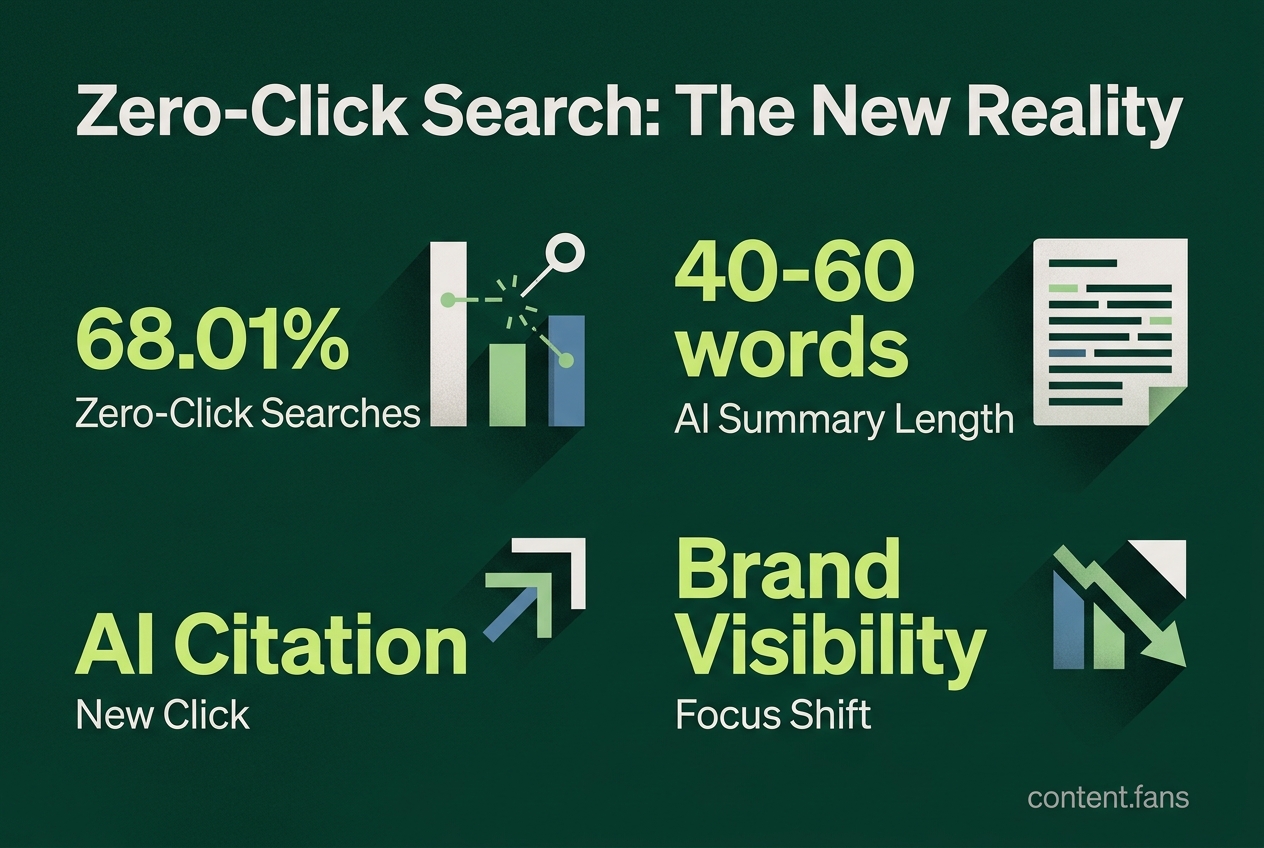
To adapt, publishers are building direct audience relationships through newsletters and apps while creating unique content like original reporting and interactive tools. They are also optimizing technically with specific schema and short summaries so AI agents can accurately cite their work, shifting focus from clicks to brand visibility.
Crafting click-resistant content
Content strategy is shifting away from simple evergreen explainers that are easily paraphrased by large language models. Instead, publishers are focusing on creating content with distinctive value. This strategic shift is supported by SparkToro research and general industry analysis, including original reporting, deep investigations, and emotionally resonant local stories that are difficult for AI to compress. Furthermore, proprietary data tables, interactive comparison widgets, and other unique tools incentivize users to visit the source page.
Answer Engine Optimisation (AEO) and Generative Engine Optimisation (GEO)
Technical teams are now implementing strategies for Answer Engine Optimization (AEO) and Generative Engine Optimization (GEO). Standard SEO practices include identifying user questions, creating concise answer blocks, and using FAQ schema. Key technical steps include adding structured data (JSON-LD) for authors and articles to aid AI comprehension, auditing robots.txt files to allow crawlers like GPTBot, and placing a 40-60 word summary below headlines for accurate AI extraction.
Treating zero-click placements as brand surfaces
Even without a click, zero-click placements like featured snippets and AI Overviews serve as powerful branding opportunities. The strategy is to treat these as digital billboards by branding visible text, managing knowledge panel data for accuracy, and ensuring design consistency to build brand association and trust. Some publishers also embed short calls-to-action, such as "read the full analysis," to encourage clicks from highly engaged users.
Re-engagement through moment-based notifications
With organic return visits declining, publishers are using web push notifications to drive re-engagement. Pushly research emphasizes web push notifications for audience retention and re-engaging users. By positioning notifications as a utility rather than an interruption, this tactic effectively nurtures passive readers toward becoming loyal subscribers.
Shifting metrics from clicks to outcomes
Measurement frameworks are evolving from tracking raw clicks to focusing on tangible business outcomes. Experts note a significant pivot toward metrics like email sign-ups, branded search volume, and membership conversions. Furthermore, analysts suggest monitoring the ratio of AI citations to subsequent branded searches to gauge brand awareness lift. In many newsrooms, dashboards now prioritize revenue per subscriber over traditional pageview counts, reflecting this fundamental shift.
Snapshot of the traffic reset
- While Google traffic declines for publishers are widely reported, specific figures vary by study and region, with many smaller publishers experiencing disproportionately larger losses.
- The appearance of an AI Overview reduces clicks to the top organic result by approximately 58% according to updated Ahrefs research from December 2025, with multiple studies reporting reductions ranging from 47.5% to 61%.
- While AI chatbots generate significantly less referral traffic than search, these visitors often convert at higher rates than average.
Ultimately, these figures underscore a new reality for publishers. Thriving in the age of AI-driven search requires a dual strategy: maximizing brand exposure within zero-click results while simultaneously building durable, direct audience relationships that are immune to AI summarization.