
OpenAI Unveils "Spud" Model Amid Executive Reorganization
Serge Bulaev
OpenAI is going through a major reorganization as it prepares to launch a new AI model called Spud, which may also be known as GPT-5.5. The company has shifted leadership roles and is focusing more on products that might bring in revenue, while cutting lower-priority work. Spud reportedly can handle different types of input like text, images, audio, and video, and it may be able to remember longer conversations and perform complex tasks step by step. There is some uncertainty about when OpenAI will go public, as leaders appear to have different views on the timing. Some of Spud's abilities and the impact of these changes may not be fully clear until there is wider use and more outside review.

OpenAI is undergoing a significant executive reorganization while preparing to launch its next-generation "Spud" model, according to industry reports. The internal shifts, driven by CEO Sam Altman, aim to sharpen the company's focus on enterprise revenue and accelerate the deployment of advanced AI products. The changes follow reports of upcoming model releases and leadership adjustments.
What Spud Can Reportedly Do
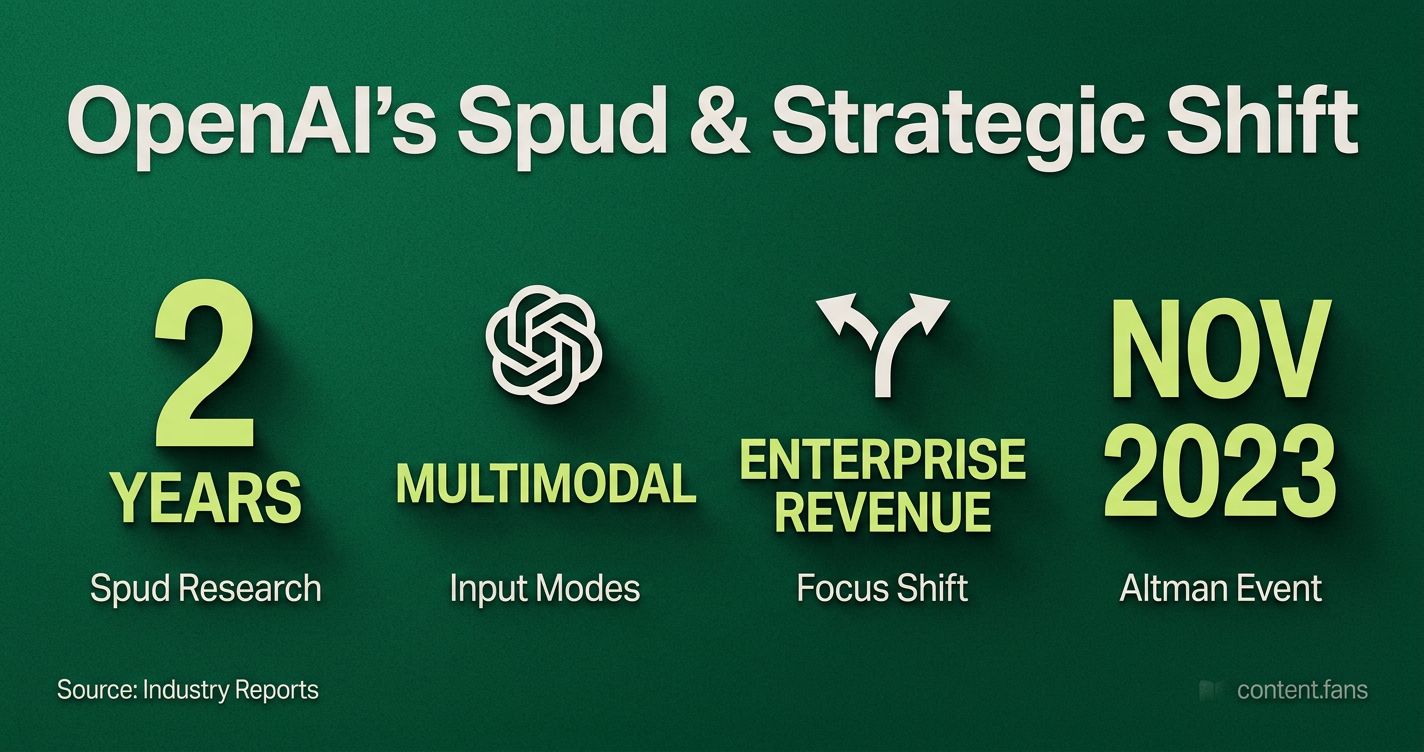
The OpenAI "Spud" model is a next-generation AI system reportedly capable of multimodal input across text, images, audio, and video. It is designed for complex, multi-step tasks, featuring long-context memory and greater autonomy for workflows like coding and advanced office functions, positioning it as a powerful enterprise tool.
Leaked information and early reports highlight several key functions:
- Multimodal Input: Processes and understands text, images, audio, and video, according to analysis from MindStudio.
- Long-Context Memory: Retains information across extended conversations for more coherent and context-aware interactions.
- Complex Reasoning: Employs step-by-step logic to solve challenging problems.
- Enhanced Autonomy: According to industry reports, the model is capable of executing multi-step workflows for coding and office tasks with minimal guidance.
Company President Greg Brockman has described Spud as a "new pre-train" that represents approximately two years of dedicated research.
Inside the Recent Reorganization
According to industry reports, CEO Sam Altman has realigned product and research leadership to accelerate Spud's deployment. The company is reportedly trimming non-essential "side quests" to focus personnel on revenue-generating products. This strategic shift is also reflected in updated company principles that acknowledge competitive pressures and the need for large-scale infrastructure.
This disciplined focus on growth follows a period of internal turbulence, including Altman's brief removal by the board in November 2023. Analysts suggest the current restructuring aims to prevent future governance issues by clarifying the chain of command as OpenAI eyes major market initiatives.
IPO Timing Dispute Surfaces
The leadership changes coincide with a reported internal debate over the timing of OpenAI's Initial Public Offering (IPO). According to industry reports, there are differing views within the company regarding the optimal timeline for going public, with some sources suggesting varying perspectives between leadership on timing considerations. These discussions are said to center on the company's readiness for public reporting standards and its significant compute spending. While a company spokesperson called talk of a rift "ridiculous," the discussion highlights the strategic tension between rapid growth and financial preparedness.
What This May Mean for Partners and Customers
For OpenAI partners and customers, the executive shifts could lead to a compressed feature roadmap and faster availability of enterprise-grade tools. While API access for Spud is expected to follow its initial limited release, a definitive timeline remains unconfirmed. Meanwhile, investors are closely watching for internal alignment on the IPO date, a decision intertwined with the rising costs of training powerful multimodal models.
Ultimately, the launch of an advanced system like Spud, combined with a management structure geared toward enterprise solutions, signals a clear pivot to commercial viability. However, the full impact will remain speculative until the model's advanced capabilities are verified through wider, independent use.