
OpenAI unveils ChatGPT "superapp" with desktop control, GPT-5.6
Serge Bulaev
OpenAI has launched a new ChatGPT "superapp" that may control your computer and browser, combining chat, coding tools, and a browser in one place. The app, called ChatGPT Work, appears to help users do tasks like making slides, building websites, and editing videos without leaving the chat. Features are rolling out first to paid plans, while free users do not have access yet. Some reviews suggest it is easy to use and fast, but there are reports of problems with accuracy and subscriptions. Early evidence hints the app might help people work faster on drafts but still needs human supervision for best results.

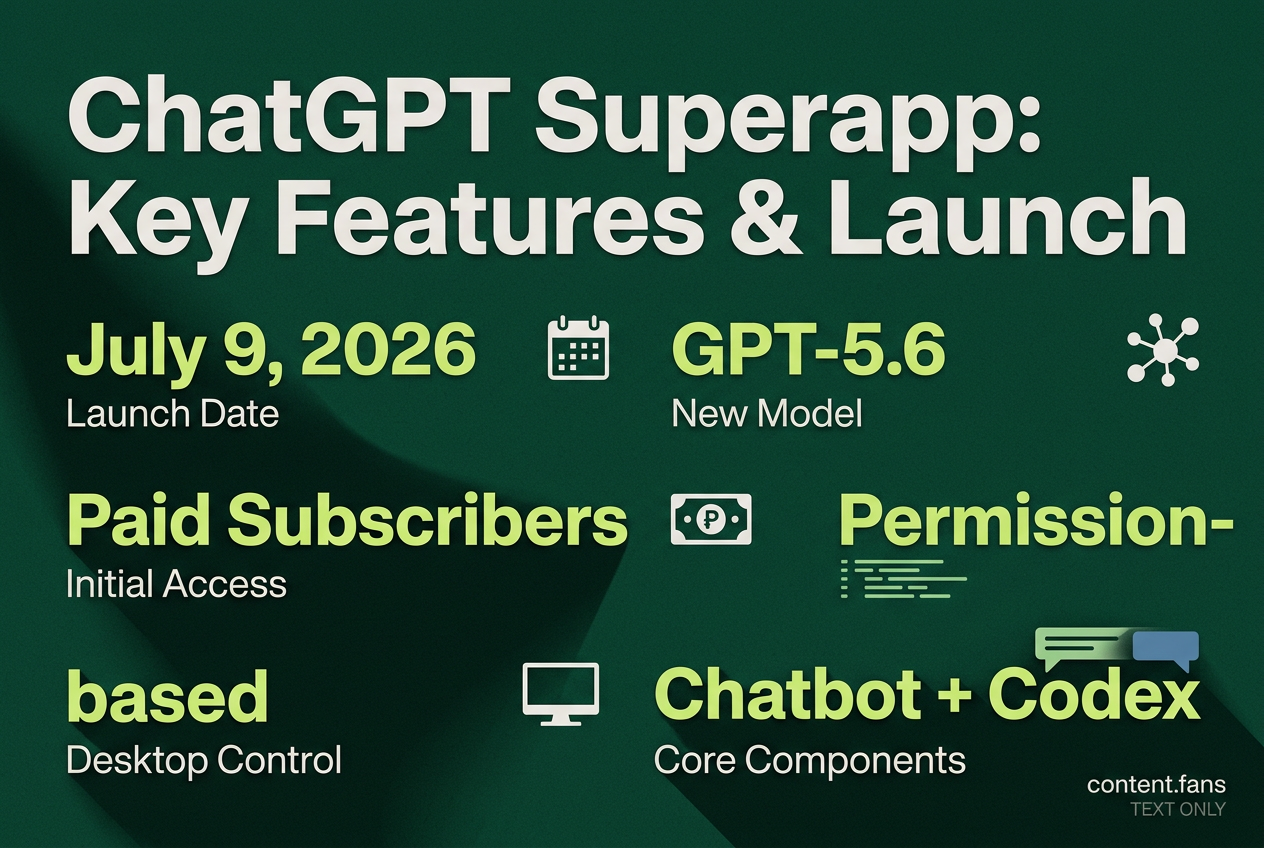
The anticipated OpenAI ChatGPT "superapp" with desktop control has officially launched, moving from rumor to release with the debut of ChatGPT Work. OpenAI launched 'ChatGPT Work' on July 9, 2026, combining the chatbot with Codex for productivity tasks. A new ChatGPT desktop application was announced, but the initial rollout for ChatGPT Work was on web and mobile. The desktop app provides three modes: Chat, Work, and Codex, rather than a single unified interface merging them all at launch.
OpenAI positions the release as a productivity-focused competitor to agentic AI products from Anthropic. Internal tests showed the app generating slide decks, building websites, and editing videos. An OpenAI Help Center notice confirms features are rolling out first to paid subscribers on Pro, Enterprise, and Edu plans, with other premium tiers following shortly. Free plans are currently excluded.
How the superapp works
The ChatGPT "superapp" is a unified desktop application that allows users to perform complex tasks by giving natural language commands. ChatGPT Work combines the chatbot with Codex to create documents, presentations, and websites on web and mobile, with a separate new desktop app announced; the unified desktop superapp merging browser, ChatGPT, and Codex was a planned initiative from March 2026, not the July 2026 launch product.
ChatGPT Work is the core of the experience, offering users a choice between a Codex-focused view for technical tasks and a Work view for documents and design. To perform actions on the desktop, the agent requests user permission before executing keyboard, mouse, or file commands. OpenAI states this approval-based system is designed to prevent unintended automation while being easy to use. By default, the agent does not use stored chat history for tasks unless a user specifically opts in.
A new "Sites" feature also appears next to the chat input, which early testers used to publish interactive webpages hosted on OpenAI's infrastructure, eliminating separate deployment steps.
Tiered rollout and model changes
The superapp launches with GPT-5.6, a new large-scale model with "max reasoning effort" and an optional "ultra mode" for difficult problems. This release follows the retirement of GPT-4.5 on June 27, 2026 (not June 26), and precedes the planned retirement of the o3 model on August 26, 2026.
According to industry reports, Pro, Pro Lite, Enterprise, and Edu users gained immediate access, with Plus and Business accounts scheduled to receive it shortly after launch. Corporate and university clients have a two-week preview, during which administrators must opt-in to enable the feature for their users.
Competitive and user context
This launch positions OpenAI in direct competition with Anthropic's Claude Code and Cowork agents. While ChatGPT has a significant user base, user feedback is mixed. Reviews on Trustpilot mention issues with hallucinations and subscriptions, whereas G2 reviewers praise its exceptional ease of use for routine queries.
This feedback suggests a market trade-off: ChatGPT offers speed and versatility, while alternatives like Claude are often preferred for high-stakes research and coding where precision is paramount. Developer forums recommend pairing Claude with tools like Cursor when accuracy is the top priority, indicating a split between generalist and specialist user bases.
What can workers expect inside the app
Internal demos shared with Reuters showcased the assistant creating a product microsite in 45 minutes, editing a seven-minute video, and drafting a press release. In these examples, the human role shifted from creator to supervisor - approving code, reordering content, and refining tone.
However, according to industry reports, similar AI assistants can provide significant efficiency gains for individual tasks, though the overall weekly time savings for workers varies considerably. This is because efficiency gains often lead to expanded workloads, suggesting that true time savings depend on how organizations manage project scope and tool adoption.
Quick scan: headline capabilities
• Toggle between dedicated views for coding (Codex) and content creation (Work)
• Execute file, mouse, and keyboard commands with explicit user permission
• Build and publish interactive websites directly from the chat interface
• Powered by GPT-5.6, featuring an optional "ultra" mode for complex reasoning
• Tiered rollout starting with Pro, Enterprise, and other paid plans
As OpenAI continues to refine memory controls and permission systems, the user experience will evolve. Early demonstrations suggest a powerful assistant that excels at generating first drafts and automating tasks, but one that still requires diligent human oversight to achieve high-quality results.