
OpenAI Readies Desktop "Superapp" to Integrate ChatGPT, Coding Tools
Serge Bulaev
OpenAI may soon launch a desktop superapp that combines ChatGPT, coding tools, and a research browser into one program. Reports suggest this app could help users write code, research online, and complete tasks without leaving the workspace. The timeline for its release is not official yet, and dates may change. Some experts believe this could help stop the drop in ChatGPT's usage, but all details remain uncertain until OpenAI shares more information.

OpenAI is reportedly developing a desktop "superapp" to integrate ChatGPT, coding tools, and an AI research browser into a unified workspace. This strategic move, detailed in reports from the Financial Times and The Wall Street Journal, aims to create a single application for a wide range of personal and professional tasks.OpenAI Plans Launch of Desktop 'Superapp' to Refocus, Simplify ... While the product is still being finalized, a phased release could begin in the coming weeks.OpenAI is still working on that 'super app'
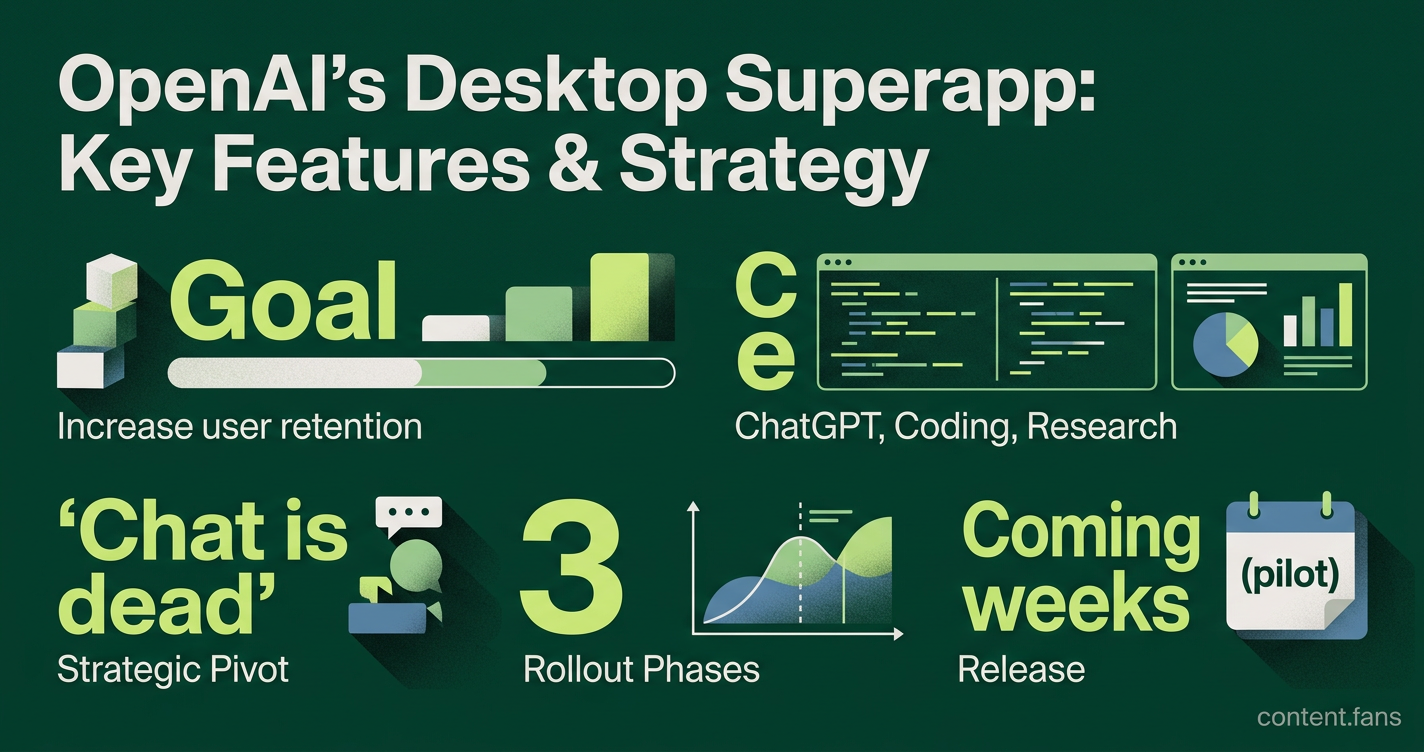
Industry analysts suggest this initiative is a direct response to a decline in ChatGPT's market dominance. According to industry reports, ChatGPT has experienced a significant decline in usage share while competitors like Google Gemini have gained substantial market presence. By bundling coding, research, and chat capabilities, OpenAI aims to increase user retention and raise the costs of switching to a competitor.
Core Features of the New ChatGPT Superapp
The OpenAI superapp is an all-in-one desktop program designed to merge ChatGPT's conversational AI with advanced coding tools and a research browser. It will allow users to perform complex workflows like writing code, delegating automated tasks, and researching topics without switching between different applications.
Reports indicate the integrated platform will offer a broad feature set designed for maximum productivity:
- Unified Coding Environment: Codex-style code editing, debugging, and project scaffolding.
- Autonomous AI Agents: Tools capable of parallel task execution and scheduled automations.
- Integrated Research: An Atlas-based browser panel for in-app web research and citation management.
- Creative Tools: Image generation capabilities that share a media library with existing DALL-E workflows.
- Partner Integrations: Connections to third-party services like Canva, Booking.com, and Spotify for handling bookings, design assets, and more.
An OpenAI employee was quoted by the Financial Times as saying "chat is dead," signaling a major pivot from conversational interfaces to a more action-oriented platform. This consolidation could compel competitors to develop similar multi-function suites instead of standalone chatbots.
Phased Rollout and Release Timeline
Sources indicate OpenAI has not confirmed an official release date, but industry reports describe a provisional three-phase roadmap:
- Phase 1: Initial desktop pilot for coding environment features.
- Phase 2: Expansion of agentic tools and worktree support.
- Phase 3: Full integration of ChatGPT and the Atlas research browser.
While an early preview may arrive according to industry sources, a wider release timeline remains uncertain. All timelines remain speculative pending an official announcement from OpenAI.
Connection to Future Models
Industry reports suggest speculation about new model developments, though specific details remain unconfirmed. Analysts speculate that if a new model ships with a larger context window and more reliable tool-use capabilities, it would provide the necessary power for the superapp's advanced agent functions. For now, any link between potential new models and the superapp project is purely speculative.
Enterprise Security, Privacy, and Pricing
For enterprise adoption, transparency and security will be critical. Reports highlight a focus on privacy features, including a potential "Lockdown Mode" to restrict external API calls during sensitive workflows and ensure clear agent permissions. OpenAI has not announced pricing, but internal discussions reportedly mention "agentic commerce," hinting at a new transaction-based revenue model that would exist alongside current subscriptions and allow for in-app checkouts.
What This Means for Users and Developers
The planned phased rollout implies that both users and developers should prepare for a transition. Developers may need to update existing plug-ins to a new agent framework, while all users will need to familiarize themselves with new UI elements and permission settings. As all sources emphasize, details remain fluid until OpenAI publishes an official roadmap.