
Meta earmarks $65 million for 2026 election, targets state AI rules
Serge Bulaev
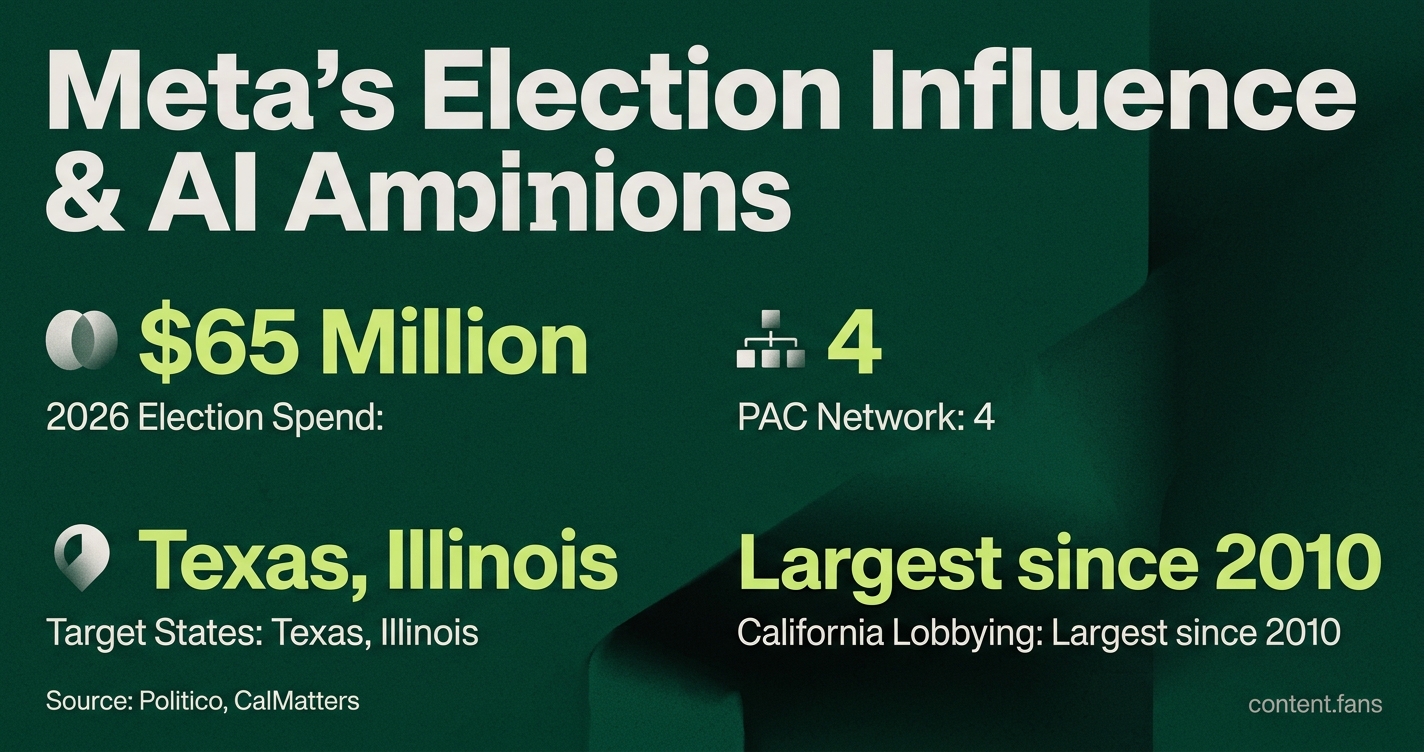
Meta has set aside about 65 million dollars for the 2026 election, aiming to influence state rules on AI and get permits for new data centers.

Meta has significantly expanded its political lobbying efforts for the upcoming election cycle to influence state AI rules and secure data center permits, according to industry reports. The company is deploying a new multi-PAC network to achieve these goals, as reported by various news outlets.
This strategy highlights the connection between Meta's regulatory objectives and its infrastructure ambitions, as the company backs friendly lawmakers who can streamline AI compliance and approve data center construction.
A multi-PAC war chest
Meta's substantial funding represents a strategic investment to shape state-level AI legislation and accelerate the approval process for its energy-intensive data centers. By supporting politically aligned candidates, the company aims to reduce regulatory friction and secure the physical infrastructure necessary for its future AI development.
Meta's network consists of:
- Forge the Future Project, created in February 2026 for Republican candidates
- Making Our Tomorrow, formed at the same time for Democratic candidates
- Mobilizing Economic Transformation Across California (META California), active since 2025
- American Technology Excellence Project, a national umbrella super PAC
The committees reportedly have received significant combined funding. Politico reports that Brian Rice, Meta's vice president of public policy, is spearheading the initiative.
Target states and data-center friction
The spending initiative focuses on states that are both considering comprehensive AI legislation and are home to significant Meta infrastructure. For instance, Meta operates three AI-focused data centers in Texas. This PAC initiative is a direct response to increasing community opposition over the substantial energy and water consumption of these facilities, which are vital for training large AI models. Illinois is another key state where similar campaigns are underway.
California lobbying spike
In addition to its election-focused spending, Meta's lobbying in California has surged. The company spent a substantial amount lobbying in Sacramento during 2025, representing its largest annual sum since establishing its California office in 2010. According to CalMatters, a significant push in the spring aimed to weaken proposed AI and child-safety legislation. Furthermore, company filings reveal numerous behested payments made at the request of state officials within that year.
Meta's stated rationale
According to public-policy researchers, this financial strategy is designed to influence both the content of legislation and the critical permitting processes for new data centers. This dual focus indicates the substantial investment is intended to safeguard Meta's software development autonomy and the physical infrastructure required for its next generation of AI products.
Meta is mounting an aggressive political campaign heading into the upcoming election cycle, with significant funding earmarked for election spending and a multi-pronged strategy to shape state-level AI policy and infrastructure approvals. The company's efforts reveal how tech giants are increasingly treating regulatory battles as political contests requiring PACs, lobbying, and candidate support at unprecedented scale.
What are the PACs Meta created, and what do they target?
Meta has assembled a multi-PAC political infrastructure designed to operate across party lines and state boundaries. The two newest additions, launched in February 2026, are the Forge the Future Project (for Republican candidates) and Making Our Tomorrow (for Democratic candidates). These join two earlier committees: a California-focused PAC and the American Technology Excellence Project, a national super PAC backing state-level candidates who support AI development and U.S. tech leadership.
The explicit goal, as stated by Meta's public policy vice president Brian Rice, is to support candidates who "embrace AI development" and "defend American tech leadership." The PACs are specifically designed to counter what Meta calls "overly restrictive state AI laws" and the "patchwork" of state AI bills it argues could hinder innovation.
Why is Meta linking AI regulation fights to data center construction?
Meta's political spending serves dual objectives: influencing AI policy while securing approvals for physical infrastructure. The company has three AI data center projects in Texas and is backing friendly legislators there, with its PACs also active in Illinois and other key states.
The connection is direct: AI development requires massive data center capacity, yet these facilities face growing public opposition over energy consumption, water use, and local impact. By supporting candidates who favor lighter AI regulation, Meta simultaneously advances officials more likely to approve data center permits despite community resistance. As one report noted, the PACs respond to opposition against "the data centers essential for training models."
How does Meta's recent spending compare to its previous political activity?
The current commitment represents a dramatic escalation. The sourced 2025 amounts shown in the available reporting are $20 million to META California and $45 million to the American Technology Excellence Project, totaling $65 million.
This state-level spending complements broader industry trends, with AI companies and executives significantly increasing their political donations in recent years.
Meta's lobbying has surged in parallel. The company spent substantially more lobbying California officials in 2025 compared to previous years. This included significant spending in one spring period specifically targeting AI and child-protection legislation.
What state AI regulations is Meta trying to prevent?
Meta faces an expanding maze of state-level obligations. In recent years, legislators have introduced numerous AI-related bills across states. Key frameworks Meta opposes include various transparency mandates, employment AI rules, and comprehensive AI acts that impose compliance costs, documentation requirements, and potential litigation exposure that Meta argues create "inconsistent regulations that threaten homegrown innovation."
What does this reveal about tech industry political strategy?
Meta's approach signals a fundamental shift in how technology companies engage politically. Rather than reactive lobbying against specific bills, Meta is proactively building permanent electoral infrastructure - creating PACs that can operate across election cycles and support candidates before specific regulatory fights emerge.
The strategy also reveals increasing integration of digital policy and physical infrastructure politics. AI regulation and data center siting were once separate issues; Meta's current spending treats them as interconnected, requiring aligned elected officials at state and local levels.
This spending level places Meta among the most aggressive corporate political actors, with resources that dwarf most individual candidates' entire campaign budgets. The company's willingness to deploy these resources publicly suggests it anticipates prolonged regulatory battles across multiple states and election cycles rather than one-time legislative victories.