
Jessica Tee Orika-Owunna's Playbook: Influence Trumps Location in SaaS
Serge Bulaev
Jessica Tee Orika-Owunna shows that you don't have to live in a big tech city to make it big in SaaS. She went from losing her job in Port Harcourt to helping top software companies around the world, simply by using smart strategies and making herself visible online. By sharing her work, teaming up with mentors, and building a strong LinkedIn presence, Jessica proved that influence and real results matter more than your location. Her story inspires more women in tech to use their wins, network, and public work to get noticed and grow fast. Data from her projects proves that big results can come from anywhere, as long as you share them with the world.

Jessica Tee Orika-Owunna's playbook for SaaS success proves that influence trumps location. Her rise from a layoff in Port Harcourt to advising global SaaS brands shows how strategic visibility and data-backed results can defy geography. Her story provides a powerful model where targeted influence, quantified outcomes, and purposeful networking create career-defining leadership opportunities.
Jessica Tee Orika-Owunna's buyer-first content blueprint
Her strategy centers on creating buyer-first, bottom-of-funnel content that quantifies results. By documenting wins and building a strong personal brand on platforms like LinkedIn, she turns project data into career leverage, proving that demonstrable impact is the ultimate currency in a remote-first world.
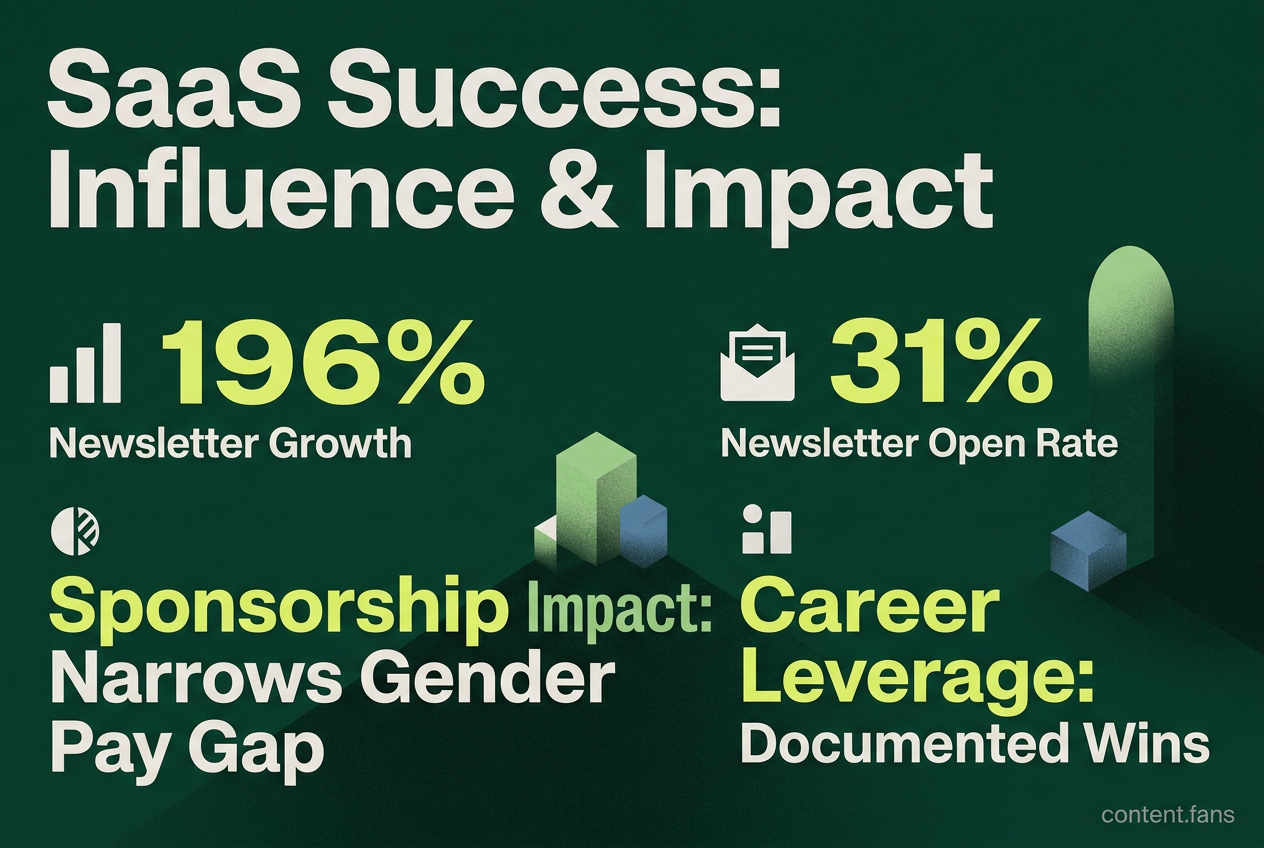
A TechCabal interview details her pivot to product-led, bottom-of-funnel content. She managed company newsletter with 196% subscriber growth over 15 months, 31% open rates, high-profile sponsors. These metrics provided the leverage to mentor on ADPList and GrowthMentor and launch the SWAT Playbook, a resource for turning product data into high-conversion copy.
LinkedIn serves as her primary growth engine. With a growing number of B2B teams running "always on" influencer programs, her strategy is validated. LinkedIn's creator tools now drive a significant portion of B2B content, per recent B2B influencer statistics.
Key Advancement Tactics for Women in Tech
Research reveals several evidence-backed tactics that accelerate career progression far more effectively than certifications alone:
- Pair Mentorship with Sponsorship: While mentors advise, sponsors advocate. 2024 CNA research shows sponsorship significantly narrows the gender pay gap.
- Maintain a "Brag Document": Systematically log your wins, quantifying revenue impact and performance improvements for performance reviews.
- Build a Speaking Record: Start with lightning talks at local meetups to create visibility and establish expertise.
- Leverage Salary Data: Use salary transparency websites to inform every negotiation and ensure equitable pay.
- Gain Executive Exposure: Participate in exchange programs like TechWomen to get project-based experience with senior leaders.
Influencer-led content is shaping B2B SaaS careers
The creator economy has become a primary B2B channel. With many B2B marketers running influencer campaigns, the opportunity is massive. For women in content and product marketing, leading an influencer partnership that drives pipeline provides a portable, metric-driven case study of their impact.
Jessica's approach directly reflects this trend. She frames her value by asking prospective clients two key questions: "Which creator already educates your buyers?" and "How can we co-author data stories with them?" This strategy positions her as a strategic growth partner, not just a content creator.
Visibility compounds faster than credentials
While certifications validate skills, public work multiplies their impact. Activities like speaking, contributing to open-source projects, or publishing educational content create searchable assets that attract recruiters. For instance, global WomenHack events feature five-minute speed talks, with alumni often reporting interview requests within a week. This mirrors Jessica's own experience: an early viral thread on auditing SaaS onboarding emails continues to rank on LinkedIn, generating a consistent flow of consulting leads.
Case Study: Proving Impact Across Borders
Based in Nigeria, Jessica effectively serves clients in global tech hubs like Toronto, Berlin, and Austin. Her method for tracking impact is simple and powerful: document the baseline metric, the experiment, and the result. For example, a recent carousel collaboration increased a client's demo request rate from 1.4% to 3.2% in just 30 days. This clear, published data proves that location is irrelevant when results are measurable and repeatable.
How did Jessica Tee Orika-Owunna turn a 2020 layoff into a global SaaS content career from Nigeria?
She treated the lockdown layoff in Port Harcourt as a forcing function to target product-led and bottom-of-funnel content strategy roles at global B2B SaaS brands. Within three years she:
- Co-owned Foundation Marketing's viral case-study program that racked up hundreds of thousands of views and citations from HubSpot and ClickUp
- Managed company newsletter with 196% subscriber growth over 15 months, 31% open rates, high-profile sponsors, unlocking sponsorship revenue from Marketing Brew and others
- Built a client roster that now includes Vena Solutions, Softr, Contentsquare and Hotjar - all while remaining location-independent
Her playbook is documented in the SWAT Playbook and through mentoring calls on ADPList and GrowthMentor.
Why does Jessica argue that influence beats location for SaaS marketers?
LinkedIn data show that many B2B marketers now use influencer marketing, and SaaS teams with an always-on creator program are significantly less likely to report poor ROI. Jessica's own discovery of Lashey Lewis via a LinkedIn interview illustrates the point: a single authentic creator post can travel farther than a traditional campaign launched from a major tech hub. By focusing on peer-to-peer credibility instead of geography, she landed brand-side and agency roles without leaving Nigeria.
What concrete steps can young women take to advance in tech beyond certifications?
Research from recent years points to six high-impact moves:
- Secure sponsors, not just mentors - sponsors actively remove promotion barriers; platforms like Women Who Code and AWIT offer structured 3-6 month pairings
- Build visible proof - open-source commits, lightning talks and quantified brag documents that track revenue or performance lifts
- Negotiate first offers - Women earn ~6-8% less; negotiate using Levels.fyi data
- Attend speed-interview nights - events listed on WomenHack compress weeks of recruiting into one evening, often yielding multiple face-to-face interviews
- Apply to exchanges - the U.S. TechWomen program brings emerging leaders to Bay Area companies for five-week project-based mentorships
- Keep a quantitative wins file - reviewers promote what they can measure
How are B2B SaaS brands measuring influencer content success in 2025?
The numbers that matter:
- Strong average revenue returns on influencer programs
- Higher lead conversion rates for B2B influencer posts vs. B2C
- Significant increases in pipeline-attributed revenue when AI is used across multiple workflow stages
- Many SaaS teams have switched to always-on creator relationships because the tactic drives substantial content output yet costs less than paid social
Jessica advises creators to lead with deep-dive product reviews and event-based storytelling on LinkedIn - formats that algorithms now reward with extended organic reach.
What tools and habits keep a remote SaaS content team cohesive and productive?
Jessica's dispersed-client routine centers on three principles:
- Async-first documentation - every case study starts in a shared Notion brief that links KPIs to product screenshots, cutting feedback loops significantly
- AI co-creation - many B2B marketers now use AI for influencer tasks; her team's stack (Jasper, Descript, Hemingway) reduces first-draft time substantially while preserving brand voice
- Monthly voice-of-customer swaps - she joins sales calls or reviews Gong transcripts to refresh messaging, ensuring content maps to live prospect language
The result: on-time delivery across time zones and a portfolio that continues to attract global inbound inquiries, proving once again that influence - not office address - drives SaaS opportunities.