
Google's Gemini 3.5 Flash-Lite changes Search visibility in AI Overviews
Serge Bulaev
Gemini 3.5 Flash-Lite, Google's new search model, quickly changed which pages are shown in AI Overviews. Early data suggests that the overlap between top search results and AI Overview citations dropped sharply, and the number of sources per answer increased. Gemini appears to favor pages that answer common questions, provide clear sources, and cover topics in detail, even if those pages are not ranked high. Sites from well-known and trusted sources are still cited more often. This update means visibility depends more on how easily a page can be quoted and trusted rather than just search ranking.

Google's Gemini 3.5 Flash-Lite changes Search visibility in AI Overviews by fundamentally decoupling citations from traditional organic rankings. The model's upgrade has created a new visibility layer where content is rewarded for authority and extractability, not just its rank. Industry reports suggest a dramatic shift, with a significant portion of AI Overview citations now coming from sources outside the top-10 results. This guide explains the critical changes and how SEO strategy must adapt.
What Changed with Gemini 3.5 Flash in Google Search?
The Gemini 3.5 Flash model introduced 'query fan-out' behavior in Google Search. Instead of relying on a single top-ranked page, the system now breaks a query into sub-questions and samples answers from a wider variety of sources, prioritizing topical authority and easily citable passages.
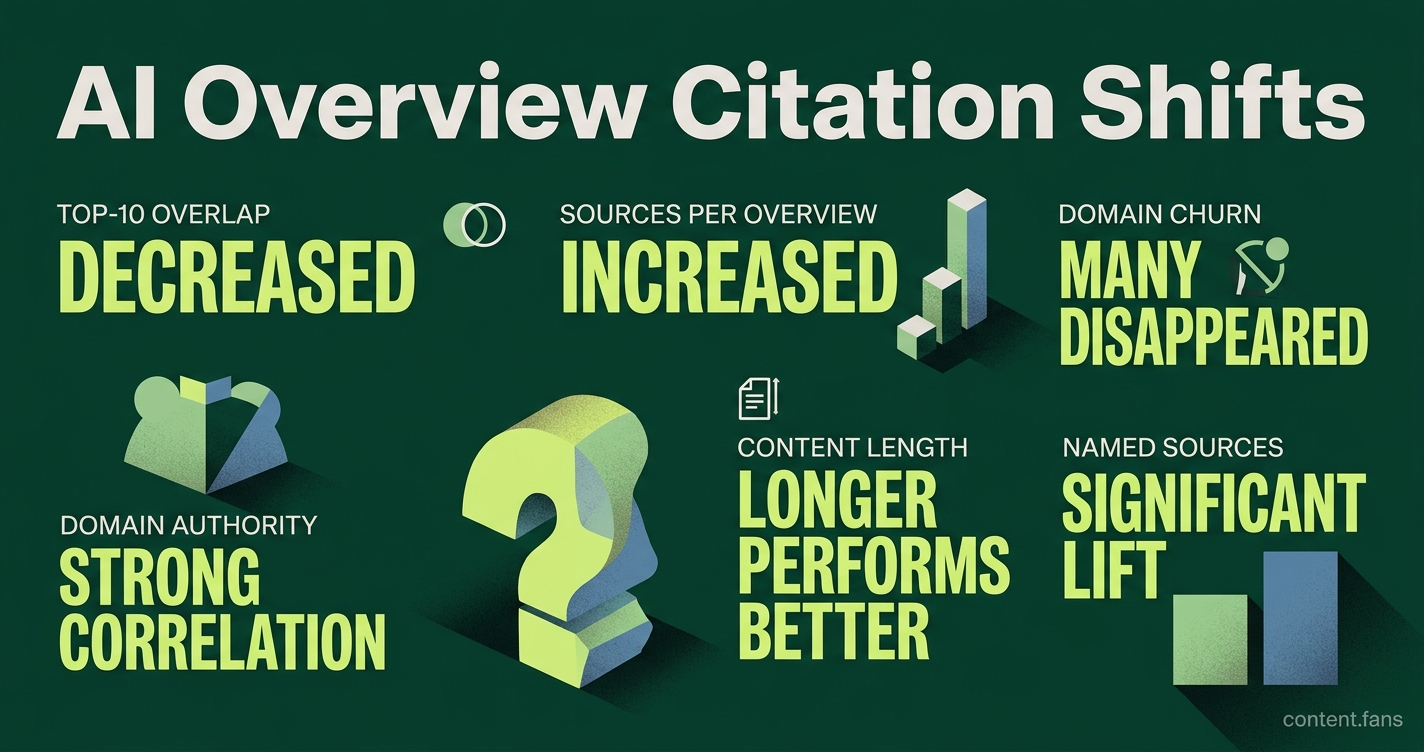
The impact has been immediate according to industry observations. The key takeaway is that ranking #1 no longer guarantees an AI Overview citation. Instead, the model prioritizes topical coverage, source diversity, and answer extractability over traditional ranking signals.
How Have AI Overview Citation Patterns Changed?
Industry analyses suggest a clear transformation in citation patterns:
| Metric | Trend |
|---|---|
| Top-10 Overlap | Significantly decreased |
| Average Sources per Overview | Increased substantially |
| Domain Churn | Many previously cited domains disappeared |
This data shows that AI Overviews are citing more sources from a broader and less predictable pool. This creates opportunities for content outside the top 10 but also means that a significant portion of domains cited before the upgrade disappeared afterward.
What Content Signals Now Predict AI Overview Citations?
Research into analyzed AI Overviews identifies several strong page-level predictors:
- Domain authority (strong correlation with citation rate)
- Content length (longer content performs better)
- Named sources (significant lift when citations are visible on-page)
The winning formula emphasizes a combination of technical structure and content quality. Key factors include an answer-first structure, question-based H2/H3 headings, and deep topical coverage through interlinked pillar pages and explainers. Pages exhibiting these patterns appear more frequently in citations, even when they sit outside the top organic tier, according to Ahrefs analysis. Google's own guidance stresses that AI Overviews reward pages already strong in Search fundamentals like clear structure and unique value.
Which Domains and Content Types Are Winning?
The citation landscape reveals a concentration in specific source categories. Even with wider sampling, Gemini favors recognizable brands and platforms with distinct expertise.
Top-cited domains include:
* YouTube: High mention share
* Reddit: Significant presence
* Facebook: Notable citation rate
While social and video platforms are dominant, brand-owned websites have increased their citation share according to industry reports. In specialized verticals, authority is paramount. For example, health-related AI Overviews frequently cite sources like the NIH, followed by other highly trusted medical sites.
How to Adapt Your SEO Strategy for Gemini 3.5
The imperative is clear: optimize for being a citable source, not merely a rankable page. Traditional rankings still matter, but AI Overview citations are a separate visibility layer requiring a distinct strategy.
- Cover the Full Query Cluster: Anticipate adjacent user intents. Since Gemini decomposes searches, create a corpus of content covering definitions, comparisons, and best practices, then connect them with internal links.
- Increase Source Trust Signals: Use visible authorship, expert reviews, unique first-party data, and precise claims with supporting evidence. For emerging sites, transparent sourcing is the quickest trust shortcut.
- Structure for Extraction: Employ direct answers, short paragraphs, comparison tables, and FAQ sections that machines can parse cleanly. Front-load definitions and data.
- Measure Citation Separately: Track AI Overview appearance, citation frequency, and which subtopics trigger citations. Analyzing this data is key to understanding and capturing this new exposure.