
GenAI cuts B2B sales cycles by 1.2 months, shifts buyer expectations
Serge Bulaev
Generative AI may be changing how B2B buyers shop, with about 89 percent using AI at some point in their process. This suggests buyers do more research on their own and come to meetings with a shortlist and specific questions. The average B2B sales cycle appears to be getting shorter, dropping from 11.3 months to 10.1 months. Buyers seem to expect faster, clearer answers from sellers, and more value is placed on data and case studies that AI can easily understand. Experts warn that AI-driven research is harder for sellers to track, which might make it tough to measure early interest and require new ways to spot serious buyers.

Generative AI is cutting B2B sales cycles and shifting buyer expectations, as prospects now perform independent research before sales engagement. When buyers use AI to compare features and pricing, they arrive at meetings with pre-made shortlists and pointed questions, starting the conversation halfway down the funnel.
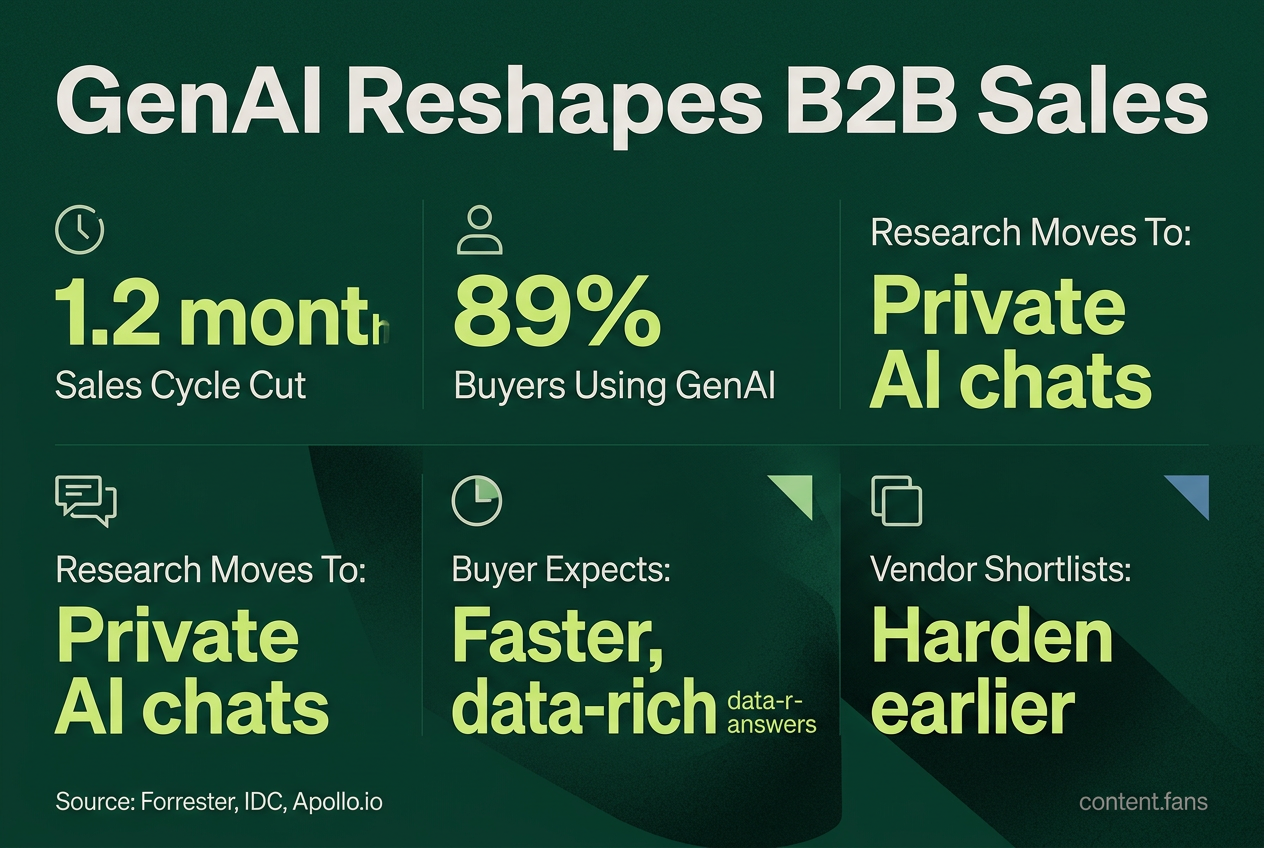
A recent Forrester survey confirms this shift, finding that 89 percent of buyers use generative AI during their purchasing process. Complex discovery and evaluation tasks, which once took weeks of vendor demos, are now completed in minutes using tools like ChatGPT, Gemini, or Perplexity.
How generative tools reshape discovery
Generative AI tools accelerate the B2B buying process by automating initial discovery and vendor evaluation. Buyers use platforms like ChatGPT to compare products, features, and pricing, allowing them to create a vendor shortlist before ever engaging with a sales representative, significantly compressing the top of the funnel.
IDC confirms that modern B2B buyers now "use AI tools to guide their own discovery, compare vendors, and evaluate fit long before they ever engage with sales." This behavioral shift creates three immediate consequences for sales teams:
- Less visible top-of-funnel activity because research moves into private AI chats
- Buyers arrive later in the cycle yet expect faster, data-rich answers
- Vendor shortlists harden earlier, leaving fewer chances to reposition
According to estimates shared by Apollo.io, 89 percent of B2B buyers now treat genAI as a primary research tool, while industry reports show that a significant portion still consider research the longest stage of the journey. While AI accelerates the timeline, it also makes each task more information-dense.
The sales cycle is compressing, but complexity remains
Corporate Visions reports that industry data suggests B2B sales cycles are compressing, with the point of first sales contact occurring later in the buyer's journey. This suggests buyers are more confident conducting research independently but still require human interaction for final validation.
Salsify adds that AI enables executives to get point-by-point vendor comparisons, raising expectations for instant clarity on pricing, implementation, and ROI.
Buyer-enablement assets now outrank classic pitch decks
With AI agents summarizing web content, analysts now recommend publishing machine-readable data. To surface in LLM-generated answers, vendors should prioritize five high-signal asset types:
- Structured comparison tables
- Transparent pricing and packaging pages
- Implementation timelines with resource assumptions
- Security and compliance documentation
- Quantified case studies linking features to outcomes
Column Five Media highlights this trend, observing that a growing number of enterprise buyers now rely on AI-sourced case studies for vendor discovery. Well-tagged success stories serve as a critical proof layer for both human buyers and the AI models advising them.
Inside the meeting: new pressures on the rep
By the time sales is invited to a meeting, the agenda is significantly more advanced. Buyers, informed by AI agents, ask deep technical and commercial questions from the outset. In response, Monday.com notes that sales teams are deploying their own AI copilots to generate tailored proposals, forecast deal risk, and surface real-time competitive intel.
Industry analysts project that conversational interfaces will increasingly mediate seller tasks in the coming years. If this holds true, the sales role will shift toward clarification, negotiation, and handling exceptions, while AI chatbots manage routine follow-ups.
Visibility gaps challenge attribution
A key challenge, highlighted by research from Geisheker, is that AI pushes discovery into "dark channels" that sellers cannot track, making traditional funnel metrics less reliable. Marketing teams may see fewer early-stage leads even as buying intent grows. To adapt, experts recommend focusing on intent data, social listening, and pristine CRM hygiene to identify late-stage engagement signals.