
FIS cuts manual tickets by 70% with new AI transaction platform
Serge Bulaev
FIS reports that its new AI-powered platform cut manual service tickets by 70% and reduced triage time by nearly 75%. The system uses software agents to help with payments, fraud detection, and basic customer questions, while humans still oversee decisions. FIS aims for all clients to use this system by early 2026, but some details are not public yet. Early results suggest routine roles may shrink, while new jobs in oversight and data management might grow. The company's experience suggests that the biggest benefits appear when AI focuses on specific, high-volume tasks and has strong controls in place.

Financial services leader FIS is demonstrating the tangible ROI of agentic AI, reporting its new AI transaction platform cuts manual service tickets by 70% and slashes triage time by nearly 75%. These figures provide a compelling case study for service operations leaders, showing how targeted automation can yield significant financial and efficiency gains. This article breaks down the technology, staffing implications, and key lessons from FIS's successful implementation.
What is FIS's AI-Powered Service Platform?
FIS achieved this reduction by deploying an AI-powered transaction platform and a Financial Crimes AI Agent. These systems use software agents to autonomously handle high-volume tasks like payment authorizations, fraud detection, and anti-money laundering investigations, freeing up human staff for more complex work.
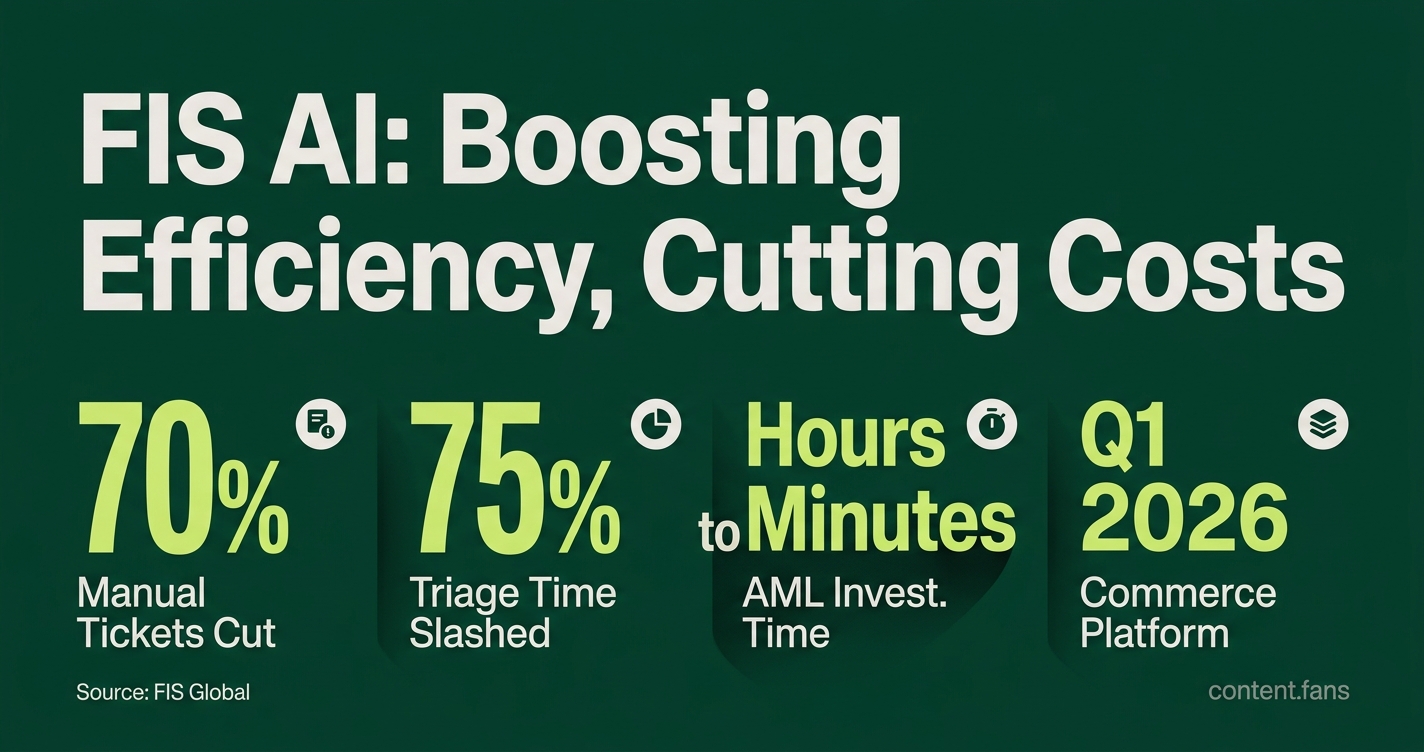
The company's strategy involves two core components. The first is an industry-first AI transaction platform that integrates with Visa and Mastercard, allowing software agents to authorize purchases and handle basic service inquiries. The second is a Financial Crimes AI Agent, co-designed with Anthropic, which can reduce AML investigation times from hours to minutes (FIS Investor disclosure).
The entire program is built on three critical guardrails:
* Traceability: Every decision made by an AI agent is trackable and auditable.
* Governance: An internal layer prevents model drift and ensures consistent performance.
* Real-Time Data: A dedicated platform streams account and case data to the agents.
FIS plans to make the commerce platform available to all its issuing-bank clients by the end of Q1 2026.
How Does AI Adoption Impact Staffing and Roles?
The dramatic reduction in manual work doesn't necessarily mean mass layoffs. Instead, it signals a shift toward human-AI collaboration. Citing analyses like a recent Deloitte report, experts predict that while routine front-line roles may shrink, new positions focused on oversight and data quality will emerge.
FIS's governance model, where humans supervise agents and audit their decisions, supports this view. Future staffing plans in similar service operations should anticipate:
* Front-line teams focused on handling complex exceptions rather than high volumes.
* Increased demand for knowledge management specialists to train and maintain the AI.
* New roles dedicated to agent supervision, compliance, and performance auditing.
How Can Organizations Measure Agentic AI Success?
A key to FIS's success is tracking ROI at the workflow level, not as a vague "AI" initiative. This allows for precise measurement and quick adjustments. Practitioners looking to benchmark their own programs can adopt metrics that FIS has highlighted:
- Manual ticket volume per 1,000 interactions.
- Average triage time per fraud or AML case.
- Audit cycle time per automated agent decision.
Other valuable metrics include customer query deflection rates, reductions in false positives, and overall agent uptime. Linking each metric to a specific owner within the operations team helps ensure accountability and accelerates performance improvements.
Key Takeaways for Implementing Agentic AI
While many details of FIS's implementation are still private, the early results offer a clear blueprint for success. The most significant returns on agentic AI investments are realized when organizations:
- Narrow the scope to a specific, high-volume pain point.
- Instrument the workflow end-to-end for clear measurement.
- Embed strong controls and governance to ensure trust and auditability.
By focusing on high-volume, well-defined workflows like support queues and AML case routing, FIS achieved a rapid and measurable payback, providing a powerful example for the rest of the industry.